


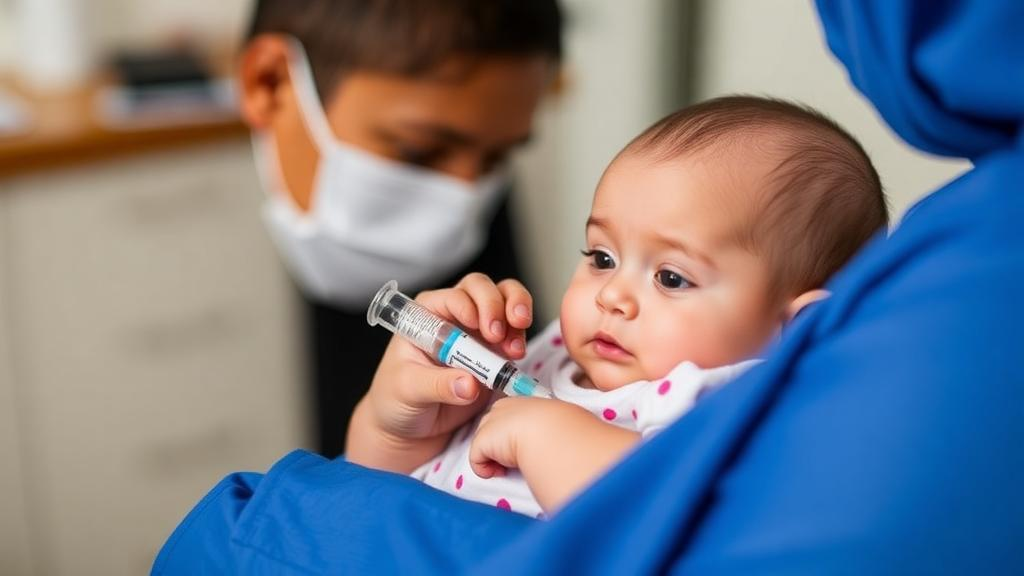
Maternal vaccination has long been recognised as one of the most effective tools in preventive medicine, offering a double layer of protection that shields pregnant women from serious infectious diseases while simultaneously arming their unborn babies with antibodies capable of defending them through the most vulnerable first months of life. Now, a major new Series published in The Lancet Regional Health – Europe, led by Professor Asma Khalil at City St George’s, University of London, and launched at the 2026 Global Society for Maternal-Fetal Medicine Congress in Utrecht, delivers both a celebration of what this approach can achieve and a stark warning about who is being left behind. The Series brings together systematic reviews, policy analyses and safety assessments to argue that Europe must act now, before a wave of new maternal vaccines reaches the clinic, to fix health systems that have failed to keep pace with the science.
The most striking technical finding concerns respiratory syncytial virus, or RSV, a ubiquitous pathogen that is the leading cause of bronchiolitis, a chest infection that can progress to severe breathing difficulties and hospital admission in infants. A systematic review and meta-analysis included in the Series pooled data from 16,394 pregnancies and found that maternal RSV vaccination was associated with an approximately 74 percent lower risk of hospitalisation for RSV-related lower respiratory tract infection in babies younger than six months. This figure is remarkable because it reflects real-world effectiveness rather than the idealised conditions of a clinical trial, confirming that antibodies generated in a vaccinated mother do indeed cross the placenta in sufficient quantity and with sufficient potency to protect her newborn during the period when the infant immune system is too immature to mount its own robust defence against the virus.
Safety data from the same pooled analysis provided additional reassurance. The researchers did not identify a statistically significant association between maternal RSV vaccination and preterm birth, one of the principal concerns that has historically complicated the evaluation of any intervention administered during pregnancy. The authors are careful, however, to note that continued safety monitoring remains essential as vaccination programmes expand across larger and more diverse populations. They also emphasise a crucial operational detail: vaccination must be delivered within the recommended gestational window, allowing enough time before birth for the maternal immune response to mature and for protective immunoglobulin G antibodies to be transferred actively across the placenta to the fetus. Timing, in other words, is not a bureaucratic nicety but a biological requirement for the intervention to work as designed.
Yet the Series makes clear that biological efficacy means little if the vaccine never reaches the arm that needs it. Evidence reviewed by the authors reveals substantial and persistent inequalities in access across Europe. One UK study included in the review found that women living in the most deprived areas had 72 percent lower odds of receiving maternal RSV vaccination than women living in the least deprived areas. This is not a marginal disparity but a near-total gradient running along socioeconomic lines, and it mirrors patterns previously documented for influenza and pertussis vaccination in pregnancy. The result is a paradox in which the babies at highest risk of severe outcomes from RSV, often those born into communities with poorer housing, higher exposure to smoke and reduced access to paediatric care, are precisely the ones least likely to benefit from a vaccine that could keep them out of hospital.
Professor Asma Khalil, Professor of Obstetrics and Maternal Fetal Medicine at City St George’s and Chair of the Series, framed the problem in terms of systems rather than science. Maternal vaccination, she noted, is one of the most powerful public health interventions available, protecting both pregnant women and their babies from serious infectious diseases, but introducing a vaccine is only the first step. Women need timely access, trusted information and convenient services if these programmes are to achieve their full benefit. Her assessment that countries should begin preparing now for the next generation of maternal vaccines, rather than waiting until new programmes are introduced, forms the central argument of the Series and reflects a recurring lesson from public health history: retrofitting equity into a rollout is far harder than building it in from the start.
The urgency of that preparation is underscored by the vaccine pipeline now advancing through clinical development. A paper in press for the Series, led by Professor Paul Heath, Professor of Paediatric Infectious Diseases at City St George’s, examines the next generation of maternal vaccines, among the most advanced of which target group B streptococcus, a bacterium that is a leading cause of neonatal sepsis and meningitis worldwide. A maternal GBS vaccine, administered during pregnancy, could prevent infections that currently strike within hours or days of birth, when diagnosis is difficult and deterioration can be rapid. Heath described the moment as a new era for maternal immunisation, noting that while the value of protecting mothers and babies through vaccination during pregnancy has been understood for decades, a pipeline of new vaccines could now prevent serious infections in the earliest months of life. The challenge, he argued, is ensuring health systems are ready to deliver these vaccines effectively, monitor their impact and make sure all families can benefit regardless of where they live or their circumstances.
What does readiness look like in practice? A separate paper in press for the Series mapped maternal vaccination policies across all 53 countries of the WHO European Region and reviewed 163 studies and policy sources. The analysis identified common factors associated with higher uptake: vaccines that are free at the point of care, offered as part of routine antenatal services, delivered by healthcare professionals with clear responsibility for recommending and administering them, and supported by robust monitoring systems. Conversely, the barriers that suppress uptake are equally consistent, including the burden of additional appointments, language difficulties, fragmented services and inconsistent recommendations between providers. The policy mapping thus converts a vague aspiration of better access into a concrete checklist that ministries of health can act upon, and it suggests that the difference between a successful programme and a failing one often lies in administrative design rather than in vaccine science.
Surveillance emerges as another weak link. A review accepted for publication within the Series examined maternal pertussis vaccination programmes across seven European countries and found substantial differences in how disease burden, vaccine uptake and programme impact are monitored. Without standardised surveillance, policymakers cannot reliably estimate vaccine effectiveness, detect safety signals or identify emerging inequalities. The Series therefore calls for coverage to be routinely monitored by deprivation, ethnicity and migration status so that underserved communities are not left behind as new programmes are introduced, and for stronger, more consistent surveillance systems to underpin the expansion of maternal immunisation. On the safety side, the Series explores the World Health Organization’s new causality assessment approach, a structured framework for determining whether a health event occurring after vaccination in pregnancy is plausibly related to the vaccine or has another explanation. This matters because miscarriage, preterm birth and hypertensive disorders occur during pregnancy regardless of vaccination status, and an event that follows vaccination does not by itself establish causation. Structured assessment, the authors argue, should complement wider surveillance systems, clinical studies and pregnancy registries.
Perhaps the most sobering statistic in the Series concerns the evidence base itself. A review of vaccine research found that almost 95 percent of late-stage vaccine trials conducted between 2018 and 2023 explicitly excluded pregnant participants, leaving clinicians to make decisions about vaccinating pregnant women with limited direct evidence. This exclusion reflects a long-standing culture of caution, but the Series argues it is self-defeating: excluding pregnant women from trials does not protect them, it simply forces them to use vaccines in pregnancy based on weaker data. The authors support greater inclusion of pregnant women in research, alongside robust systems for evaluating safety and monitoring outcomes for mothers and babies.
The Series closes with a set of coordinated recommendations: making maternal vaccination a routine component of antenatal care across Europe, strengthening monitoring of uptake, safety and inequalities, integrating maternity and immunisation records, improving support for underserved communities, coordinating preparation for future vaccine programmes, establishing a European coordination group for maternal vaccine rollout, and developing a European Maternal Immunisation Preparedness Plan. As Professor Khalil concluded, the evidence is clear that maternal vaccination can save lives and reduce serious illness in mothers and babies; the challenge now is ensuring those benefits reach all families, which will require coordinated action across health services, public health agencies and policymakers. The science, it seems, has done its part. The systems must now catch up.
Subject of Research: Effectiveness, safety and equitable delivery of maternal vaccination in Europe
Article Title: Maternal vaccines protect babies from serious infections, but unequal access limits benefits across Europe
Article References: Maternal vaccines protect babies from serious infections, but unequal access limits benefits across Europe. (n.d.). Original publication
Image Credits: AI Generated
DOI: Not provided
Keywords: maternal vaccination, RSV, infant health, health inequality, pregnancy, group B streptococcus, vaccine safety, Europe, public health policy, surveillance, antenatal care, The Lancet Regional Health – Europe
Cite Scienmag News
Harold Sullivan. (October 8, 2026). Maternal Vaccines Slash Infant Hospitalisations, Yet Unequal Access Holds Europe Back. Scienmag. https://scienmag.com/maternal-vaccines-slash-infant-hospitalisations-yet-unequal-access-holds-europe-back/
Harold Sullivan. "Maternal Vaccines Slash Infant Hospitalisations, Yet Unequal Access Holds Europe Back." Scienmag, 8 October 2026, https://scienmag.com/maternal-vaccines-slash-infant-hospitalisations-yet-unequal-access-holds-europe-back/. Accessed 8 October 2026.
Harold Sullivan. "Maternal Vaccines Slash Infant Hospitalisations, Yet Unequal Access Holds Europe Back." Scienmag. October 8, 2026. https://scienmag.com/maternal-vaccines-slash-infant-hospitalisations-yet-unequal-access-holds-europe-back/


