


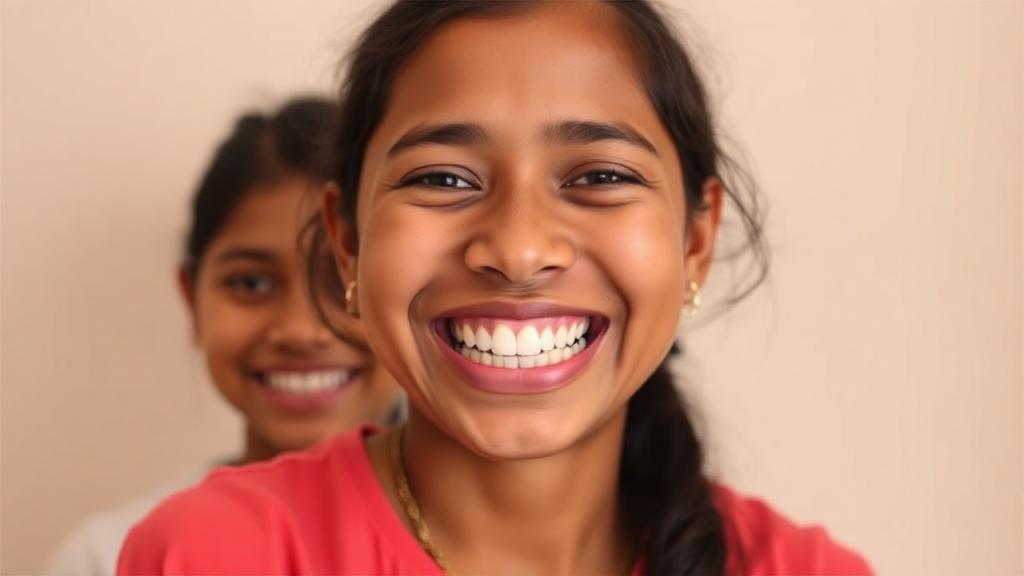
A smile is one of the most immediate signals humans exchange, and a new study from Bangladesh suggests that how young adults perceive their own teeth may quietly shape how confidently they speak, laugh and move through social life. Researchers at Shahjalal University of Science and Technology in Sylhet surveyed 534 undergraduate and postgraduate students from one public and two private universities to untangle the relationship between dental appearance and social confidence. Their findings, published as an open-access paper in Discover Social Science and Health, indicate that both self-perceived oral conditions and perceived social evaluation contribute to how comfortable students feel in everyday interactions. The work is among the first to examine these psychosocial dimensions in a Bangladeshi university population, and it arrives at a moment when social media has intensified scrutiny of personal appearance worldwide.
The research team, led by Jemima Jaman Celia and corresponding author Shah Md. Atiqul Haq from the Department of Sociology, framed the problem in explicitly psychosocial terms. Dental appearance, they note, may have a significant impact on individuals’ self-image and confidence when interacting with others in different social contexts. To capture that impact, the cross-sectional study assessed three dimensions related to dental appearance and social confidence: dissatisfaction with dental appearance, confidence while smiling or speaking, and confidence in social situations. Participants completed a structured questionnaire, and the researchers selected respondents through convenience sampling, a design choice that the authors acknowledge shapes how broadly the results can be generalized beyond the Sylhet university population studied.
Methodologically, the study leaned on a layered statistical strategy. Descriptive statistics provided an initial portrait of the sample, Chi-square tests probed associations between categorical variables, and one-way analysis of variance, or ANOVA, compared mean differences across groups. The centerpiece, however, was multinomial logistic regression, a technique suited to outcomes with more than two ordered or unordered categories. By adjusting for multiple variables simultaneously, the model produced adjusted odds ratios, abbreviated AORs, with 95 percent confidence intervals, allowing the team to estimate how strongly each factor predicted different levels of feeling bad about dental appearance or of confidence, while holding other influences constant. Statistical significance was set at p less than 0.05, the conventional threshold in health and social science research.
The adjusted regression results reveal a striking pattern. Students in STEM fields were more likely to report moderate levels of feeling bad about their dental appearance, with an adjusted odds ratio of 2.189 and a p-value of 0.032. Gum health emerged as a powerful driver: very poor gum health was associated with high levels of feeling bad about dental appearance, with an AOR of 2.765 and a p-value of 0.008, while fair gum health carried an AOR of 1.905 with a p-value of 0.007. In other words, the worse students rated their gums, the more likely they were to experience strong negative feelings about how their teeth looked, an association that persisted even after accounting for other variables in the model.
Perhaps counterintuitively, several factors the researchers examined were associated with lower odds of high distress. Reporting no tooth discoloration, no teeth misalignment, not considering orthodontic treatment, and disagreeing with social media comparison were all linked to high levels of feeling bad about dental appearance, with adjusted odds ratios ranging from 0.258 to 0.476. An odds ratio below one indicates a reduced likelihood relative to the reference category, so these findings suggest that students free of visible dental complaints and free of appearance-related social comparison were less likely to fall into the most distressed group. The consistency of the direction across these four variables lends weight to the interpretation that both objective-looking self-assessments and subjective social pressures matter.
Confidence-related outcomes told a complementary story. Tooth discoloration, consideration of orthodontic treatment, social media comparison, and concern about bad breath were all associated with the confidence measures, with adjusted odds ratios between 0.178 and 0.430. Concern about bad breath is particularly interesting because it is an oral condition that is largely invisible to the self but imagined to be highly salient to others. Its association with confidence while smiling or speaking, and with confidence in social situations, supports the study’s central thesis that social confidence is influenced not only by how students perceive their own dental appearance but also by how they believe others evaluate them. The gap between perceived self and perceived other, the authors suggest, is where much of the psychological burden seems to sit.
The ANOVA results sharpened the picture of which factors cut across all outcomes. Consideration of orthodontic treatment and social media comparison were associated with all four study outcomes, with p-values below 0.001, making them the most pervasive influences in the dataset. Orthodontic treatment consideration is a revealing variable: it captures students who are dissatisfied enough with alignment or appearance to contemplate braces or aligners, a decision that blends clinical need with aesthetic aspiration and, increasingly, with norms broadcast through digital platforms. Social media comparison, meanwhile, reflects the constant exposure to curated faces and smiles that characterizes contemporary online life, and its strong statistical footprint here echoes a growing international literature on appearance anxiety among young people.
Concern about bad breath, by contrast, was associated only with the confidence-related outcomes, with p-values below 0.01, and not with the broader measure of feeling bad about dental appearance. That dissociation is scientifically meaningful. It implies that different psychosocial factors operate on different channels: some, like gum health and misalignment, feed into a general negative self-appraisal of one’s teeth, while others, like breath concerns and discoloration, more directly undermine the willingness to smile, speak up, or engage in social settings. For clinicians and university counselors alike, the implication is that a single intervention aimed at dental aesthetics may not automatically resolve every confidence-related complaint, and vice versa.
The study was approved by the SUST Research Ethics Board under reference SREB/SSS/SOC/02 (2026), based on review by the School Ethics Review Committee of the School of Social Sciences. The researchers state that all data collection methods adhered to the ethical standards of the Declaration of Helsinki, including protections for participant anonymity, privacy and dignity. Consent procedures were conducted in Bengali, participants were informed they could withdraw at any time without penalty, and participants with low reading levels underwent verbal consent with witness confirmation. The authors declare no competing interests, and the study received no external funding, details that matter for readers weighing the independence of the findings.
The authors conclude that addressing both psychosocial factors and perceived oral conditions may help improve the social well-being of students. That dual prescription is the study’s most actionable takeaway. Universities in Bangladesh and beyond could pair accessible dental services with counseling that addresses appearance-based anxiety, particularly the kind amplified by social media comparison. At the same time, the convenience sampling design and the single-city setting mean the results should be read as a well-grounded signal rather than a definitive national estimate. Even so, for the 534 students surveyed, the message is clear: the state of one’s gums, the color of one’s teeth, and the silent comparisons made on a phone screen all converge on a single, socially consequential question of whether it feels safe to smile.
Subject of Research: Psychosocial factors linking dental appearance to social confidence among university students in Bangladesh
Article Title: Factors influencing social confidence in relation to dental appearance among university students in Bangladesh
Article References: Celia, J. J., Chowdhury, N., Jesun, M. A. K., Arafat, Y., & Haq, S. M. A. (2026). Factors influencing social confidence in relation to dental appearance among university students in Bangladesh. Discover Social Science and Health. https://doi.org/10.1007/s44155-026-00492-6
Image Credits: AI Generated
DOI: 10.1007/s44155-026-00492-6
Keywords: dental appearance, social confidence, university students, Bangladesh, oral health, psychosocial factors, orthodontic treatment, social media comparison, gum health, tooth discoloration, bad breath, multinomial logistic regression
Cite Scienmag News
Courtney Benton. (October 7, 2026). Teeth, Smiles and Self-Esteem: What Shapes Social Confidence in Bangladeshi Students. Scienmag. https://scienmag.com/teeth-smiles-and-self-esteem-what-shapes-social-confidence-in-bangladeshi-students/
Courtney Benton. "Teeth, Smiles and Self-Esteem: What Shapes Social Confidence in Bangladeshi Students." Scienmag, 7 October 2026, https://scienmag.com/teeth-smiles-and-self-esteem-what-shapes-social-confidence-in-bangladeshi-students/. Accessed 7 October 2026.
Courtney Benton. "Teeth, Smiles and Self-Esteem: What Shapes Social Confidence in Bangladeshi Students." Scienmag. October 7, 2026. https://scienmag.com/teeth-smiles-and-self-esteem-what-shapes-social-confidence-in-bangladeshi-students/


