


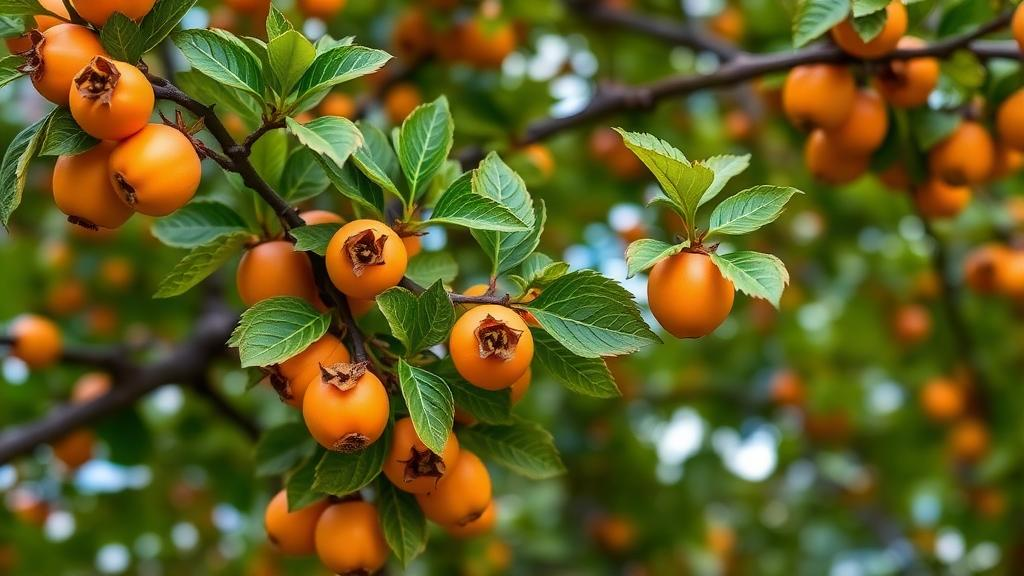
Copper nanoparticles are among the most versatile tools in modern nanoscience, prized for their antimicrobial power, catalytic efficiency, and potential in cancer therapy. Yet producing them has long depended on toxic reagents, high temperatures, and energy-hungry industrial processes. A new review published in Discover Chemistry argues that an unlikely botanical ally, the genus Diospyros, the plant family that includes persimmon and the ebony tree, could change that. Researchers led by Pragya Gupta and Sanjay Kumar Bharti at Guru Ghasidas Vishwavidyalaya in India systematically analyzed how extracts from these plants can transform copper salts into functional nanoparticles under mild, environmentally benign conditions, and why the resulting particles may outperform their chemically synthesized counterparts.
The appeal of Diospyros lies in its extraordinary phytochemical arsenal. Leaves, bark, and fruit of these species are loaded with flavonoids such as quercetin and kaempferol, hydrolysable and condensed tannins, phenolic acids like gallic acid, and pentacyclic triterpenoids including betulin, lupeol, and betulinic acid. These molecules perform a remarkable double duty during synthesis. Their hydroxyl and carbonyl groups donate electrons to reduce copper(II) ions from precursor salts such as copper sulfate into metallic copper, cuprous oxide, or cupric oxide nanostructures. Simultaneously, the same biomolecules adsorb onto the freshly formed particle surfaces, forming a protective organic corona that prevents aggregation and, to some extent, shields the copper from rapid oxidation.
The synthesis itself follows the classic bottom-up logic of nanoparticle formation: reduction, nucleation, growth, and stabilization. When copper ions meet the extract, phenolic compounds are oxidized to quinone-like structures as they transfer electrons, a process often signaled by a visible color change. Supersaturation then triggers rapid nucleation, and the tiny copper clusters grow through coalescence and Ostwald ripening into particles typically ranging from 10 to 80 nanometers. Reaction parameters exert fine control over the outcome. Alkaline pH enhances the deprotonation of phenolics, accelerating reduction and yielding smaller, well-dispersed particles, while acidic conditions slow the process and favor larger, less stable products. Elevated temperature speeds nucleation and improves crystallinity, but excessive heat can degrade the very biomolecules responsible for capping.
The review illustrates this parameter sensitivity with striking species-specific examples. Diospyros malabarica, synthesized at alkaline pH 8 to 10 and 60 to 80 degrees Celsius, produces particles as small as 17.4 nanometers thanks to enhanced reduction kinetics. Diospyros vilosa, rich in tannins and processed at 70 to 80 degrees Celsius, yields an even finer 5 to 20 nanometer fraction. Diospyros lotus at near-neutral pH produces larger 20 to 50 nanometer particles stabilized by phenolic capping, while Diospyros kaki under moderate conditions delivers uniform 25 to 45 nanometer particles. These comparisons underscore a central message: nanoparticle characteristics are not accidental but emerge from the interplay between reaction conditions and each species’ distinctive phytochemical fingerprint.
Characterization studies reinforce this structure-property relationship. UV-visible spectroscopy reveals surface plasmon resonance bands for metallic copper nanoparticles in the 560 to 600 nanometer range, with Diospyros kaki leaf-mediated synthesis showing a distinct peak near 580 nanometers. Fourier-transform infrared spectroscopy identifies the hydroxyl, carbonyl, and aromatic signatures of the capping phytochemicals, and crucially, shifts in these peaks before and after synthesis provide direct evidence of coordination between copper and the biomolecules. X-ray diffraction confirms crystalline phases, distinguishing face-centered cubic metallic copper from monoclinic CuO, while transmission electron microscopy visualizes predominantly spherical particles wrapped in a thin organic layer. X-ray photoelectron spectroscopy adds definitive identification of oxidation states, revealing that many green-synthesized products are actually mixed-phase systems of Cu, Cu2O, and CuO.
That oxidation behavior is both a challenge and an opportunity. Metallic copper nanoparticles are inherently unstable, with high surface energy and a strong affinity for oxygen driving rapid conversion to cuprous and cupric oxide. The review notes that incomplete phytochemical capping often produces hybrid Cu/Cu2O/CuO systems, and that strategies such as inert-atmosphere synthesis, alkaline pH, and storage in oxygen-free conditions can preserve the metallic state. Interestingly, the oxidized phases are not merely defects; they possess distinct catalytic and biological properties that may be advantageous for specific applications, provided researchers precisely characterize and report what they have actually made.
The biomedical performance of these plant-derived particles is where the story becomes genuinely exciting. Diospyros-mediated copper nanoparticles have demonstrated dose-dependent cytotoxicity against cancer cell lines, with nanoparticles from Diospyros malabarica fruit extract showing an IC50 of 58.63 micrograms per milliliter against U87-MG glioblastoma cells, and related plant-mediated copper oxide nanoparticles generally falling in the 40 to 80 micrograms per milliliter range. The proposed mechanism centers on reactive oxygen species generation, which triggers DNA damage, cell-cycle arrest, mitochondrial dysfunction, cytochrome c release, and caspase activation, ultimately inducing apoptosis in malignant cells. Surface-bound betulinic acid, abundant in Diospyros, is known to promote this intrinsic apoptotic pathway, suggesting a synergistic partnership between the copper core and its phytochemical coating.
Antimicrobial results are equally compelling. Nanoparticles synthesized with Diospyros malabarica extract produced inhibition zones of 18.2 millimeters against Escherichia coli and 16.5 millimeters against Staphylococcus aureus, while Diospyros ebenum-derived particles leverage naphthoquinones and flavonoids that disrupt microbial cell walls and amplify oxidative stress. Beyond medicine, the particles show promise as green catalysts, degrading organic dyes such as methylene blue and rhodamine B with reported efficiencies of 85 to 95 percent within 120 minutes, and rapidly converting 4-nitrophenol to 4-aminophenol, a model reaction that positions them as low-cost alternatives to noble-metal catalysts.
The authors are candid about the obstacles standing between laboratory promise and real-world impact. A bibliometric analysis reveals the scale of the gap: a broad search for copper nanoparticles retrieves more than 218,000 documents, but combining the terms with plant extract and Diospyros narrows the field to roughly 158, with no clinical trials at all. Reproducibility suffers because phytochemical composition varies with species, season, and geography. Standardized synthesis and testing protocols are lacking, minimum inhibitory concentrations vary widely between studies, and most anticancer claims rest on in vitro monocultures without proper normal-cell controls. Long-term in vivo toxicity, pharmacokinetics, and biodistribution data remain scarce, and the paradoxical dual behavior of copper, antioxidant in chemical assays yet pro-oxidant in biological environments, demands more careful interpretation than many current studies provide.
Looking forward, the review charts a data-driven path to maturity. Artificial intelligence and machine learning could predict optimal synthesis conditions by linking phytochemical composition and reaction parameters to nanoparticle properties, enabling safe-by-design development. Hybrid nanocomposites such as CuO/ZnO and biofunctionalized systems may amplify synergistic effects through controlled ion release and improved interfacial interactions. The authors also spotlight Diospyros melanoxylon, the tendu tree of Indian forestry, as a conspicuously underexplored species whose rich tannin and triterpenoid profile suggests strong reducing and capping potential. If the field can deliver standardized protocols, rigorous biosafety evaluation, and scalable production, persimmon-derived copper nanoparticles could evolve from a curious green chemistry experiment into a credible platform for low-toxicity nanotherapeutics, antimicrobial coatings, and sustainable wastewater treatment.
Subject of Research: Green synthesis of copper nanoparticles using Diospyros plant extracts and their biomedical applications
Article Title: The current development in green synthesis of copper nanoparticles using Diospyros species: sustainable nanotechnology and biomedical applications
Article References: Gupta, P., Shukla, Y. K., Suryavanshi, A., & Bharti, S. K. (2026). The current development in green synthesis of copper nanoparticles using Diospyros species: sustainable nanotechnology and biomedical applications. Discover Chemistry, 3(1), Article 499. https://doi.org/10.1007/s44371-026-00937-6
Image Credits: AI Generated
DOI: 10.1007/s44371-026-00937-6
Keywords: green synthesis, copper nanoparticles, Diospyros, nanotechnology, phytochemicals, antimicrobial, anticancer, reactive oxygen species, sustainable chemistry, nanomedicine, catalysis, plant extracts
Cite Scienmag News
Bethany Barker. (October 7, 2026). Persimmon Trees Could Hold the Secret to Safer, Greener Copper Nanoparticles. Scienmag. https://scienmag.com/persimmon-trees-could-hold-the-secret-to-safer-greener-copper-nanoparticles/
Bethany Barker. "Persimmon Trees Could Hold the Secret to Safer, Greener Copper Nanoparticles." Scienmag, 7 October 2026, https://scienmag.com/persimmon-trees-could-hold-the-secret-to-safer-greener-copper-nanoparticles/. Accessed 7 October 2026.
Bethany Barker. "Persimmon Trees Could Hold the Secret to Safer, Greener Copper Nanoparticles." Scienmag. October 7, 2026. https://scienmag.com/persimmon-trees-could-hold-the-secret-to-safer-greener-copper-nanoparticles/


