


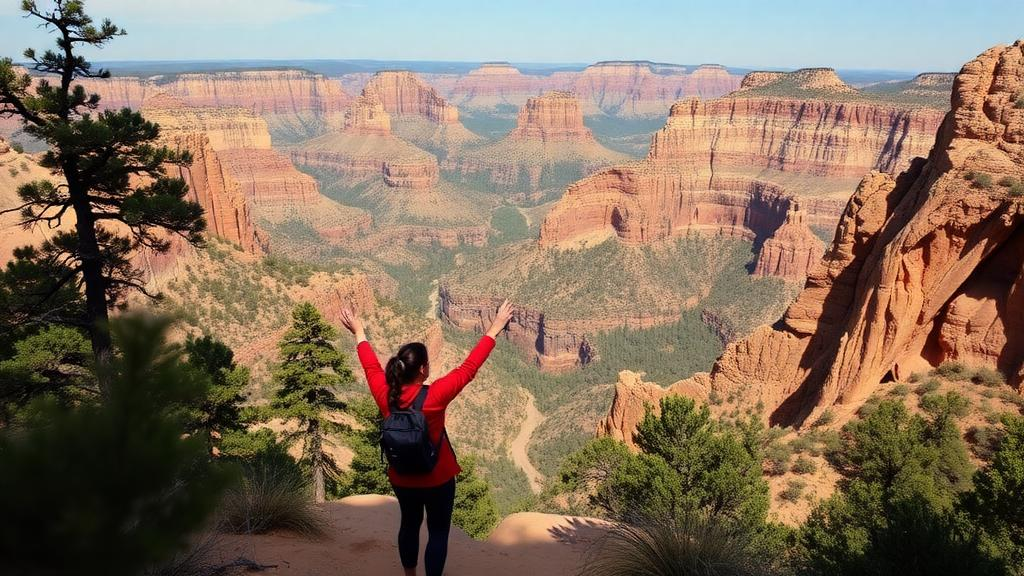
Every summer, millions of Americans set alarm clocks, open multiple browser tabs, and hover over refresh buttons in the hope of snagging one of the most coveted prizes in outdoor recreation: a national park reservation. Whether it is a timed-entry permit for Rocky Mountain National Park, a backcountry site in Yosemite, or a parking spot along Glacier’s Going-to-the-Sun Road, the competition has become fierce. A new study published in Nature Communications suggests that this digital scramble is not a level playing field. According to the research, visitors from higher-income neighborhoods are significantly more likely to win the race for the most competitive permits, raising uncomfortable questions about equity in how America’s public lands are allocated.
The study was conducted by Jonathan Hughes, an economist at the University of Colorado Boulder and a fellow at the Renewable and Sustainable Energy Institute. Hughes, who has spent years navigating these very reservation systems himself, examined eleven reservation systems spanning more than five million reservations across seven national parks, including Rocky Mountain, Glacier, and Yosemite. His central finding is striking: among systems that offered advance reservations, people who secured permits weeks or months ahead of their visits tended to come from ZIP codes with notably higher median household incomes than those who obtained permits on the same day or just one day in advance.
The income gap was most pronounced for the scarcest reservations. For highly competitive permits, where the majority of available tickets sell out within five minutes of release, successful reservation holders came from ZIP codes with median household incomes roughly three to six percent higher than those associated with less competitive reservations. That may sound like a modest difference, but across millions of transactions it represents a systematic skew in who gets access to parks that belong, by law and by founding ideal, to everyone. Hughes points to the organic act that established Yellowstone National Park, the nation’s first, which set the land apart as a public park for the benefit and enjoyment of the people, not just rich people.
The timing of the study is significant. Rocky Mountain National Park, one of the busiest in the system, is preparing to end its timed-entry permit system for the season on October 18. Under that system, during peak hours from mid-May to mid-October, visitors must obtain a permit costing two dollars, in addition to an entrance pass, to enter the park during a specific time window. The park releases some permits on the first day of each month for the remainder of that month, while another batch becomes available the evening before each entry date. This two-tier release structure is common across the National Park Service and is precisely where Hughes identified the equity gap.
The pressure on these systems has grown dramatically over the past decade. National parks in the United States have experienced steady increases in visitation since around 2013, and the COVID-19 pandemic pushed attendance even higher as Americans sought open-air recreation. In 2024, more than 331 million people visited national parks. That surge has placed real strain on park infrastructure: crowded roads, trampled ecosystems, overwhelmed restrooms, and emergency response operations complicated by gridlock. In response, many parks have turned to online reservation systems for parking, popular trails, and entry during peak periods, effectively rationing access through a combination of technology and advance planning.
Hughes’s interest in the question was personal as well as professional. He recalls arriving on campus early to take advantage of faster WiFi connections and running two computers simultaneously to maximize his odds of securing a permit. Those experiences prompted him to think about who is actually able to participate in such a process. Not everyone, he notes, can plan trips months in advance, is comfortable navigating online booking platforms, or has access to a fast and reliable internet connection. The reservation race, in other words, rewards resources that are unevenly distributed: flexible schedules, digital literacy, and the financial security to commit to a trip long before it happens.
The new findings build on Hughes’s earlier research into river permit systems in the American West, which govern access to popular boating and fishing stretches through a combination of lotteries and advance reservation systems. In that work, he found that people who secured permits through advance reservation tended to have higher incomes than those who obtained them through lotteries. The parallel is telling. Advance reservation systems, by design, favor those with the foresight, flexibility, and technical skill to act the moment bookings open. Lotteries, by contrast, randomize the outcome and appear to distribute access more evenly across income groups.
The mechanism behind the bias is likely a combination of factors, Hughes suggests. Higher-income visitors tend to have more flexibility to plan trips months ahead, whether because their jobs allow predictable vacation scheduling or because they can absorb the risk of a nonrefundable booking. They are also more familiar with the intricacies of reservation systems, knowing exactly when permits are released and how to move quickly when they are. And they tend to be more tech-savvy, with better devices, faster connections, and greater comfort competing in a five-minute digital sprint. Each of these advantages compounds the others, producing the measurable income gradient Hughes observed across the five million reservations in his dataset.
The implications for park managers are considerable. As the National Park Service continues to adjust its reservation systems, Hughes argues that the findings could help administrators think differently about how permits are distributed. One option is to experiment with the balance between permits released months in advance and those released closer to the visit date, potentially giving spontaneous or less well-connected visitors a fairer shot. In some cases, he suggests, random lotteries may provide a more equitable alternative to first-come, first-served advance booking, echoing the pattern he documented in Western river systems. The goal is not to eliminate reservations, which have proven effective at managing crowds and protecting fragile resources, but to design them so that the benefits of access do not accrue disproportionately to the wealthy.
For Hughes, the issue ultimately goes to the heart of what national parks are meant to be. For many years, he notes, the people responsible for stewarding America’s public lands have worked to give everyone equal access, and any indication that some people have better access than others runs counter to that mission. Income, he cautions, is just one indicator; education, age, and race could also play a role in who succeeds in the reservation race, and those dimensions deserve further study. As parks grapple with record visitation and finite resources, the challenge will be to manage crowds without quietly converting shared national treasures into amenities reserved for those with the time, money, and technology to outcompete everyone else. The study, published in Nature Communications with the DOI 10.1038/s41467-026-76030-4, offers park managers a data-driven starting point for redesigning systems so that the benefit and enjoyment of the people extends to all of the people.
Subject of Research: Income-based inequality in national park reservation and permit systems
Article Title: Richer people have an edge when it comes to getting national park permits
Article References: Richer people have an edge when it comes to getting national park permits. (n.d.). Original publication
Image Credits: AI Generated
DOI: Not provided
Keywords: national parks, reservation systems, income inequality, Rocky Mountain National Park, timed-entry permits, Nature Communications, recreation equity, National Park Service, lotteries, outdoor recreation, Jonathan Hughes, public lands
Cite Scienmag News
Courtney Benton. (October 7, 2026). Wealthy Visitors Win the Race for Scarce National Park Permits, Study Finds. Scienmag. https://scienmag.com/wealthy-visitors-win-the-race-for-scarce-national-park-permits-study-finds/
Courtney Benton. "Wealthy Visitors Win the Race for Scarce National Park Permits, Study Finds." Scienmag, 7 October 2026, https://scienmag.com/wealthy-visitors-win-the-race-for-scarce-national-park-permits-study-finds/. Accessed 7 October 2026.
Courtney Benton. "Wealthy Visitors Win the Race for Scarce National Park Permits, Study Finds." Scienmag. October 7, 2026. https://scienmag.com/wealthy-visitors-win-the-race-for-scarce-national-park-permits-study-finds/


