


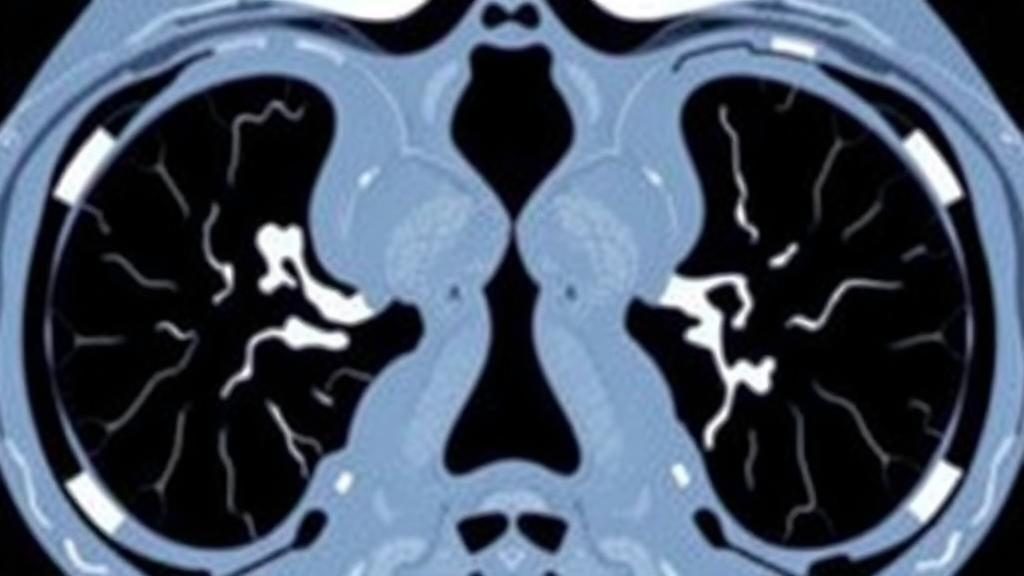
When the COVID-19 pandemic overwhelmed hospitals worldwide, high-resolution computed tomography of the chest became one of the most heavily deployed diagnostic weapons in the fight against SARS-CoV-2. The technique, which uses thin-slice X-ray acquisition and sophisticated reconstruction algorithms to visualize the lung parenchyma in exquisite detail, can reveal the ground-glass opacities, consolidations, and peripheral distributions characteristic of viral pneumonia well before some laboratory results return. Yet a new retrospective study from southern Iran suggests that this powerful tool was frequently deployed without a solid clinical justification, exposing patients to unnecessary radiation and imposing a measurable financial toll on an already strained health system.
The research, conducted at Shohadaye-Khalije-Fars Teaching Hospital in Bushehr and published in BMC Infectious Diseases, examined the medical records of 428 hospitalized patients with RT-PCR-confirmed SARS-CoV-2 infection admitted during 2020, all of whom underwent at least one chest HRCT scan during their stay. Across this cohort, a total of 463 HRCT examinations were performed. The researchers, led by Atefeh Esfandiari and Hedayat Salari of Bushehr University of Medical Sciences, judged each scan against the indications laid out in the Iranian national COVID-19 guidelines, using a structured checklist to extract clinical data from the charts. By these criteria, 188 of the 463 scans, or 40.6 percent, were classified as inappropriate.
The distinction between appropriate and inappropriate imaging rests on well-established principles of radiological stewardship. Reverse transcription polymerase chain reaction remains the reference standard for diagnosing SARS-CoV-2 infection, detecting viral RNA with high specificity. HRCT is meant to serve as a complementary tool, reserved for situations such as diagnostic uncertainty, suspected complications, or significant deterioration in a patient’s respiratory status. When a scan is ordered outside these documented indications, the patient absorbs ionizing radiation without a corresponding benefit, and the health system absorbs the cost. The American College of Radiology and similar bodies worldwide have long warned that indiscriminate imaging of this kind erodes both safety and economic efficiency.
To understand why so many scans fell outside guideline recommendations, the team turned to multivariable logistic regression, a statistical technique that isolates the independent effect of each potential predictor while controlling for the others. The results were striking. The strongest driver of inappropriate ordering was symptom duration of seven days or less at the time the scan was requested, with an adjusted odds ratio of 47.15 and a p-value below 0.001. In practical terms, patients scanned very early in the course of illness were dramatically more likely to have been imaged without a guideline-supported reason, a pattern consistent with clinicians reaching for CT before the disease’s characteristic radiological evolution had even had time to develop.
Two other independent predictors emerged from the analysis. Requests originating from hospital-based general practitioners working in the emergency department carried an adjusted odds ratio of 9.64 for inappropriateness, compared with requests from subspecialists, suggesting that the ordering physician’s level of training shaped adherence to imaging criteria. Patient age also mattered: those younger than 30 years faced an adjusted odds ratio of 8.97 for receiving an inappropriate scan relative to patients older than 65. Younger patients with COVID-19 generally have milder disease and lower baseline risk, which may explain why imaging them often lacked a defensible clinical indication, yet the scanners were still frequently rolled out.
Repeat imaging added another layer of concern. Among the 35 repeat HRCT examinations performed during the study period, 12 were judged inappropriate. Serial chest CT is sometimes justified to track disease progression or response to therapy, but each additional scan compounds the cumulative radiation dose. In the context of a respiratory illness where many follow-up scans yield little actionable information, the finding underscores how easily a resource-intensive test can become routine rather than reasoned.
The economic analysis translated these clinical lapses into monetary terms, calculated from three distinct perspectives. The unnecessary financial burden attributable to inappropriate HRCT utilization was estimated at 56,047,000 Iranian rials, approximately 2,156 US dollars, borne by patients themselves. From the governmental healthcare system perspective, the burden rose to 182,360,000 rials, roughly 7,014 US dollars. Under the private tariff, the figure climbed to 328,812,000 rials, or about 12,646 US dollars. While these sums may appear modest in absolute global terms, they represent pure waste, expenditure on imaging that delivered no clinical value, and they scale rapidly when projected across the thousands of hospitals and millions of admissions that defined the pandemic era.
The study’s methodology deserves attention for what it reveals about health services research during public health emergencies. As a retrospective, analytical, cross-sectional investigation conducted in 2022, it reviewed records rather than prospectively guiding care, which means the findings describe practice as it happened rather than testing an intervention. Descriptive statistics and chi-square or Fisher’s exact tests were used to compare groups, and the appropriateness judgment depended on documented clinical indications in the chart, an approach that ties the assessment to the paper trail each ordering clinician left behind. The work was approved by the ethics committee of Bushehr University of Medical Sciences, with informed consent waived due to the retrospective design and all patient data fully anonymized.
Why does this matter beyond a single hospital in Bushehr? The pandemic placed unprecedented pressure on diagnostic infrastructure everywhere, and the temptation to image broadly, to see what the lungs looked like rather than to answer a specific clinical question, was felt in emergency departments across the globe. Guidelines from national health authorities and professional societies consistently urged restraint, recommending CT primarily when RT-PCR results were unavailable or discordant with clinical findings, or when complications were suspected. The Iranian data provide a quantified case study of what happens when that restraint slips: more than four in ten scans ordered without indication, a clear gradient of risk tied to early symptom duration, junior ordering patterns, and young age, and a measurable bill attached to every unnecessary exposure.
The authors conclude that strengthening adherence to evidence-based imaging indications could reduce unnecessary utilization without compromising clinical care. Their findings point toward practical remedies: decision-support tools embedded in electronic ordering systems, clearer escalation pathways that involve subspecialist judgment before advanced imaging, and audit-and-feedback mechanisms that show clinicians how their ordering behavior compares with guideline expectations. As health systems worldwide continue to digest the lessons of COVID-19, the Bushehr study offers a reminder that the cost of a pandemic is measured not only in lives and lockdowns but also in the quiet accumulation of tests that were never needed, doses of radiation that were never justified, and funds that could have strengthened care elsewhere.
Subject of Research: Clinical appropriateness and economic burden of high-resolution chest CT scanning in hospitalized COVID-19 patients
Article Title: Evaluating the clinical appropriateness of high-resolution chest CT scans in hospitalized patients with COVID-19 and the economic burden: a retrospective study in southern Iran
Article References: Esfandiari, A., Amiri, B., Abbasi, F., Esfandiari, S., & Salari, H. (2026). Evaluating the clinical appropriateness of high-resolution chest CT scans in hospitalized patients with COVID-19 and the economic burden: a retrospective study in southern Iran. BMC Infectious Diseases. https://doi.org/10.1186/s12879-026-14582-y
Image Credits: AI Generated
DOI: 10.1186/s12879-026-14582-y
Keywords: COVID-19, SARS-CoV-2, high-resolution computed tomography, HRCT, RT-PCR, medical imaging, imaging appropriateness, healthcare costs, radiation exposure, Iran, retrospective study, clinical guidelines
Cite Scienmag News
Ophelia Keating. (October 6, 2026). Four in Ten COVID-19 Chest CT Scans Were Medically Unnecessary, Iranian Study Finds. Scienmag. https://scienmag.com/four-in-ten-covid-19-chest-ct-scans-were-medically-unnecessary-iranian-study-finds/
Ophelia Keating. "Four in Ten COVID-19 Chest CT Scans Were Medically Unnecessary, Iranian Study Finds." Scienmag, 6 October 2026, https://scienmag.com/four-in-ten-covid-19-chest-ct-scans-were-medically-unnecessary-iranian-study-finds/. Accessed 6 October 2026.
Ophelia Keating. "Four in Ten COVID-19 Chest CT Scans Were Medically Unnecessary, Iranian Study Finds." Scienmag. October 6, 2026. https://scienmag.com/four-in-ten-covid-19-chest-ct-scans-were-medically-unnecessary-iranian-study-finds/


