


Microplastics have become one of the most ubiquitous contaminants on the planet, and a new systematic review has now assembled the most detailed picture yet of where they accumulate in China’s surface waters and how much danger they pose. Researchers at Northwest University in Xi’an analyzed data from 40 eligible studies published between January 2014 and March 2026, spanning rivers, lakes, reservoirs, and estuarine systems across the country. By combining four complementary assessment frameworks—the Pollution Load Index, the Potential Ecological Risk Index, Species Sensitivity Distribution modeling, and human health risk models including the Target Hazard Quotient and Cancer Risk calculations—the team built a multi-dimensional risk portrait that goes far beyond simple measurements of plastic abundance. Their findings, published in Environmental Geochemistry and Health, reveal a contamination landscape defined less by uniform spread than by sharp regional contrasts, with pollution hotspots clustered in places that few members of the public would expect.
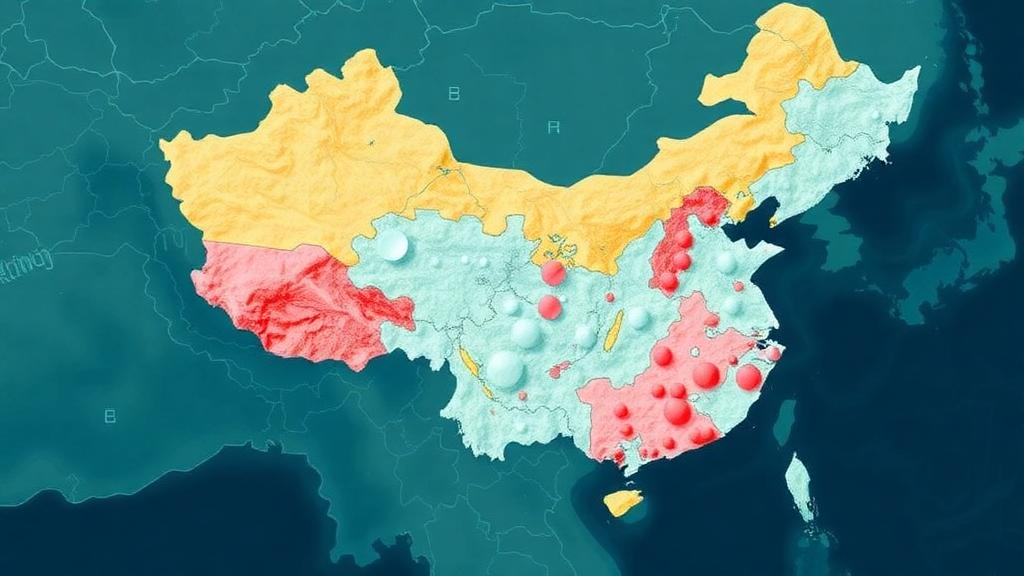
The most striking result is the pronounced spatial heterogeneity of microplastic contamination. Rather than concentrating exclusively around the megacities of the eastern seaboard, the highest burdens appeared in three distinct zones: the inland rivers of northwestern China, the industrialized basins of the north, and the densely populated southeastern coast. This pattern challenges the intuitive assumption that plastic pollution simply tracks population density. In arid northwestern river systems, low water flows and limited dilution capacity can concentrate particles that would be dispersed in larger rivers, while northern industrial basins receive effluent from intensive manufacturing and agricultural plastic use. Coastal southeastern waters, meanwhile, absorb a combination of urban runoff, aquaculture debris, and riverine transport from vast upstream catchments. The review’s authors emphasize that these hotspots require targeted monitoring, since average national figures can mask severe local problems.
Physically, the particles tell a consistent story across regions. Fibers dominated the assemblages, accounting for between 47.6 and 59.5 percent of all microplastics recorded, a signature strongly associated with laundry wastewater, fishing gear, and the degradation of synthetic textiles. Even more consequential is the size profile: particles smaller than one millimeter made up 62.8 percent of the total. This matters because smaller particles are more readily ingested by zooplankton, filter feeders, and fish larvae, and they travel farther through water columns and food webs. Fiber morphology also affects settling behavior; research cited in the review shows that the elongated shape and low density of many fibers keeps them suspended longer, extending their exposure to pelagic organisms before they eventually settle into sediments or are flushed seaward.
Polymer identification added another layer of insight. Polyethylene, at 25.5 percent, and polypropylene, at 23.4 percent, together accounted for nearly half of all identified plastics, reflecting their dominance in packaging, single-use products, and agricultural films. But the polymer that most alarmed the risk assessors was polyvinyl chloride. Although PVC was less abundant, its chemical composition—particularly the chlorine content and the plasticizers and additives it carries—earns it a high hazard score in polymer toxicity rankings. That combination of moderate prevalence and high intrinsic toxicity proved decisive in the ecological risk calculations, driving the most severe risk classifications in the analysis.
The Pollution Load Index, a tool originally developed for heavy metal assessment and adapted here for plastics, classified 62.5 percent of the studied basins as having low pollution levels, which sounds reassuring at first. Yet 5 percent of basins fell into the heavy pollution category, and the distribution of those heavily polluted systems did not follow any simple geographic logic. The Potential Ecological Risk Index, which weights abundance by polymer hazard, painted a similarly nuanced picture: 67.6 percent of basins showed low ecological risk, but 5.9 percent exhibited extremely high risk, and PVC toxicity was the decisive factor in those worst-case basins. The divergence between the two indices illustrates a central principle of modern contaminant assessment—the most dangerous waterway is not necessarily the one with the most plastic, but the one with the most hazardous plastic.
To translate contamination into consequences for aquatic life, the team employed Species Sensitivity Distribution modeling, a statistical framework that integrates toxicity data across many species to estimate a concentration below which most organisms are protected. The resulting predicted no-effect concentration was 129.1 particles per liter. Comparing measured environmental concentrations against this threshold allowed the researchers to identify waters where sensitive species, from the water flea Daphnia magna to benthic insect larvae, face meaningful physiological stress. Laboratory studies underpinning this approach have documented growth inhibition and oxidative stress in common carp larvae exposed to PVC microparticles, uptake in mussels and lugworms under natural conditions, and adverse effects on freshwater invertebrates that anchor aquatic food webs. When the foundation of the food web is stressed, the effects propagate upward to fish, birds, and ultimately the fisheries and water supplies that human communities depend on.
The human health dimension of the analysis will likely draw the most public attention. Under the assumed exposure scenarios modeled in the study, the Target Hazard Quotient came out at 0.019, well below the threshold of 1 that typically signals concern for non-cancer hazards. The estimated Cancer Risk was 1.32 multiplied by 10 to the power of negative 5, a figure that sits near the lower boundary of the ranges regulatory agencies generally consider acceptable. The authors are careful to frame these numbers as scenario-dependent estimates rather than predictions of individual outcomes. Exposure assumptions about water consumption, dietary intake, and particle transfer into food remain uncertain, and the science of microplastic toxicology is still maturing. Nevertheless, the estimates provide a quantitative baseline that can be updated as better exposure and toxicity data emerge, and they suggest that, at current levels, the population-scale health burden is not acute but warrants continued surveillance.
What makes this review methodologically significant is its insistence on triangulation. Any single risk index can mislead: abundance-based indices ignore polymer chemistry, hazard-based indices ignore exposure reality, and health models rest on contested assumptions about dose. By running four frameworks in parallel on the same dataset, the researchers exposed where the methods agree and where they diverge, producing a more defensible basis for policy. The approach also highlights gaps in the underlying literature. Sampling protocols varied widely across the 40 studies, detection methods ranged from visual sorting to spectroscopy, and reporting standards differed enough that harmonization remains an urgent need. The authors note that no new datasets were generated in the study itself; its value lies in synthesis, which means its conclusions are only as strong as the standardized future monitoring it is meant to inspire.
The practical implications are already visible. Hotspot basins identified in the review—particularly those with heavy pollution loads or extreme ecological risk—become natural priorities for intervention, whether through improved wastewater treatment capable of capturing fibers and fine particles, restrictions on high-hazard polymers such as PVC in disposable applications, or agricultural plastic film recovery programs in the northwest. China’s national attention to plastic pollution has grown considerably over the past decade, and a spatially explicit risk map gives regulators a rational basis for allocating limited enforcement resources. For the rest of the world, the study offers a template: as microplastic monitoring expands globally, the combination of systematic review, multi-model risk assessment, and hotspot identification demonstrated here may become the standard against which national plastic pollution strategies are judged. The particles are small, but the analytical machinery now trained on them is anything but.
Subject of Research: Microplastic contamination and ecological and human health risk assessment in Chinese surface waters
Article Title: Occurrence, distribution, and ecological risk of microplastics in Chinese surface waters: a systematic review and multi-model assessment
Article References: Zhou, R., Zhang, Y., Shan, Z., & Gan, M. (2026). Occurrence, distribution, and ecological risk of microplastics in Chinese surface waters: a systematic review and multi-model assessment. Environmental Geochemistry and Health, 48(14), Article 560. https://doi.org/10.1007/s10653-026-03458-4
Image Credits: AI Generated
DOI: 10.1007/s10653-026-03458-4
Keywords: microplastics, surface water, China, ecological risk, polyvinyl chloride, polyethylene, polypropylene, species sensitivity distribution, pollution load index, human health risk, fibers, systematic review
Cite Scienmag News
Sloane Callahan. (October 6, 2026). Microplastics Map of China’s Waters Reveals Hotspots and Hidden Risks. Scienmag. https://scienmag.com/microplastics-map-of-chinas-waters-reveals-hotspots-and-hidden-risks/
Sloane Callahan. "Microplastics Map of China’s Waters Reveals Hotspots and Hidden Risks." Scienmag, 6 October 2026, https://scienmag.com/microplastics-map-of-chinas-waters-reveals-hotspots-and-hidden-risks/. Accessed 6 October 2026.
Sloane Callahan. "Microplastics Map of China’s Waters Reveals Hotspots and Hidden Risks." Scienmag. October 6, 2026. https://scienmag.com/microplastics-map-of-chinas-waters-reveals-hotspots-and-hidden-risks/


