


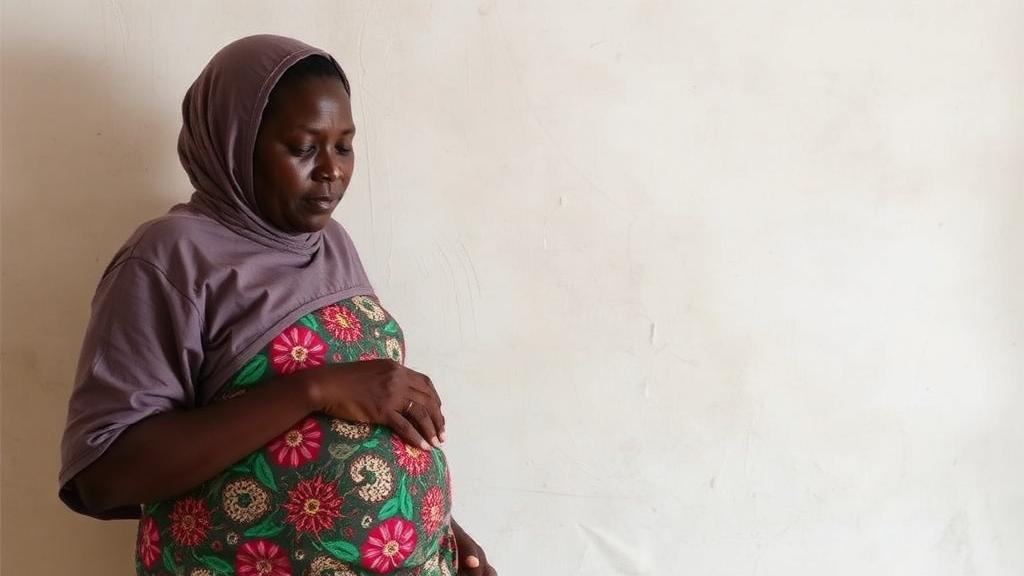
When the COVID-19 pandemic swept across the globe, much of the scientific attention focused on the virus itself: its transmission, its variants, and its devastating toll on hospitals in wealthy nations. Far less was known about how the crisis affected expectant mothers in sub-Saharan Africa, where health systems are often stretched thin even in ordinary times. A new study published in BMC Public Health now offers one of the most detailed portraits to date of maternal psychosocial health in Ghana during the pandemic, and its findings carry uncomfortable implications for how the world prepares for the next global emergency.
The research, led by Ruthfirst E. A. Ayande of the University of Massachusetts Amherst and Yale School of Medicine, together with colleagues at the University of Ghana and the University of Massachusetts Amherst, took a deliberately layered approach. The team conducted a sequential explanatory mixed-methods study, meaning they first gathered quantitative survey data and then followed up with in-depth interviews to probe what the numbers actually meant in women’s lived experiences. Between June 2021 and January 2022, the researchers administered an online survey to Ghanaian mothers whose children were between zero and fifteen months old, meaning every participant had been pregnant at some point during the pandemic’s most disruptive phases.
The quantitative core of the study rested on two validated psychological instruments. The Coronavirus Anxiety Scale, or CAS, measures dysfunctional anxiety specifically linked to the coronavirus, capturing physiological symptoms of fear such as dizziness, sleep disturbance, and intrusive somatic reactions when thinking about the virus. The Obsession with Coronavirus Scale, or OCS, assesses repetitive, intrusive thinking about COVID-19, a cognitive pattern that can signal pathological preoccupation rather than ordinary concern. Mothers were asked to recall their levels of anxiety and obsessive worry while they were pregnant during the pandemic, a retrospective design the authors acknowledge requires careful interpretation but which nonetheless provides rare insight into a period that can never be studied prospectively again.
The results were striking. Among the 221 mother-child dyads analyzed, eleven percent of mothers showed probable dysfunctional coronavirus-related anxiety, and a full thirty-three percent exhibited probable dysfunctional thinking about COVID-19. In other words, roughly one in three women in the sample experienced obsessive, intrusive thought patterns about the pandemic while carrying their children. For comparison, studies from high-income countries during the same period reported rising rates of maternal anxiety and depression, but comparable data from sub-Saharan Africa had been almost entirely absent. This study helps close that gap, and the prevalence figures suggest that the psychological burden in Ghana was far from negligible.
One of the most technically interesting findings concerns health literacy. The researchers measured participants’ health literacy using the All Aspects of Health Literacy scale, an instrument that captures not just the ability to read health information but the capacity to appraise, communicate about, and apply it. In statistical models adjusted for baseline demographic characteristics, higher health literacy scores corresponded with reduced coronavirus anxiety scores. Specifically, every one-point increase in AAHLS scores was associated with a decrease of 0.43 points on the CAS, with a ninety-five percent confidence interval spanning from negative 0.80 to negative 0.05. The confidence interval excludes zero, indicating a statistically reliable protective association. The interpretation is intuitive but profound: women who were better equipped to find, understand, and evaluate health information appear to have been somewhat buffered against the most dysfunctional forms of pandemic anxiety.
Economic disruption told the opposite story. When the researchers adjusted for health literacy as a main covariate, mothers who reported losing jobs or wages during the pandemic scored significantly higher on the Coronavirus Anxiety Scale, with a beta coefficient of 1.30 and a confidence interval from 0.07 to 2.53. This finding underscores that pandemic stress was not merely a matter of information or cognition; it was rooted in material precarity. For a pregnant woman in Ghana, losing income during a global health crisis meant facing both the immediate threat of infection and the looming prospect of being unable to feed her family or access antenatal care. The statistical signal of economic loss, robust even after accounting for psychological and demographic factors, suggests that financial protection policies are inseparable from mental health protection during crises.
A third quantitative finding was more unexpected. Participants who reported exercising during the pandemic had higher OCS scores than those who did not, with a beta of 1.08, a confidence interval spanning negative 0.01 to 2.16, and a p-value of exactly 0.05, sitting right at the conventional threshold of statistical significance. The authors are appropriately cautious here. The association could reflect reverse causation, in which women already preoccupied with the virus turned to exercise as a coping strategy, or it could indicate that exercise heightened awareness of bodily symptoms, fueling health-related rumination. Either way, the finding complicates the simple assumption that physical activity is uniformly protective for mental health during crises and points to the need for longitudinal research that can disentangle cause from effect.
The qualitative arm of the study gave the numbers human texture. Eleven women participated in in-depth interviews about their experiences of pregnancy and childbirth during the pandemic, and the team analyzed the transcripts thematically using the social support networks in health framework. Three broad domains of themes emerged: COVID-19 pandemic impacts, COVID-19 adaptations, and social support networks. The framework proved particularly valuable because it situates individual psychological responses within the web of relationships, institutions, and communities that either cushion or amplify stress. Women described how lockdowns and fear of infection disrupted routine antenatal visits, how traditional sources of support such as extended family and community gatherings were curtailed, and how they improvised new ways of obtaining information and reassurance.
The convergence of the quantitative and qualitative strands yields a coherent picture. Pandemic stress among pregnant Ghanaian women was shaped by an intersection of three forces: psychosocial health, social support, and health literacy. Women with stronger health literacy could filter the flood of misinformation and alarming news; women with intact social networks could share burdens and practical help; and women who lost livelihoods faced compounded anxiety that neither information nor relationships could fully offset. The authors argue that this complexity demands a correspondingly sophisticated policy response, one that treats maternal mental health not as a luxury to be addressed after the epidemiological emergency is controlled, but as an integral component of pandemic preparedness from the outset.
The practical recommendations that flow from the study are concrete. The researchers point to telehealth and mobile health platforms as promising vehicles for maternal mental health screening, an approach that could reach women even when clinic visits are disrupted by lockdowns or fear of infection. They also call for community-based health literacy resources, building on the finding that higher health literacy was associated with lower dysfunctional anxiety. Given that the study relied on a conveniently sampled online survey and retrospective recall, the authors acknowledge limitations and emphasize the need for further research examining the longer-term effects of the pandemic on mothers and children. Yet even with those caveats, the message is clear: the next global crisis will inevitably collide with pregnancy again, and the evidence from Ghana shows that how societies protect women’s minds, incomes, and information environments during that collision will shape the health of an entire generation.
Subject of Research: Maternal psychosocial health and COVID-19 pandemic stressors among pregnant women in Ghana
Article Title: A retrospective mixed methods analysis of maternal psychosocial health during the COVID-19 pandemic in Ghana: lessons for future public health crises
Article References: Ayande, R. E. A., Otoo, G. E., Pearlman, J., Gonzalez-Nahm, S., & Carbone, E. T. (2026). A retrospective mixed methods analysis of maternal psychosocial health during the COVID-19 pandemic in Ghana: lessons for future public health crises. BMC Public Health. https://doi.org/10.1186/s12889-026-29740-9
Image Credits: AI Generated
DOI: 10.1186/s12889-026-29740-9
Keywords: COVID-19, maternal health, mental health, Ghana, health literacy, pregnancy, anxiety, social support, public health, mixed methods, pandemic preparedness, sub-Saharan Africa
Cite Scienmag News
Harold Sullivan. (October 4, 2026). Pregnancy Under Pandemic: Ghanaian Mothers Reveal the Hidden Mental Health Cost of COVID-19. Scienmag. https://scienmag.com/pregnancy-under-pandemic-ghanaian-mothers-reveal-the-hidden-mental-health-cost-of-covid-19/
Harold Sullivan. "Pregnancy Under Pandemic: Ghanaian Mothers Reveal the Hidden Mental Health Cost of COVID-19." Scienmag, 4 October 2026, https://scienmag.com/pregnancy-under-pandemic-ghanaian-mothers-reveal-the-hidden-mental-health-cost-of-covid-19/. Accessed 4 October 2026.
Harold Sullivan. "Pregnancy Under Pandemic: Ghanaian Mothers Reveal the Hidden Mental Health Cost of COVID-19." Scienmag. October 4, 2026. https://scienmag.com/pregnancy-under-pandemic-ghanaian-mothers-reveal-the-hidden-mental-health-cost-of-covid-19/


