


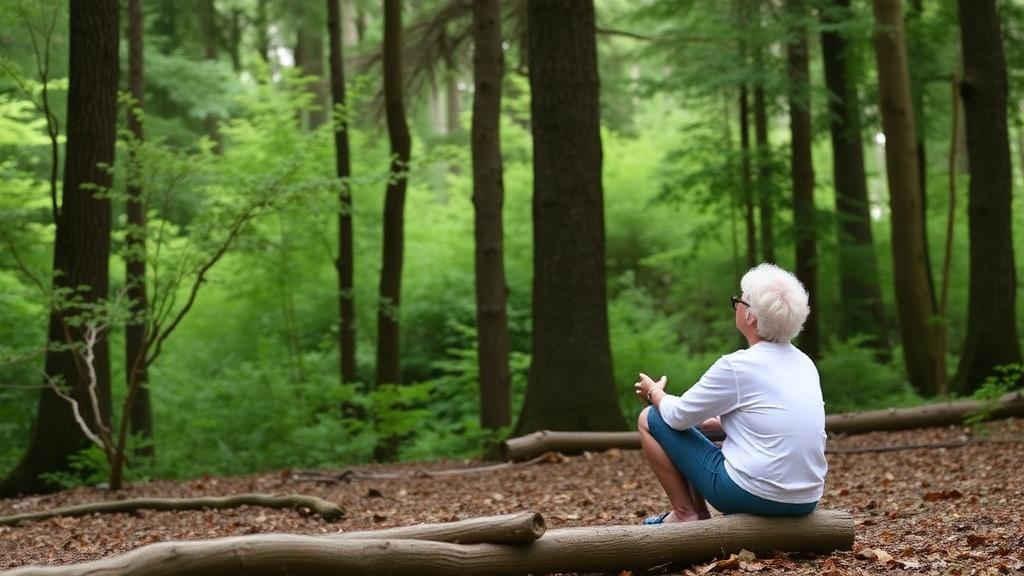
In a quiet forest in Thailand, a group of adults over the age of fifty walked slowly among the trees, paying attention to the sound of leaves, the texture of bark, and the smell of damp earth. For many of them, this was more than a leisurely stroll. It was the first time in years that they had felt genuinely safe, seen, and at peace. A new qualitative study published in BMC Psychology suggests that forest bathing, the practice of mindfully immersing oneself in a forest environment, may offer meaningful psychological benefits for LGBTQIA+ middle-aged and older adults, a population that researchers describe as facing compounded vulnerabilities from both aging and minority stress.
The research, led by Potjanee Kamolrat of the International College for Sustainability Studies at Srinakharinwirot University, together with Nanchatsan Sakunpong of the university’s Behavioral Science Research Institute and Sarah Abboud of the College of Nursing at the University of Illinois Chicago, set out to explore a striking gap in the scientific literature. While nature-based interventions have been studied extensively in general populations, almost nothing is known about how they affect LGBTQIA+ people as they age, particularly in Southeast Asia, where culturally relevant, non-clinical mental health supports for this community remain scarce. The team designed a program of nine forest bathing sessions and then carefully documented what participants experienced psychologically.
The study involved 24 LGBTQIA+ adults aged 50 years and older who completed the full series of forest bathing sessions. After the program ended, the researchers conducted four focus group discussions to capture participants’ reflections in depth. To strengthen the reliability of their findings, they supplemented the focus groups with field notes written during the sessions, personal journals kept by participants, and posts shared in a LINE group chat that the cohort used to communicate between sessions. This multi-source approach allowed the team to triangulate the data, comparing what people said in group discussions against what they wrote privately and shared digitally in real time.
Analysis followed the established method of thematic analysis, in which researchers use open coding to identify recurring patterns in qualitative data and then iteratively review and refine those codes into broader themes. Peer debriefing, in which colleagues outside the immediate analysis review the interpretive process, was used to enhance trustworthiness. The result was a remarkably rich map of psychological experience: seven distinct themes emerged from the data, painting a picture of how sustained contact with nature interacted with the participants’ identities, histories, and social lives.
The first two themes concerned well-being in its most fundamental dimensions. Participants reported improvements in mental well-being, describing reductions in psychological distress and a greater sense of calm and emotional balance, alongside improvements in physical well-being, reflecting the embodied nature of the practice. Forest bathing is not simply exercise, though walking is part of it; it is a structured sensory engagement with a natural environment, and the participants’ accounts suggest that this combination of gentle physical activity and mindful sensory attention produced benefits that they perceived in both body and mind. For a population in which social isolation and ageism can exacerbate mental health challenges, these perceived improvements carry considerable practical significance.
The third theme, coping and emotional management, points to a mechanism that may explain why the practice was so resonant. Many LGBTQIA+ older adults have spent decades navigating discrimination, concealment, and exclusion, and the psychological residue of those experiences often surfaces in later life as heightened distress. Participants in the study described the forest sessions as a space in which they could process difficult emotions and develop strategies for managing them. The natural environment, in this sense, functioned not as an escape from their histories but as a supportive setting in which those histories could be acknowledged and worked through at their own pace.
Perhaps the most striking findings concern identity and connection. The fourth theme, valuing LGBTQ+ identity, indicates that the program did more than reduce distress; it appeared to strengthen participants’ relationship with their own identities. The fifth theme, perceived social support, and the seventh, deep communication and connection, suggest that the group format of the sessions fostered bonds among participants that extended beyond the forest itself, as evidenced by the ongoing conversations in the LINE group. For middle-aged and older LGBTQIA+ adults, many of whom report limited access to inclusive care and weakened family or community networks, the emergence of a supportive peer community through a nature-based intervention is a notable outcome.
Interestingly, the sixth theme revealed an unexpected dimension: environmental conservation awareness. Participants developed a heightened sense of care for the forests they had come to know, suggesting that the psychological benefits of nature immersion may be reciprocal. As people feel healed by an environment, they appear more inclined to value and protect it. This finding aligns with a broader body of environmental psychology research showing that direct experiences in nature cultivate pro-environmental attitudes, but its emergence among older sexual and gender minority adults adds a new dimension to that literature and hints at potential co-benefits for conservation engagement in community-based programs.
Beyond documenting psychological experiences, the researchers also asked participants to evaluate the program itself. The study reports that participants identified strengths of the forest bathing program and offered suggestions for improvement, feedback that the authors present as essential for refining future iterations. This evaluative component matters because the ultimate ambition of the research extends past the 24 participants involved. The authors argue that forest bathing represents a promising, inclusive strategy for promoting psychological well-being among LGBTQIA+ older adults and offer their findings as insights for integrating such interventions into public health services for marginalized aging populations. In Thailand and across Southeast Asia, where formal mental health services for LGBTQIA+ elders are limited, a low-cost, community-embedded, non-clinical intervention could fill a critical gap.
The study’s design carries both strengths and limitations worth noting. On the strengths side, the triangulation of focus groups, field notes, journals, and digital posts provides a unusually layered view of participant experience, and the peer debriefing process adds a check on interpretive bias. The study was also retrospectively registered with the Thai Clinical Trials Registry under registration number TCTR20240929005, and it received ethics approval from the Institutional Review Board of Srinakharinwirot University on July 1, 2024, under Protocol No. SWUEC-672263, with written informed consent obtained from all participants. As a qualitative study, however, it cannot quantify the magnitude of the psychological changes reported, and the experiences of 24 participants in Thailand may not generalize to all LGBTQIA+ aging populations. What it does establish, convincingly, is that when given the opportunity to bathe in the forest together, these adults experienced something they described as healing, and that the healing touched their minds, their bodies, their identities, and their connections to one another and to the living world around them.
Subject of Research: Psychological experiences of LGBTQIA+ middle-aged and older adults participating in forest bathing in Thailand
Article Title: Healing from nature: the psychological experiences of LGBTQIA+ middle-aged and older adults through forest bathing
Article References: Kamolrat, P., Sakunpong, N., & Abboud, S. (2026). Healing from nature: the psychological experiences of LGBTQIA+ middle-aged and older adults through forest bathing. BMC Psychology. https://doi.org/10.1186/s40359-026-05583-2
Image Credits: AI Generated
DOI: 10.1186/s40359-026-05583-2
Keywords: forest bathing, LGBTQIA+, older adults, mental health, nature-based intervention, qualitative research, thematic analysis, social support, minority stress, environmental psychology, Thailand, well-being
Cite Scienmag News
Glenn Wilkins. (October 4, 2026). Forest Bathing Emerges as a Powerful Mental Health Ally for Aging LGBTQIA+ Adults. Scienmag. https://scienmag.com/forest-bathing-emerges-as-a-powerful-mental-health-ally-for-aging-lgbtqia-adults/
Glenn Wilkins. "Forest Bathing Emerges as a Powerful Mental Health Ally for Aging LGBTQIA+ Adults." Scienmag, 4 October 2026, https://scienmag.com/forest-bathing-emerges-as-a-powerful-mental-health-ally-for-aging-lgbtqia-adults/. Accessed 4 October 2026.
Glenn Wilkins. "Forest Bathing Emerges as a Powerful Mental Health Ally for Aging LGBTQIA+ Adults." Scienmag. October 4, 2026. https://scienmag.com/forest-bathing-emerges-as-a-powerful-mental-health-ally-for-aging-lgbtqia-adults/


