


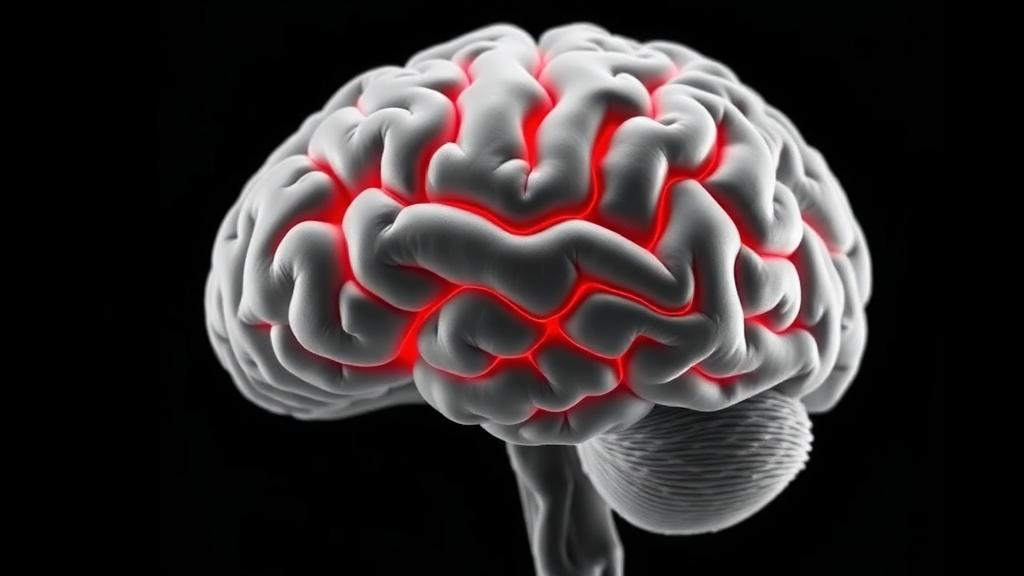
Long before functional imaging and optogenetics, the map of the human brain was drawn with scalpels, animal experiments, and fierce scientific argument. One of the most consequential of those early cartographers was Luigi Luciani, the Italian physiologist born in 1840 and died in 1919, whose experimental work on the cerebellum and on the functional organization of the cerebral cortex helped define how nineteenth-century neuroscience understood the brain as a set of localized but interacting systems. A new historical profile published in the Journal of Neurology by Andrew J. Larner of University College London and Stefano Sandrone of Imperial College London revisits Luciani’s career and places his achievements back into the European context in which they were made, offering modern readers a portrait of a scientist whose name is far less familiar today than his findings deserve.
Luciani belongs to the generation of researchers who transformed physiology from a philosophical pursuit into an experimental discipline. In the late 1870s, together with Augusto Tamburini, he carried out a landmark series of experimental investigations into the functions of the brain, published in the Rivista Sperimentale di Freniatria e di Medicina Legale. These studies were divided into two parts: the first, appearing in 1878, addressed what the authors called cortical psychomotor centers, and the second, published in 1879, examined cortical psychosensory centers. The terminology sounds archaic now, but the underlying question was strikingly modern: which regions of the cerebral cortex govern movement, and which govern sensation? At a time when the localization of function in the brain was one of the most contested issues in all of biology, Luciani and Tamburini were staking out a position that both cerebral movement and sensory processing had identifiable cortical seats.
That position was not universally held. The great British physiologist David Ferrier had produced influential mapping experiments suggesting specific cortical areas for sensory and motor functions, and the German school associated with figures such as Friedrich Goltz argued for a far more diffuse, equipotential organization of the cerebrum. Luciani’s work placed him firmly in the localizationist camp, but with an experimental rigor and a willingness to revise that distinguished him from dogmatic partisans. In 1884 he published an article in the journal Brain titled On the Sensorial Localization in the Cortex Cerebri, bringing his findings to an international readership, and in 1885 he co-authored with Giuseppe Seppilli a substantial Italian volume on the functional localizations of the brain. These publications show a researcher actively engaged in the transnational debate over brain function, contributing Italian experimental evidence to a conversation dominated by British and German laboratories.
Yet it is the cerebellum for which Luciani is best remembered, and rightly so. His experimental studies of cerebellar function, first summarized in 1884 in Linee Generali della Fisiologia del Cervelletto and then expanded in his 1891 monograph Il Cervelletto: Nuovi Studi di Fisiologia Normale e Patologica, were based on systematic ablation experiments in animals. By removing the cerebellum and carefully observing the resulting deficits over time, Luciani identified a characteristic triad of symptoms. The animals lost muscle tone, a condition now described as atonia or hypotonia; they lost strength and fatigued rapidly, a phenomenon he described as asthenia; and they showed profound disturbances of equilibrium and coordinated movement, what he termed ataxia. From these observations he inferred that the cerebellum normally contributes three functions to the nervous system: the maintenance of muscle tone, the regulation of nervous force or energy, and the coordination of movement and the sense of orientation.
The conceptual leap here is easy to miss from a modern vantage point. Today, textbooks describe the cerebellum as a comparator and timing machine, calibrating movement and contributing to cognitive and affective processing. Luciani’s triad anticipated key elements of this picture. His recognition that cerebellar damage produces not a single deficit but a coordinated constellation of tone, strength, and coordination failures, and that some of these deficits recover partially over time, pointed toward the idea that the cerebellum modulates rather than generates movement. That modulatory view, which distinguishes cerebellar function from the more direct motor commands of the cerebral cortex, remains central to cerebellar physiology. Luciani’s insistence on observing the evolution of deficits over days and weeks, rather than only in the immediate postoperative period, was itself methodologically important, because it separated acute shock effects from the lasting consequences of tissue loss.
Luciani did not work in isolation, and his conclusions drew immediate international scrutiny. When Ferrier published his own account of cerebellar physiology, Luciani responded in detail, publishing a corrective and reply in 1895 in the Rivista Sperimentale that took issue with Ferrier’s interpretation of the experimental evidence. The exchange, conducted across journals and languages, illustrates how nineteenth-century physiology advanced: through replication, dispute, and the slow accumulation of ablation data from different laboratories. Luciani’s standing was such that his major cerebellar monograph was translated into German, appearing in 1893 as Das Kleinhirn: Neue Studien zur Normalen und Pathologischen Physiologie, published in Leipzig. A German translation was the currency of scientific authority in that era, and its existence signals that Luciani’s findings had become part of the mainstream European physiological literature rather than a provincial Italian curiosity.
The historical study by Larner and Sandrone situates these achievements within the broader framework of Italian research at the end of the nineteenth century, a period when Italian laboratories were making decisive contributions to neuroscience. Luciani’s career intersected with the rise of experimental psychology and neurophysiology in Italy, and his publications in the Rivista Sperimentale di Freniatria, the journal that also carried early Italian work in psychiatry and legal medicine, show how tightly neurology, psychiatry, and physiology were interwoven at the time. The distinction between psychomotor and psychosensory cortical centers, the careful separation of cerebellar symptoms, and the engagement with Ferrier’s maps all reflect a researcher who saw brain function as a problem to be solved by experiment, not by doctrine. As Carmela Morabito argued in a 2000 study in the Journal of the History of the Neurosciences, Luciani’s work on the localization of brain functions must be understood within the context of European neurophysiology, where Italian research both absorbed and influenced the dominant currents of the field.
Why does Luciani matter to a readership in the 2020s? Part of the answer lies in the enduring nature of his questions. The tension between localized and distributed accounts of brain function has not disappeared; it has simply migrated to new technologies and new vocabularies, from lesion-deficit mapping in stroke patients to network neuroscience and whole-brain modeling. Luciani’s ablation experiments were, in effect, an early form of lesion analysis, and the logic he applied, that the function of a structure can be inferred from what is lost when the structure is removed and from how the system compensates over time, is the same logic that underlies modern neuropsychology and lesion-based inference in cognitive neuroscience. His observation of partial recovery after cerebellar damage likewise foreshadows contemporary interest in neural plasticity and compensation, topics that now drive rehabilitation research and brain-computer interface design.
There is also a lesson in the sociology of science embedded in Luciani’s story. His cerebellar triad entered the canon, but his name did not achieve the household status of a Sherrington, a Ferrier, or a Broca, particularly in the English-speaking world. Historical reappraisals such as the one by Larner and Sandrone serve as a corrective, reminding the field that its foundational ideas often emerged from laboratories and languages that later narratives tend to overlook. The 2026 profile, published in the Journal of Neurology as part of its Pioneers in Neurology series, received on 24 August 2026, revised on 29 August, accepted on 6 September, and published on 15 September 2026, forms part of a wider effort to restore the full geography of neuroscience’s past. For students of the cerebellum, for historians of physiology, and for anyone interested in how the brain’s division of labor was first charted, Luciani’s career offers a vivid case study in experimental rigor, international debate, and the long afterlife of good data. A century after his death, the three functions he assigned to the cerebellum, tone, force, and orientation, still read as a remarkably prescient sketch of what that small but mighty structure does for every movement we make.
Subject of Research: Historical profile of Italian physiologist Luigi Luciani and his contributions to cerebellar physiology and cortical localization of brain function
Article Title: Luigi Luciani (1840–1919)
Article References: Larner, A. J., & Sandrone, S. (2026). Luigi Luciani (1840–1919). Journal of Neurology, 273(10), Article 598. https://doi.org/10.1007/s00415-026-14136-x
Image Credits: AI Generated
DOI: 10.1007/s00415-026-14136-x
Keywords: Luigi Luciani, cerebellum, neurophysiology, brain localization, history of neuroscience, David Ferrier, cortical centers, ataxia, muscle tone, ablation experiments, Journal of Neurology, Italian physiology
Cite Scienmag News
Cassandra Pierce. (October 4, 2026). Luigi Luciani: The Italian Physiologist Who Taught Neuroscience How the Cerebellum Works. Scienmag. https://scienmag.com/luigi-luciani-the-italian-physiologist-who-taught-neuroscience-how-the-cerebellum-works/
Cassandra Pierce. "Luigi Luciani: The Italian Physiologist Who Taught Neuroscience How the Cerebellum Works." Scienmag, 4 October 2026, https://scienmag.com/luigi-luciani-the-italian-physiologist-who-taught-neuroscience-how-the-cerebellum-works/. Accessed 4 October 2026.
Cassandra Pierce. "Luigi Luciani: The Italian Physiologist Who Taught Neuroscience How the Cerebellum Works." Scienmag. October 4, 2026. https://scienmag.com/luigi-luciani-the-italian-physiologist-who-taught-neuroscience-how-the-cerebellum-works/


