


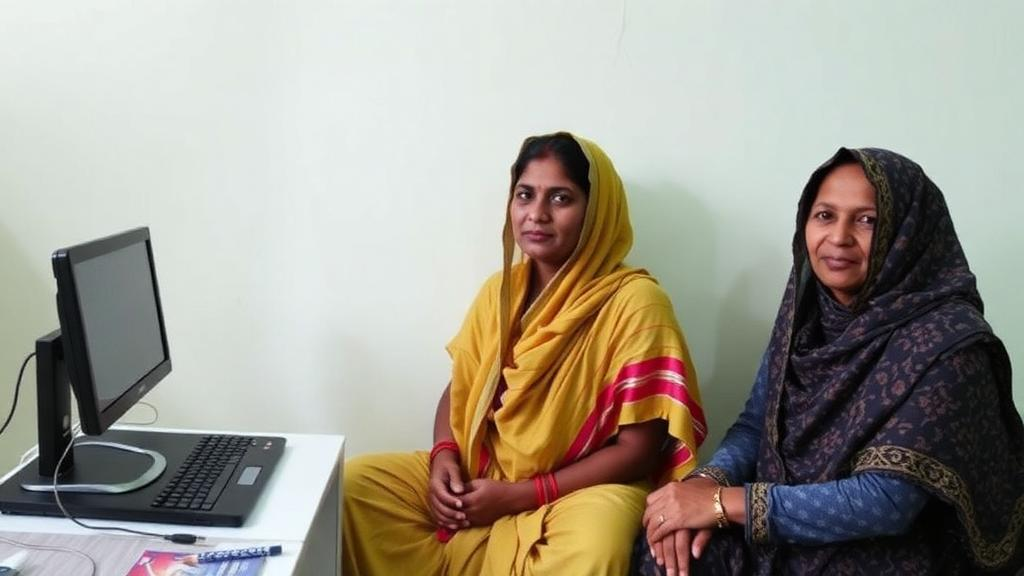
In the arid hills of Sirohi district in Rajasthan, India, a quiet experiment in remote healthcare has been delivering results that could reshape how medical services reach some of the world’s most isolated communities. A new study published in BMC Health Services Research reports that patients served by the Satellite Centre for Tribal Health and Research (STHR) in Abu Road expressed consistently high satisfaction with the telemedicine consultations they received, even as the service grappled with the practical realities of patchy internet connectivity in one of India’s most underserved regions. The findings, drawn from one of the larger patient-satisfaction datasets assembled for a rural telemedicine programme, offer a detailed portrait of what works, and what still needs fixing, when specialist care is delivered through a screen to people who might otherwise travel hours for a hospital appointment.
The research, led by a team from the Centre of Excellence for Tribal Health at the All India Institute of Medical Sciences (AIIMS) Jodhpur, took a mixed-method approach, combining a structured quantitative survey with open-ended questionnaires and focus group discussions. Between February 6, 2022, and May 31, 2024, a total of 4,570 tribal patients passed through the telemedicine centre. Of these, 3,704 patients, roughly 81 percent, completed the satisfaction survey, an exceptionally high response rate that lends considerable weight to the results. The instrument used was the Telehealth Satisfaction Survey, known as TeSS, a validated tool developed under the auspices of the International Society for Pharmacoeconomic and Outcomes Research, with responses recorded on a three-point Likert scale.
The demographic profile of the respondents reflects the population the centre was designed to serve. The median age of participants was 32 years, and 58.6 percent were male. These were patients seeking specialist consultations, in fields ranging from general medicine and dermatology to obstetrics, gynaecology and paediatrics, from consultants based at AIIMS Jodhpur, a tertiary teaching hospital located far from the tribal belt of southern Rajasthan. For many patients, the alternative to a teleconsultation would have been a long and costly journey to a district hospital or beyond, a burden that falls disproportionately on low-income households in remote areas.
On the quantitative side, the results were striking in their consistency. Satisfaction scores across the survey domains clustered at the upper end of the three-point scale, with the lowest score, 2.00, recorded for voice quality during consultations, and the highest, 2.31, for the courtesy of the telemedicine staff. In practical terms, this means that patients rated the human dimension of the service, the politeness and professionalism of the staff who facilitated their consultations, more highly than any technical aspect. The audio channel, by contrast, emerged as the weakest link, a finding that aligns with the study’s qualitative data, where internet connectivity issues surfaced repeatedly as a source of frustration.
That pattern, in which interpersonal quality outperforms technical performance, carries important lessons for telemedicine programmes everywhere. A video link can stutter and a voice line can crack, but if patients feel respected, listened to and properly guided through the process, their overall assessment of the service remains strongly positive. The thematic analysis of the qualitative material identified convenience, accessibility and communication as the dominant themes in patient accounts. Convenience and accessibility are precisely the promises that telemedicine makes to marginalised communities: the ability to consult a specialist without leaving one’s home district, without losing a day’s wages, and without navigating unfamiliar urban hospital systems.
The study’s setting matters as much as its findings. Sirohi district sits in a region of Rajasthan with a substantial tribal population and limited local access to specialist care. The Satellite Centre for Tribal Health and Research was established with support from the Ministry of Tribal Affairs, Government of India, and the Tribal Area Development Department, Government of Rajasthan, with the explicit aim of delivering high-quality healthcare through telemedicine to the tribal population of the region. Consultants from AIIMS Jodhpur provided teleconsultations at the Abu Road facility, effectively extending the reach of a tertiary academic hospital into a landscape where the nearest equivalent expertise might otherwise be many hours away by road.
The authors frame patient satisfaction not merely as a metric of goodwill but as an operational imperative. Satisfaction, they note, helps in building and maintaining sustainable services and is one of the key factors driving service utilisation. In other words, a telemedicine centre that patients trust and value will be used; one that frustrates them will quietly empty out, regardless of the quality of the clinical advice flowing through it. This feedback loop is especially consequential in tribal healthcare, where historical experiences of exclusion and distance from formal health systems have often depressed engagement with services. A programme that demonstrably meets patient expectations can begin to rebuild that trust.
The study also illustrates the value of the mixed-method design itself. Numbers alone could confirm that patients were broadly satisfied, but the focus group discussions and open-ended responses revealed the texture behind those numbers: which specific elements patients appreciated, what inconvenienced them, and how connectivity problems shaped their experience of a consultation. The researchers analysed the quantitative data using SPSS version 22, reporting medians and interquartile ranges alongside standard descriptive statistics, while the qualitative arm followed established thematic analysis procedures. Triangulating the two streams produced a more actionable picture than either could alone, pinpointing voice quality and internet reliability as the technical priorities for improvement while confirming that the service model itself resonates with its users.
The implications extend well beyond a single district. India has invested heavily in digital health infrastructure in recent years, and telemedicine has been promoted as a cornerstone of universal health coverage for remote and rural populations. Yet the evidence base on how such services are actually received by the communities they target has remained thin, particularly for tribal populations who face compounded barriers of geography, income and language. This study, conducted under ethics approval from the Institutional Ethics Committee of AIIMS Jodhpur and with voluntary written informed consent obtained from all participants in line with the Indian Council of Medical Research’s national ethical guidelines, adds a substantial, carefully documented data point to that sparse literature.
The overall conclusion drawn by the research team is cautiously optimistic. The high satisfaction levels recorded at the STHR telemedicine centre underscore, in their words, the potential of telemedicine to meet the healthcare needs of marginalised communities, provided that technological and communication barriers are addressed. The caveat is doing real work in that sentence. Voice quality scored lowest of all the domains measured, and connectivity complaints ran through the qualitative accounts, suggesting that the next phase of progress for rural telemedicine in India depends less on proving demand, which this study has now done convincingly, and more on engineering reliability: stable bandwidth, clear audio and robust platforms that can function in the bandwidth-constrained environments where the need is greatest. If those barriers fall, the Sirohi experience suggests that patients in some of the country’s most remote corners are more than ready to embrace care delivered at a distance.
Subject of Research: Patient satisfaction with telemedicine services for tribal communities in rural Rajasthan, India
Article Title: Patient satisfaction towards telemedicine services at the satellite centre of tribal health and research in district Sirohi Rajasthan, India-a mixed method study
Article References: Dwivedi, R., Jain, R., Goyal, P., Goel, A. D., Bohra, G. K., Bhardwaj, A., Singh, P., Singh, K., & Dwivedi, P. (2026). Patient satisfaction towards telemedicine services at the satellite centre of tribal health and research in district Sirohi Rajasthan, India-a mixed method study. BMC Health Services Research. https://doi.org/10.1186/s12913-026-14419-z
Image Credits: AI Generated
DOI: 10.1186/s12913-026-14419-z
Keywords: telemedicine, patient satisfaction, tribal health, Rajasthan, India, mixed methods, health services research, rural healthcare, digital health, health access, telehealth satisfaction survey, AIIMS Jodhpur
Cite Scienmag News
Ophelia Keating. (October 4, 2026). Telemedicine Wins High Marks From Tribal Patients in Rural Rajasthan, Study Finds. Scienmag. https://scienmag.com/telemedicine-wins-high-marks-from-tribal-patients-in-rural-rajasthan-study-finds/
Ophelia Keating. "Telemedicine Wins High Marks From Tribal Patients in Rural Rajasthan, Study Finds." Scienmag, 4 October 2026, https://scienmag.com/telemedicine-wins-high-marks-from-tribal-patients-in-rural-rajasthan-study-finds/. Accessed 4 October 2026.
Ophelia Keating. "Telemedicine Wins High Marks From Tribal Patients in Rural Rajasthan, Study Finds." Scienmag. October 4, 2026. https://scienmag.com/telemedicine-wins-high-marks-from-tribal-patients-in-rural-rajasthan-study-finds/


