


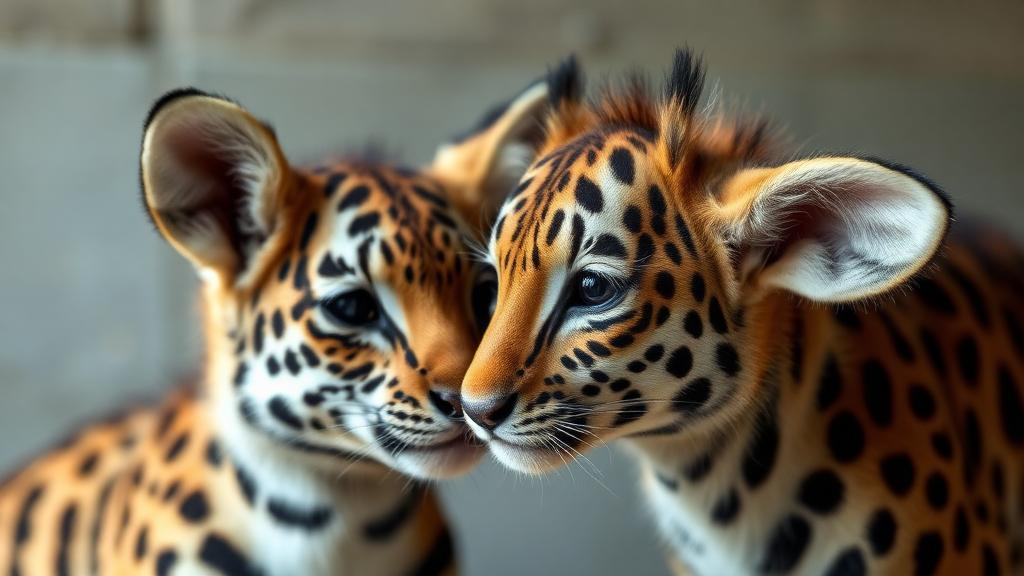
When we think about how animals cope with a human-dominated planet, we usually picture shifts in habitat, diet or migration routes. But a sweeping new review published in Ecology and Evolution argues that one of the most consequential — and most neglected — responses to environmental change is happening in the social domain: the way individuals seek, tolerate or avoid the company of their own kind. The synthesis, which draws on hundreds of studies across mammals, birds, fish, reptiles and invertebrates, makes the case that sociability, defined as an individual’s tendency to associate with conspecifics in non-aggressive contexts, is a trait that human activity is reshaping in profound and often unpredictable ways, with consequences that ripple from single animals all the way up to entire populations.
One of the review’s central contributions is conceptual housekeeping. Species are routinely labelled as social or solitary, yet those labels depend heavily on the criteria applied — estimates of how many mammal species are solitary range from more than two-thirds to less than a quarter depending on the study. Even so-called solitary species, from semi-nomadic orangutans to seemingly asocial carnivores, engage in repeated, non-random interactions that build genuine social structure. The authors therefore distinguish sociability, an individual-level tendency, from sociality, a property of groups and species, and stress that sociability is not a single unitary trait. It can be expressed through spatial proximity, affiliative contact such as grooming, or preferences for specific partners, and it can be measured with everything from simple observation counts to sophisticated social network analysis. This definitional tangle, they argue, has produced apparently contradictory findings across the literature and has left sociability among the least consistently studied of the classic animal personality axes, alongside boldness, activity, exploration and aggressiveness.
Crucially, consistent individual differences in sociability do not mean fixed behaviour. Individuals can shift their expressed sociability with conditions while repeatable differences among them persist, and they can even differ in how plastic they are. In common bottlenose dolphins, for example, individuals varied in how their gregariousness responded to short-term swings in food availability, even though the population’s overall social structure stayed stable. These individual behavioural reaction norms may themselves be heritable and subject to selection, meaning that environmental change can act on sociability through reversible within-individual plasticity, through developmental shifts in social tendencies, or through selective and demographic processes that change which social phenotypes exist in a population at all.
The feedbacks between individuals and their social worlds are where the review becomes genuinely striking. Individual tendencies build relationships, relationships build networks, and networks feed back to shape individual behaviour. A famous population of olive baboons illustrates the point: after tuberculosis removed the most aggressive males, the remaining group became markedly more tolerant, and this ‘pacific culture’ persisted even after every original male had been replaced by immigrants. In pig-tailed macaques, experimentally removing a handful of individuals that performed policing roles caused networks to become smaller, less diverse and less integrated. Such ‘keystone’ individuals — brokers, gatekeepers, social hubs — can stabilise or destabilise group-level structure out of all proportion to their numbers, a fact with obvious implications when humans remove animals from the wild.
Turning to the drivers of change, the review distinguishes indirect effects, such as habitat modification, climate change and pollution, from direct effects of human presence and lethal removal. Habitat change cuts both ways: structurally simple environments can push fish into larger, more cohesive shoals, while increased complexity can funnel sleepy lizards into shared pathways and boost social connectivity. In southern pig-tailed macaques ranging inside oil palm plantations, affiliative interactions dropped and aggression rose, while at plantation edges grooming rates and partner diversity were actually higher than in forest — but with low-ranking individuals, not high-ranking ones, occupying the most central network positions. Perceived risk and visibility, the authors suggest, can matter as much as food. Grey wolves exposed to intensifying human landscape modification showed reduced pair cohesion, suggesting that simply avoiding disturbance can quietly erode social bonds.
Climate change acts through temperature, resources and catastrophe. Warming can dissolve the thermal benefits of huddling: bushtits abandon dense communal roosts once temperatures rise, and modelling for desert night lizards predicts far fewer survival-enhancing aggregations in a hotter future. In sociable weavers, hot and variable temperatures increase panting and produce more fragmented social networks. In sticklebacks from warmer habitats, sociability is lower, heritable, and — tellingly — no longer repeatable across trials in warm-acclimated fish, hinting that warming may destabilise the very consistency that makes sociability a personality trait. Resource shifts are equally ambivalent. Ravens rely on roost-based alliances to access carcasses when food is scarce but abandon those ties when it is plentiful; Bornean orangutan females reduced association rates and increased aggression after fires caused prolonged fruit scarcity; and southern resident killer whales formed smaller, less interconnected groups in years of low Chinook salmon abundance.
Catastrophic events reveal the sharpest trade-offs. After hurricanes, rhesus macaques expanded their affiliative networks, with previously isolated individuals building new connections — a seemingly adaptive surge of social support under stress. But simulations showed that infection risk doubled and remained elevated for up to five years, and became more evenly spread across social ranks as low-ranking animals gained partners. Black howler monkeys suffered population crashes and prolonged social disorganisation after hurricanes, with interaction rates never fully recovering. The recurring lesson is that short-term social buffering can carry delayed epidemiological and structural costs, a pattern the authors identify as one of the most consistent themes across systems.
Pollution adds another layer of subtlety. A meta-analysis of fish studies found that chemical pollutants and artificial light consistently reduce individual sociability while leaving group cohesion unchanged, whereas mixtures of pollutants increased individual sociability but reduced cohesion — decoupling individual tendencies from emergent group properties. Pharmaceutical contaminants act directly on behaviour-regulating neurology: the anxiolytic oxazepam reduced shoaling in European perch, while fluoxetine increased shoaling in guppies only under specific social conditions. Noise pollution is similarly double-edged, tightening flock clustering in some birds as an apparent antipredator response while degrading the vocal communication that maintains social connectivity in others, such as red-backed fairy-wrens.
Direct human contact produces its own tangle of effects. Ground squirrels habituated to people and dogs showed reduced affiliative behaviour, whereas natural predators promoted cohesion — humans, the review notes, act as a qualitatively distinct class of disturbance. Urban macaques that spent more time monitoring humans groomed less and had fewer partners, consistent with a time-constraint mechanism, while semi-provisioned Assamese macaques with access to energy-rich human food spent less time feeding and more time socialising. The most sobering evidence concerns lethal removal. Vancouver Island marmots undergoing population decline experienced what the authors call a social ‘meltdown’ — smaller colonies, fewer greetings, more aggression, more vigilance and less feeding — that constrained recovery. Killer whale networks proved robust to random removals but fragmented when socially central juvenile females were targeted, as historical live captures did. Simulated poaching of central individuals reduced connectivity in elephant networks, and wolf packs destabilised by human-caused mortality lost reproductive output even without immediate declines in abundance. In elephants, the loss of older matriarchs also erodes ecological knowledge precisely when it is most needed under stress.
The conservation implications are concrete. Network-informed vaccination in wild chimpanzees could prevent large outbreaks with far fewer doses than random strategies, yet targeted removal of highly connected Tasmanian devils failed to control facial tumour disease because network positions shifted seasonally — the utility of such interventions hinges on how stable individual sociability really is. Social transmission can also spread problematic behaviours, as models of California sea lions stealing from fishing gear showed: culling works best before social learning amplifies recruitment. Translocation outcomes, invasion dynamics in guppies, and even responses to monitoring drones in guanacos all depend on social context. The review’s bottom line is that behavioural diversity deserves recognition as a component of biodiversity in its own right: preserving variation in individual social phenotypes and in the relationships they create may be critical for resilience, because populations are not merely collections of mean trait values but living networks whose architecture humans are quietly, and sometimes irreversibly, rewiring.
Subject of Research: Effects of anthropogenic environmental change on animal sociability and its population-level consequences
Article Title: Sociability Under Anthropogenic Change: From Individual Behaviour to Population‐Level Consequences
Article References: Sociability Under Anthropogenic Change: From Individual Behaviour to Population‐Level Consequences. (n.d.). https://doi.org/10.1002/ece3.74205
Image Credits: AI Generated
DOI: 10.1002/ece3.74205
Keywords: animal behaviour, sociability, animal personality, social networks, anthropogenic change, climate change, pollution, habitat fragmentation, conservation, wildlife management, social learning, disease transmission
Cite Scienmag News
Gavin Prescott. (October 4, 2026). How Human Change Is Rewiring the Social Lives of Animals. Scienmag. https://scienmag.com/how-human-change-is-rewiring-the-social-lives-of-animals/
Gavin Prescott. "How Human Change Is Rewiring the Social Lives of Animals." Scienmag, 4 October 2026, https://scienmag.com/how-human-change-is-rewiring-the-social-lives-of-animals/. Accessed 4 October 2026.
Gavin Prescott. "How Human Change Is Rewiring the Social Lives of Animals." Scienmag. October 4, 2026. https://scienmag.com/how-human-change-is-rewiring-the-social-lives-of-animals/


