


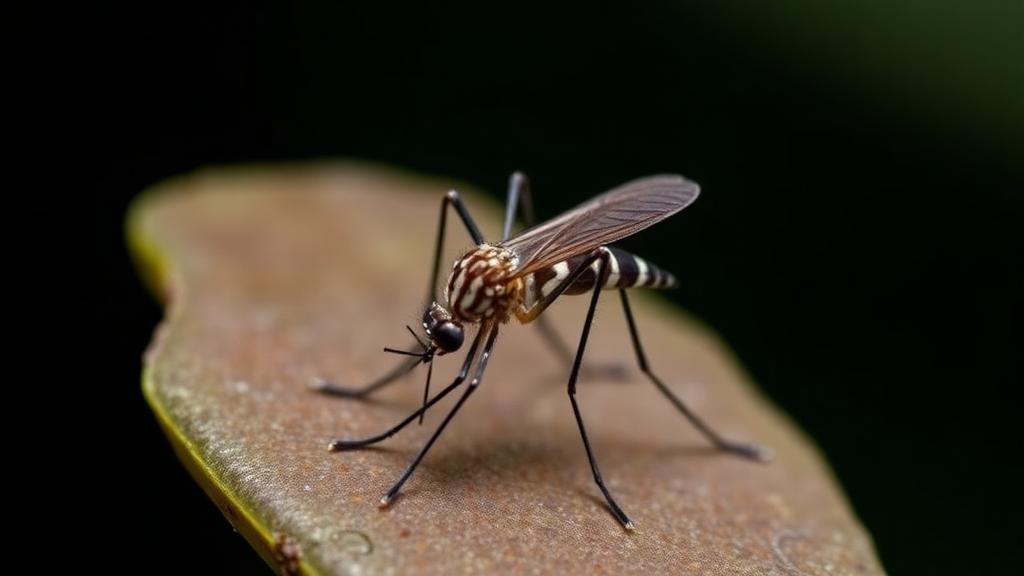
The Asian tiger mosquito, Aedes albopictus, is one of the most consequential invasive insects in the Pacific, capable of transmitting dengue, chikungunya, and Zika viruses to human populations that historically had little exposure to these diseases. Across the Hawaiian Islands, where the species has become firmly established, public health planners are increasingly looking toward biological control strategies that exploit a common bacterial symbiont called Wolbachia. A new study published in the journal Parasites & Vectors has now provided the most detailed picture yet of how Wolbachia naturally infects Aedes albopictus populations on two Hawaiian islands, and the results reveal patterns that are more complicated than researchers expected.
Wolbachia is an intracellular bacterium that manipulates the reproduction of its insect hosts, most famously through a phenomenon known as cytoplasmic incompatibility. When males carrying a particular Wolbachia strain mate with females that either lack that strain or carry a different one, their fertilized eggs fail to hatch. This quirk of reproductive biology has become the foundation of several mosquito control approaches, including the incompatible insect technique, in which large numbers of Wolbachia-carrying male mosquitoes are released to mate with wild females and crash the population. Wolbachia also has pathogen-blocking properties, meaning it can interfere with the ability of mosquitoes to transmit viruses such as dengue, which underlies replacement strategies that spread virus-resistant Wolbachia strains through wild populations.
Unlike Aedes aegypti, the yellow fever mosquito, which does not naturally harbor Wolbachia, Aedes albopictus carries two native strains of the bacterium, designated wAlbA and wAlbB. In most populations studied elsewhere, individuals are superinfected, meaning they carry both strains simultaneously. This natural dual infection matters enormously for control programs because the outcome of any cytoplasmic incompatibility-based intervention depends on which strains are already circulating in the target population. If wild mosquitoes carry unexpected combinations of strains, or if the density of the bacteria in their tissues varies in unanticipated ways, releases of incompatible males may fail to suppress reproduction as intended.
Despite the global importance of these questions, the infection status of Hawaiian Aedes albopictus had remained poorly characterized. A research team led by Sangwoo Seok and senior authors Eric P. Caragata and Yoosook Lee of the Florida Medical Entomology Laboratory at the University of Florida, working with collaborators from state and federal agencies in Hawaiʻi and the University of California, set out to fill this gap. Using quantitative PCR, a laboratory technique that can detect and precisely quantify the amount of bacterial DNA in an individual mosquito, the team characterized Wolbachia infections in 399 specimens collected from two islands: Oʻahu and the Island of Hawaiʻi.
The headline finding was that Wolbachia is nearly universal in these populations: 98.5 percent of the mosquitoes tested were infected. However, the composition of those infections was strikingly lopsided. Every infected specimen carried wAlbB, but only 28.6 percent were superinfected with wAlbA. In other words, the vast majority of Hawaiian Aedes albopictus carry only a single Wolbachia strain, a pattern that departs from the double infection typically assumed for this species. This lower-than-expected prevalence of wAlbA establishes an important baseline for any future biocontrol effort in the region, because it means the resident bacterial landscape is not uniform across individuals.
The study also revealed that infection dynamics are strongly shaped by the sex of the mosquito. Females were significantly more likely than males to harbor wAlbA, and bacterial density, the quantity of Wolbachia per individual, was significantly higher in females for both strains. This sex bias has practical implications because only female mosquitoes bite and transmit viruses, and because cytoplasmic incompatibility manifests through the interaction between infected males and uninfected or differently infected females. A sex-skewed distribution of native strains therefore changes the arithmetic of any release program designed around mating incompatibility.
Environmental factors also left their mark on the bacterial communities. The prevalence of wAlbA was associated with the island of collection and with precipitation at the collection site, suggesting that local climate and geography influence which mosquitoes carry the second strain. By contrast, the prevalence of wAlbB did not vary significantly with sex, island, temperature, or precipitation, indicating that the two native strains respond to different ecological pressures. Temperature is known from laboratory studies to affect Wolbachia density, and rainfall shapes breeding habitat availability, so these field associations provide a real-world counterpart to experimental work on how environmental conditions modulate symbiont infections.
Perhaps the most technically intriguing results concern the interactions between the two strains when they coexist in the same mosquito. In superinfected individuals, wAlbB consistently exhibited higher density than wAlbA, and wAlbB density was higher in superinfected mosquitoes than in those carrying wAlbB alone. Both strains reached higher densities in females than in males. In females, the densities of the two strains were positively correlated, meaning mosquitoes with more wAlbA also tended to have more wAlbB, whereas no such correlation existed in males. These sex-specific microbe-microbe dynamics suggest that the two symbionts do not simply compete for host resources; their relationship differs fundamentally between the sexes, possibly reflecting differences in tissue tropism, vertical transmission requirements, or host physiology.
For the design of Wolbachia-based control in Hawaiʻi, these findings carry a clear warning. Population suppression projects that rely on cytoplasmic incompatibility depend on predictable mating outcomes between released and wild mosquitoes. If a substantial fraction of wild females carry only wAlbB while released males carry both strains or a different combination, the strength of incompatibility may vary across the population, diluting the effectiveness of releases. Similarly, the sex and site-specific variation in bacterial density could influence how faithfully the released strains are transmitted to the next generation. The authors emphasize that future projects in the region must account for these varying patterns of infection before strategies are developed and implemented, rather than assuming a uniform superinfection across the archipelago.
The study, funded in part by the U.S. Environmental Protection Agency’s Science to Achieve Results program, the USDA National Institute of Food and Agriculture, and the National Institutes of Health, and conducted with permits from Hawaiʻi’s national parks, demonstrates the value of baseline surveillance before intervention. As Hawaiʻi confronts recurring outbreaks of dengue and the expanding range of mosquito vectors in a warming climate, understanding the invisible bacterial passengers of its mosquitoes has become a practical necessity. The nearly universal presence of wAlbB, the patchy distribution of wAlbA, and the complex density relationships between the strains together form a map of the biological terrain on which any future Wolbachia campaign will be fought, and this research provides the first careful survey of that terrain across the Hawaiian Islands.
Subject of Research: Native Wolbachia infection prevalence and density in Hawaiian Aedes albopictus mosquito populations
Article Title: Native Wolbachia infection dynamics across Aedes albopictus (Diptera: Culicidae) populations in Hawaiʻi
Article References: Seok, S., Salama, L., Vorsino, A. E., Leong, M. K. H., Haines, W. P., Jacobsen, C. M., Akbari, O. S., Caragata, E. P., & Lee, Y. (2026). Native Wolbachia infection dynamics across Aedes albopictus (Diptera: Culicidae) populations in Hawaiʻi. Parasites & Vectors. https://doi.org/10.1186/s13071-026-07695-5
Image Credits: AI Generated
DOI: 10.1186/s13071-026-07695-5
Keywords: Wolbachia, Aedes albopictus, Hawaiʻi, cytoplasmic incompatibility, mosquito control, dengue, Zika, chikungunya, endosymbiont, quantitative PCR, invasive species, vector biology
Cite Scienmag News
Kristina Jarvis. (October 4, 2026). Hidden Wolbachia Patterns in Hawaiian Mosquitoes Could Shape Future Virus Control. Scienmag. https://scienmag.com/hidden-wolbachia-patterns-in-hawaiian-mosquitoes-could-shape-future-virus-control/
Kristina Jarvis. "Hidden Wolbachia Patterns in Hawaiian Mosquitoes Could Shape Future Virus Control." Scienmag, 4 October 2026, https://scienmag.com/hidden-wolbachia-patterns-in-hawaiian-mosquitoes-could-shape-future-virus-control/. Accessed 4 October 2026.
Kristina Jarvis. "Hidden Wolbachia Patterns in Hawaiian Mosquitoes Could Shape Future Virus Control." Scienmag. October 4, 2026. https://scienmag.com/hidden-wolbachia-patterns-in-hawaiian-mosquitoes-could-shape-future-virus-control/


