


Coastal communities have long been told to worry about the sea itself as a carrier of so-called forever chemicals. Earlier international studies, relying largely on computer modelling and laboratory experiments, had suggested that breaking waves could launch per- and polyfluoroalkyl substances, or PFAS, from ocean water into the air, allowing the persistent pollutants to ride marine aerosols ashore and contaminate coastal land. Now a field study from York University in Toronto, conducted along one of the windiest and most wave-battered coastlines in North America, has found little evidence to support that alarming picture. The researchers report that sea spray does not appear to be a meaningful source of PFAS contamination in coastal regions, a result that surprised even the team that set out to confirm the threat.
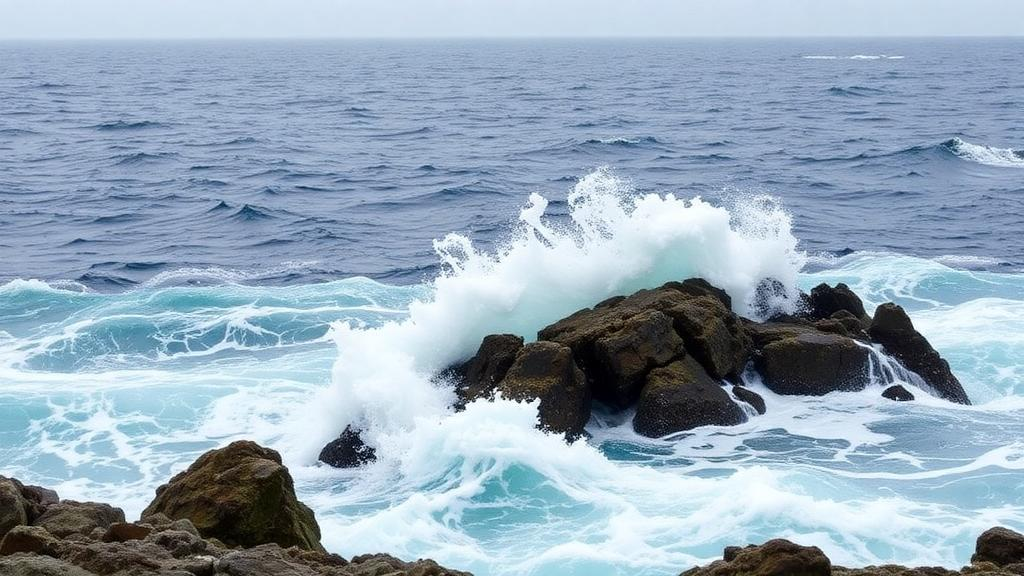
The study focused on the coast of Newfoundland and Labrador, where waves from the Atlantic Ocean crash against an extensive shoreline and strong winds whip spray far inland. According to the researchers, this is close to a worst-case scenario for sea-spray-driven PFAS transport: abundant wind, crashing surf and a long coastline all combine to maximise the generation of marine aerosols. If the ocean were truly pumping significant quantities of forever chemicals into coastal environments through spray, the team reasoned, Newfoundland would be one of the places where the signal would be unmistakable. Senior author Cora Young, an atmospheric chemist and Guy Warwick Rogers Chair in York University’s Faculty of Science, said the location was chosen precisely because it offered the ideal conditions to detect such an effect.
We designed this study specifically to see if sea spray was contributing to a mobilization of PFAS in coastal regions and Newfoundland is a great place to do that, Young explained, noting that it is a marine location and very windy, so the team expected quite a lot of PFAS from sea spray. Instead, she said, the researchers were quite surprised that they did not see anything indicating sea spray was contributing to PFAS in the area. The finding directly contradicts the expectation, rooted in earlier modelling and laboratory work, that the ocean-to-land transfer of these chemicals through aerosols represents a significant and direct exposure pathway for people and ecosystems near the coast.
To test the hypothesis rigorously, the team moved beyond simulations and carried out on-the-ground field work. Lead author Daniel Persaud, a PhD student at York, together with Young and their collaborators, collected both wet and dry deposition samples at several locations stretching up to 30 kilometres from the eastern coast. Wet deposition refers to PFAS delivered by precipitation such as rain, while dry deposition captures the dust and particles, along with gases, that settle out of the atmosphere onto the ground. Measuring both pathways matters, because many studies record only one or the other, and the balance between them shapes how scientists estimate where forever chemicals ultimately land.
The sampling sites were forested watersheds within the Newfoundland and Labrador Boreal Ecosystem Latitudinal Transect, a network of study locations chosen because they are all influenced by marine aerosols and lie close to the ocean. Because the sites are windy and near the water, the researchers expected a strong marine-aerosol signal in their chemistry. To track it, they used sodium as a tracer of sea spray, since sodium is abundant in ocean-derived particles. Persaud said the measured PFAS showed little association with sodium, indicating that the forever chemicals found at the sites were not arriving with the salt spray from the Atlantic.
That does not mean the landscape was clean. The researchers did detect PFAS at every study site, but the pattern of compounds pointed to a different origin. They mostly found perfluoroalkyl acids, a subclass of PFAS that includes perfluoroalkyl carboxylic acids and perfluoroalkanesulfonic acids. These substances are not produced from local sources in Newfoundland. Instead, the evidence suggested they were the atmospheric breakdown products of PFAS precursor compounds that had been emitted elsewhere, transformed in the air during long-range transport, and then deposited on the island. In other words, the chemicals arrived from distant industrial and commercial centres, not from the waves at the shore.
The likely sources of those precursors lie elsewhere in Canada and the United States, and potentially even further afield. PFAS and their precursors are typically found in firefighting foams, non-stick materials and performance chemicals, and they are notorious for their ability to travel long distances through the atmosphere, reaching even the Arctic. Because perfluoroalkyl acids are extremely persistent and can bioaccumulate in living organisms, their continued deposition in remote regions raises ongoing environmental concerns. The new results do not make those concerns disappear; they simply redirect attention away from the ocean surface and back toward atmospheric transport of emissions from faraway sources.
The implications may extend well beyond eastern Canada. Young noted that Newfoundland offers something close to a perfect storm for sea-spray generation, with driving wind, crashing waves and an extensive coastline that together maximise the amount of aerosol produced. If sea spray were a major route for moving PFAS from ocean to land, it should have shown up there. According to Young, this sort of sea spray is really not a major source of global pollution according to the study. That conclusion, she suggested, amounts to good news: researchers had worried that PFAS could move from ocean to land and back again indefinitely, but the field evidence indicates the problem is not as large as feared.
One of the study’s most instructive findings concerned the role of dry deposition. The team measured both wet and dry deposition, but that combined approach is not universally practised, and their results underline how important it is to do so in order to understand the full impact of PFAS in the environment. Young said she still finds it surprising that dry deposition remains so important even in a place like Newfoundland, where rainfall is frequent. The observation suggests that in many other landscapes, from remote deserts to the Arctic, the settling of particle-bound and gaseous PFAS may be a larger contributor than precipitation alone would indicate, and that studies relying only on rain and snow could substantially underestimate total deposition.
Persaud said the distinction between wet and dry pathways helps researchers better predict where forever chemicals will be found as they move around the globe and where they will ultimately end up, benefiting not only his team but other researchers going forward. The work was a collaboration with scientists at Memorial University in St. John’s, where Young previously worked and collected samples, the Canadian Forest Service and Natural Resources Canada in Corner Brook, and the Aquatic Contaminants Research Division of Environment and Climate Change Canada in Burlington, Ontario. The paper, titled The Occurrence of Legacy Per- and Polyfluoroalkyl Substances (PFAS) Deposited along a Latitudinal Transect in Newfoundland and Labrador, Canada, was published in the Royal Society of Chemistry journal Environmental Science: Processes & Impacts under DOI 10.1039/D6EM00257A. For coastal residents wondering whether summer sea spray carries a hidden dose of forever chemicals, the answer from this windswept corner of Canada appears to be reassuring: the ocean, at least, is not the culprit it was made out to be.
Subject of Research: Atmospheric deposition of PFAS forever chemicals in coastal Newfoundland and the role of sea spray as a transport pathway
Article Title: Exposure to forever chemicals through sea spray may be overblown
Article References: Exposure to forever chemicals through sea spray may be overblown. (n.d.). Original publication
Image Credits: AI Generated
DOI: Not provided
Keywords: PFAS, forever chemicals, sea spray, marine aerosols, Newfoundland and Labrador, atmospheric deposition, wet deposition, dry deposition, perfluoroalkyl acids, long-range transport, York University, environmental chemistry
Cite Scienmag News
Russell Cooper. (October 3, 2026). Sea Spray Is Not a Major Route for Forever Chemicals, Newfoundland Field Study Finds. Scienmag. https://scienmag.com/sea-spray-is-not-a-major-route-for-forever-chemicals-newfoundland-field-study-finds/
Russell Cooper. "Sea Spray Is Not a Major Route for Forever Chemicals, Newfoundland Field Study Finds." Scienmag, 3 October 2026, https://scienmag.com/sea-spray-is-not-a-major-route-for-forever-chemicals-newfoundland-field-study-finds/. Accessed 3 October 2026.
Russell Cooper. "Sea Spray Is Not a Major Route for Forever Chemicals, Newfoundland Field Study Finds." Scienmag. October 3, 2026. https://scienmag.com/sea-spray-is-not-a-major-route-for-forever-chemicals-newfoundland-field-study-finds/


