


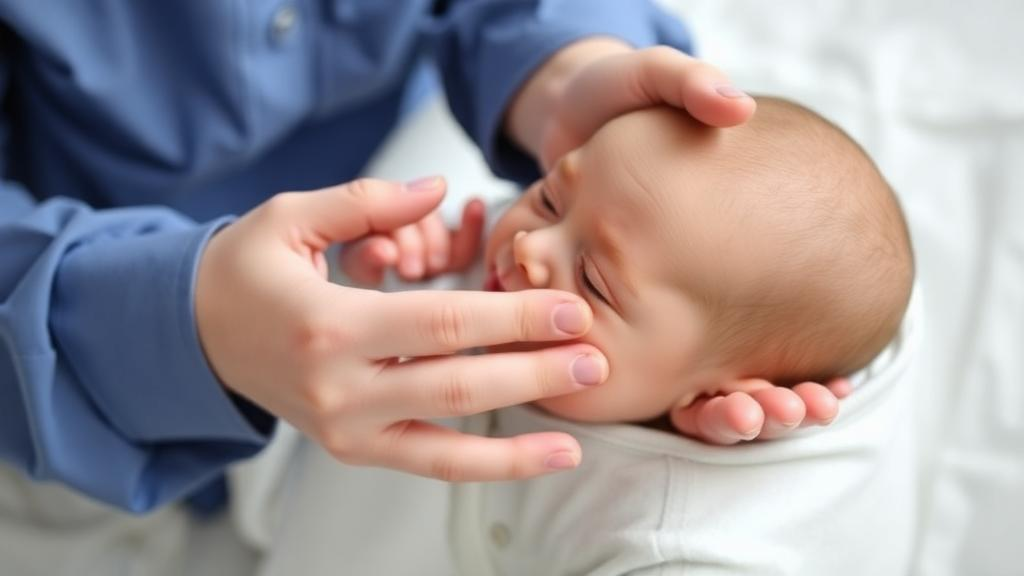
Parents of infants born with a flattened spot on the back or side of the head may soon have a new, non-invasive option beyond repositioning and helmet therapy. Researchers presenting at the American Academy of Pediatrics 2026 National Conference and Exhibition in San Diego, held October 2 through 6, reported that osteopathic manipulative treatment, a hands-on therapy approach, was safe, well tolerated, and well accepted by families of babies with positional plagiocephaly, the medical term for asymmetrical flattening of an infant’s skull. The findings, presented in an abstract titled Safety and Feasibility of Osteopathic Manipulative Treatment in Addressing Plagiocephaly, come from an interim analysis of an ongoing randomized clinical trial and offer an early but encouraging signal for families searching for gentle alternatives.
Positional plagiocephaly develops when sustained external pressure is placed on one area of a baby’s soft, still-forming skull. Because an infant’s cranial bones are pliable in the first months of life, repeated pressure on the same spot, most often the back of the head, can produce a visible asymmetrical flattening, usually involving the occipital bone at the rear of the cranium. That flattening can trigger compensatory shifts in anterior structures, including the orbits around the eyes and the middle ear, which is one reason pediatricians take the condition seriously even though it is often considered primarily cosmetic. The condition typically emerges in the first few months of life, when babies spend long stretches lying on their backs.
The prevalence of positional plagiocephaly rose dramatically after pediatricians began recommending that babies sleep on their backs, a public health campaign credited with saving lives by reducing the risk of sudden infant death syndrome. According to the researchers, the Back to Sleep campaign has been associated with a 600 percent increase in plagiocephaly prevalence and a corresponding surge in referrals for evaluation and treatment. One clinical trial cited in the abstract found plagiocephaly in 205 of 440 infants between 7 and 12 weeks of age, an incidence of roughly 46.6 percent. The researchers are careful to note that back sleeping remains essential for infant safety; the challenge is managing the skull flattening that can accompany it without compromising safe sleep practices.
Current management of positional plagiocephaly typically consists of conservative measures. Families are usually advised to try repositioning strategies, such as encouraging more tummy time while the baby is awake and supervised, and shifting the orientation of the infant’s head during sleep and feeding. Physical therapy may be recommended when muscle tightness in the neck, a common contributor to head turning preferences, appears to be driving the asymmetry. For infants with persistent or more severe deformity, helmet therapy, in which a custom-molded orthotic device is worn for many hours a day over months, remains an option for selected patients. Yet many families find helmets burdensome, expensive, or emotionally difficult, and repositioning alone does not always resolve the flattening.
That gap in options is what motivated the research team behind the OPT-IN trial, a two-arm, randomized cross-over clinical trial comparing osteopathic manipulative treatment with the standard of care of repositioning. Kimberly Wolf, DO, FAAP, FACOP, FAAPO, NABBLM-C, one of the study authors, said that families of infants with plagiocephaly often want treatment options that are gentle and non-invasive, and that the study demonstrates osteopathic manipulative treatment is safe, well accepted by families, and provides additional benefits for the baby’s health. She added that a flat head is a common reason parents bring their infants to the pediatrician in the first few months of life, yet until now families have had strikingly few choices for treatment, and the team wanted to find an option that works with the baby’s own body to improve head shape and address the root causes behind the flattening.
The interim analysis focused specifically on two questions: how safe and how feasible osteopathic manipulative treatment is for infants enrolled between birth and four months of age. Safety was assessed by tabulating and describing adverse events as reported by both families and the medical team. Feasibility was measured through adherence to the treatment schedule and through family satisfaction, which was captured in two ways: a feedback survey sent to caregivers upon completion of the eight-week intervention, and focus groups conducted with caregivers after the intervention ended. Importantly, all family satisfaction data were collected and analyzed by consultants unknown to the families, who de-identified the data before sharing results with the research team, a design choice intended to reduce bias in the reporting of subjective outcomes.
The preliminary results were striking in their consistency. Among the 67 families who completed the study, adherence reached 100 percent compliance across a total of ten visits per participant, comprising eight osteopathic manipulative treatment visits and two measurement visits. No serious adverse events occurred, leading the researchers to conclude that the treatment is safe and well tolerated by infants. The few concurrent symptoms that were reported, such as fussiness, were described as mild, not bothersome to the family, and quickly resolved. In a field where even minor adverse events can derail a pediatric intervention, a perfect completion rate across hundreds of visits is a notable feasibility finding in its own right.
Beyond the primary goal of improving head shape, parents whose infants completed the treatment visits reported a range of secondary benefits, including improvements in feeding, fussiness, reflux, and sleep. Parents also highlighted how important the therapy was as an alternative to helmets, which many families had been offered as a treatment option. In survey feedback summarized by the researchers, one parent described the experience as gentle, effective, and awesome. The survey results, drawn from 44 respondents, were described as very positive, showing that families viewed the hands-on approach as both a safe and a feasible option for treating plagiocephaly. Study author Kaur Sirjen is scheduled to present the research from 12 to 12:30 PM Pacific time on Sunday, October 4, and Dr. Wolf was among the highlighted abstract authors giving a brief presentation during a conference soundbite session.
The researchers conclude that osteopathic manipulative treatment should be considered for families seeking a non-invasive treatment option for managing positional plagiocephaly. Still, the usual scientific caveats apply. These are interim results from a safety and feasibility analysis, not the trial’s final efficacy verdict; the randomized cross-over design of the full OPT-IN trial is intended to compare the therapy directly against repositioning on head shape outcomes, and those comparative data will determine whether the enthusiasm generated by family satisfaction translates into measurable cranial improvement. The findings have been presented at a scientific conference rather than published in a peer-reviewed journal, meaning they have not yet undergone formal external review. Even so, for a condition affecting nearly half of infants in some cohorts, and for parents weighing months of helmet therapy against watchful waiting, the prospect of a gentle, hands-on treatment with a clean safety record and near-perfect family adherence is a development worth watching closely as the trial progresses.
Subject of Research: Safety and feasibility of osteopathic manipulative treatment for infant positional plagiocephaly
Article Title: Hands-on treatment studied as option in treating baby flat head syndrome
Article References: Hands-on treatment studied as option in treating baby flat head syndrome. (n.d.). Original publication
Image Credits: AI Generated
DOI: Not provided
Keywords: positional plagiocephaly, osteopathic manipulative treatment, infants, flat head syndrome, pediatrics, helmet therapy, Back to Sleep campaign, randomized clinical trial, American Academy of Pediatrics, tummy time, safety, family satisfaction
Cite Scienmag News
Ophelia Keating. (October 3, 2026). Gentle Hands-On Therapy Shows Safety Promise for Babies With Flat Head Syndrome. Scienmag. https://scienmag.com/gentle-hands-on-therapy-shows-safety-promise-for-babies-with-flat-head-syndrome/
Ophelia Keating. "Gentle Hands-On Therapy Shows Safety Promise for Babies With Flat Head Syndrome." Scienmag, 3 October 2026, https://scienmag.com/gentle-hands-on-therapy-shows-safety-promise-for-babies-with-flat-head-syndrome/. Accessed 3 October 2026.
Ophelia Keating. "Gentle Hands-On Therapy Shows Safety Promise for Babies With Flat Head Syndrome." Scienmag. October 3, 2026. https://scienmag.com/gentle-hands-on-therapy-shows-safety-promise-for-babies-with-flat-head-syndrome/


