


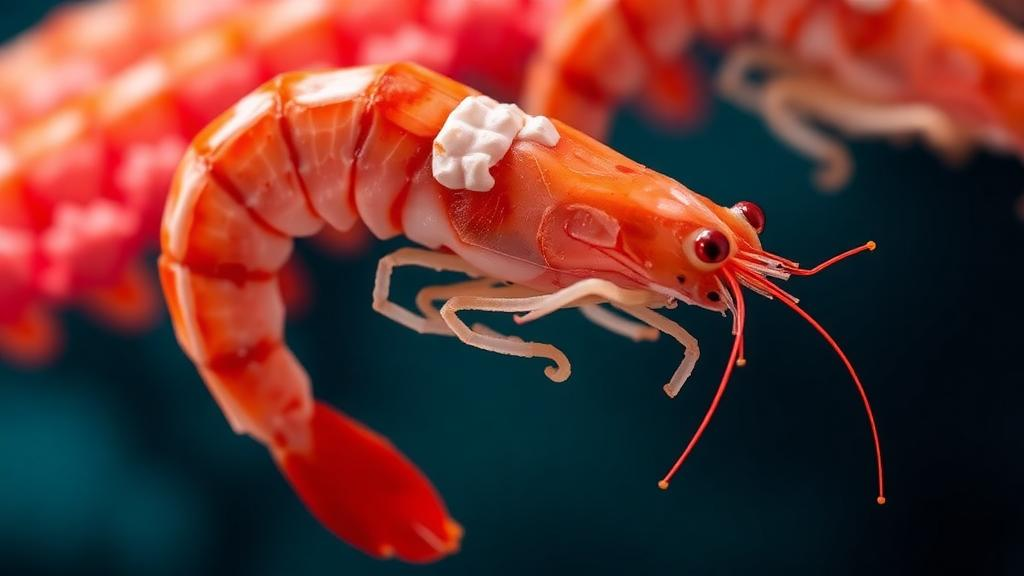
As antibiotic resistance spreads across the globe, scientists are increasingly turning to unexpected corners of the natural world for new antimicrobial weapons. One of the latest candidates comes from an unlikely source: the black tiger shrimp, Penaeus monodon, one of the most economically important farmed crustaceans in Asia. A research team led by Sheethu Annie Vincent and Swapna P. Antony of Cochin University of Science and Technology, working with collaborators at Rajagiri College of Social Sciences and other institutions, has identified and characterized a thymosin beta 3 peptide from this species, designated Pmthymosin3. Their study, published in December 2024 in the journal Blue Biotechnology, combines laboratory cloning and gene expression profiling with an extensive battery of computational analyses to argue that this peptide deserves a place on the growing list of marine-derived antimicrobial candidates.
The motivation behind the work is rooted in a crisis familiar to anyone following aquaculture. Shrimp farming suffers enormous economic losses from bacterial diseases, including acute hepatopancreatic necrosis disease caused by Vibrio parahaemolyticus, bacterial white tail disease caused by V. harveyi, and early mortality syndrome linked to V. alginolyticus. The industry has historically leaned heavily on antibiotics, a practice that accelerates resistance and leaves farmers with fewer options each year. Antimicrobial peptides, small bioactive proteins that form a first line of defense against pathogens, offer an appealing alternative because they tend to act broadly and more slowly select for resistant microbes. They kill bacteria not only by disrupting cell membranes but also by modulating the host immune response, a dual mechanism that conventional antibiotics cannot match.
Penaeid shrimps already harbor a rich arsenal of such peptides. Researchers have previously described penaeidins, crustins carrying whey acidic protein domains, antilipopolysaccharide factors, hemocyanin-derived peptides, lysozymes, histone-derived peptides, and stylicins from various penaeid species. Thymosins, however, occupy a particularly interesting niche. Originally isolated from the thymus gland, these peptides are classified into alpha, beta, and gamma families based on their isoelectric points. Beta thymosins, typically 40 to 44 amino acids long with molecular masses around 5 kilodaltons, function as actin-binding proteins and participate in processes ranging from wound healing and angiogenesis to immune regulation and cancer development. In invertebrates, their antimicrobial properties have drawn the most attention, with studies in crabs, crayfish, and other shrimp species showing that these peptides respond to bacterial challenges and can even suppress viral replication.
To find thymosins in the black tiger shrimp, the team isolated RNA from the hemocytes of healthy adults, reverse-transcribed it into cDNA, and amplified thymosin sequences using specially designed primers. The cloning effort yielded not one but three distinct thymosin isoforms, which the researchers named Thybeta2.pm, Thybeta3.pm, and Thybeta4.pm according to the beta-actin-binding motifs they carry. All three displayed isoelectric points between pH 5.0 and 7.0, the hallmark range of the beta thymosin family, and phylogenetic analysis placed them in a clade most closely related to the thymosins of the kuruma prawn, Penaeus japonicus. The full-length cDNA of the beta 3 isoform, Pmthymosin3, spans 387 base pairs and encodes a protein of 128 amino acids with a predicted molecular weight of 14.268 kilodaltons and a theoretical isoelectric point of 5.45. According to the authors, this is the first characterization of a thymosin beta 3 peptide from P. monodon.
Structurally, Pmthymosin3 carries three thymosin domains and the strongly conserved LKKTET actin-binding motif that defines the beta thymosin family. Domain prediction tools also flagged two overlapping low-confidence regions, a K homology RNA-binding domain and a calmodulin-binding domain, hinting at possible additional functions. Physicochemical predictions painted the picture of an acidic, mildly unstable, water-loving protein: a net charge of minus 4, a GRAVY hydropathy score of minus 0.933, an aliphatic index of 74.06 suggesting reasonable thermal stability, and an instability index of 47.47 marking it as unstable. Notably, the peptide lacks tryptophan, tyrosine, and cysteine residues, making it invisible to standard UV spectrophotometry. SignalP analysis found no signal peptide, implying that Pmthymosin3 is not secreted but instead functions within the cytoplasm, a prediction reinforced by the DeepLoc subcellular localization tool.
The computational characterization went considerably deeper. Helical wheel projections showed the peptide adopting an alpha-helical configuration with hydrophilic and hydrophobic residues concentrated at opposite poles, the classic amphipathic arrangement that underpins many membrane-interacting peptides. A short hydrophobic stretch, the sequence GFSAVNL at positions 23 to 27, stood out in the Kyte-Doolittle hydrophobicity plot. Secondary structure prediction with PSIPRED and homology modeling with SWISS-MODEL revealed alternating alpha-helical and random coil regions connected by a proline hinge, producing a helix-hinge-helix architecture with disordered termini. The quality of the three-dimensional model was impressive: the Ramachandran plot placed 99.21 percent of residues in favored regions with zero outliers, indicating a stereochemically sound structure. NetSurfP analysis suggested that essentially all residues are surface-exposed, consistent with a flexible, intrinsically disordered-adjacent molecule.
The functional predictions are where the story becomes genuinely provocative. The CAMP database assigned Pmthymosin3 a 0.75 probability of being an antimicrobial peptide, and the APD3 tool calculated a Boman protein-binding index of 2.27 kilocalories per mole along with a Wimley-White whole-residue hydrophobicity of 66.73, both consistent with antimicrobial potential. AntiCP identified the peptide as anticancer with an average SVM score of 0.74, while AntiAngioPred flagged antiangiogenic activity, suggesting possible applications in cancer therapy. The dPABB tool predicted antibiofilm properties, and CellPPD classified Pmthymosin3 as a cell-penetrating peptide with a tendency to bind DNA, with roughly a quarter of its residues showing DNA-binding potential scores above 0.54. ToxinPred, importantly, judged the peptide non-toxic. Interestingly, the predictions found no activity against fungi, viruses, or parasites, narrowing the peptide’s presumed spectrum to bacteria. Because Pmthymosin3 is anionic rather than cationic, the authors suggest it may sidestep the resistance mechanisms that Gram-negative bacteria deploy against conventional cationic peptides, whose recognition by the PhoP/PhoQ sensor system triggers protective lipopolysaccharide modifications. Anionic peptides such as the human sweat-derived dermcidin are known to attack bacterial membranes through zinc-dependent oligomeric channels, a route that bypasses this defense.
Expression profiling added a biological dimension to the computational story. Using quantitative reverse-transcription PCR normalized to the EF-1alpha reference gene, the team measured Pmthymosin3 transcript levels across six adult tissues. Expression was highest in the hemolymph, the crustacean equivalent of blood and the chief immune tissue, followed by the intestine, gill, heart, and hepatopancreas, with negligible signal in muscle. The hemolymph dominance fits neatly with the peptide’s proposed immune role, since shrimp hemocytes detect and destroy pathogens through phagocytosis, reactive oxygen species, and antimicrobial peptide synthesis. The strong intestinal expression is particularly intriguing in light of recent work showing that the shrimp intestine is a key binding site for white spot syndrome virus, and that blocking viral binding there prevents infection, raising the possibility that Pmthymosin3 could contribute to defense at this critical entry point.
Across development, the peptide followed a striking concave-up trajectory. Transcript levels were high in the nauplius, zoea, and mysis larval stages, plunged to very low values in early post-larval stages, and then rebounded slightly at post-larval stages 19 and 25 before rising again in adults. This pattern suggests that shrimp deploy thymosin beta 3 as an early-life defense mechanism, consistent with previous findings that the shrimp immune system matures early in ontogenesis and that other antimicrobial peptides, such as penaeidins and the stylicin Mj-sty, show pronounced expression during larval metamorphosis. The authors also calculated Codon Adaptation Indices for expressing the peptide in four heterologous systems, with the best predicted success in Spodoptera frugiperda at 0.81, followed by Pichia pastoris at 0.72, Saccharomyces cerevisiae at 0.64, and Escherichia coli at 0.55, opening practical routes for producing recombinant peptide for future experiments.
The researchers are careful to frame their findings as preliminary. Every antimicrobial, anticancer, and antibiofilm claim rests on in silico predictions, and the expression data come from healthy, non-infected animals. Confirming Pmthymosin3 as a true antimicrobial peptide will require challenge experiments with live bacteria, in vitro activity assays, and studies of how its expression fluctuates during actual infections. Still, the convergence of evidence, a conserved thymosin architecture, an amphipathic helical structure, predicted antimicrobial and antibiofilm activity, non-toxicity, hemolymph-centered expression, and early developmental deployment, makes a compelling case that this shrimp peptide is worth the follow-up. If subsequent laboratory work validates the computational predictions, Pmthymosin3 could join the ranks of marine-derived peptides under development as alternatives to antibiotics, offering shrimp farmers a biologically grounded tool against the Vibrio diseases that currently devastate their crops, and perhaps offering medicine a new scaffold for fighting drug-resistant infections.
Subject of Research: Thymosin beta 3 peptide expression and antimicrobial potential in black tiger shrimp
Article Title: Profiling of thymosin beta 3 peptide (Pmthymosin3) expression across tissues and developmental stages in Penaeus monodon, and its antimicrobial potential via in silico analysis
Article References: Vincent, S. A., Noorjahan, K. K., Maharajan, T., Ceasar, S. A., Thomas, A. M., Gokul, K., Samad, R., Mathew, P., & Antony, S. P. (2024). Profiling of thymosin beta 3 peptide (Pmthymosin3) expression across tissues and developmental stages in Penaeus monodon, and its antimicrobial potential via in silico analysis. Blue Biotechnology, 1(1), Article 21. https://doi.org/10.1186/s44315-024-00021-7
Image Credits: AI Generated
DOI: 10.1186/s44315-024-00021-7
Keywords: antimicrobial peptides, Penaeus monodon, thymosin beta 3, aquaculture, shrimp immunity, in silico analysis, gene expression, antibiotic resistance, biofilm, qRT-PCR, hemolymph, peptide structure
Cite Scienmag News
Juliet Wilcox. (October 3, 2026). Shrimp Peptide Pmthymosin3 Emerges as a Candidate Weapon Against Antibiotic Resistance. Scienmag. https://scienmag.com/shrimp-peptide-pmthymosin3-emerges-as-a-candidate-weapon-against-antibiotic-resistance/
Juliet Wilcox. "Shrimp Peptide Pmthymosin3 Emerges as a Candidate Weapon Against Antibiotic Resistance." Scienmag, 3 October 2026, https://scienmag.com/shrimp-peptide-pmthymosin3-emerges-as-a-candidate-weapon-against-antibiotic-resistance/. Accessed 3 October 2026.
Juliet Wilcox. "Shrimp Peptide Pmthymosin3 Emerges as a Candidate Weapon Against Antibiotic Resistance." Scienmag. October 3, 2026. https://scienmag.com/shrimp-peptide-pmthymosin3-emerges-as-a-candidate-weapon-against-antibiotic-resistance/


