


Ask anyone which environment helps them unwind, and the answer will almost certainly involve trees, water, or open sky. Decades of research have supported that intuition, showing that natural settings reduce stress, improve mood, and replenish the mental resources drained by modern life. Yet a new pair of experiments suggests that the story of environmental restoration is far more personal, and far more visual, than the simple dichotomy of nature good, city bad would imply. According to a study published in Current Psychology by Stephanie Wilkie of Northumbria University and Louise Delicato of Heriot-Watt University, how restorative a scene appears depends not only on what the scene depicts, but on how sharply it is rendered to the early visual cortex, and on who is doing the looking.
The research tackles a long-standing gap in environmental psychology. Most studies of restorative environments have focused on high-level cognitive processes: the feelings of being away, of soft fascination, of compatibility between a person’s goals and a setting’s affordances, as described by Attention Restoration Theory, or the immediate positive emotions proposed by Stress Reduction Theory. Far less attention has been paid to the very first milliseconds of visual processing, when neurons in the primary visual cortex respond to rudimentary features such as luminance, edge orientation, and contrast, before the brain has even categorised a scene as natural or urban. Wilkie and Delicato asked whether one of these low-level properties, contrast, defined as the standard deviation of luminance across an image, could independently shape judgements of a setting’s perceived restorative potential.
The team also brought a second, distinctly social ingredient into the mix: place preference. Rather than treating preference as mere liking of a landscape, the researchers framed it as an aspect of place-related social identity, a self-categorisation captured by a deceptively simple question: are you a country person or a city person? Drawing on social identity theory and on conditioned restoration theory, which proposes that we learn associations between certain environments and past restorative experiences, they predicted that people would rate settings matching their identity as more restorative, and that this congruence effect would be strongest among those who identified with nature.
Two online experiments tested these ideas with different kinds of images. In the first, 218 participants drawn from the United Kingdom, the United States, India, and elsewhere viewed forty colour photographs of natural and urban scenes near Austin, Texas, images typical of those used in person-environment research. Crucially, the researchers adjusted the histogram luminosity of every image so that nature and urban pictures were matched on mean brightness, ensuring that any differences in restorative ratings could not simply be attributed to one set being brighter than the other. Contrast was then manipulated by selecting the highest and lowest contrast images within each environment type, creating four stimulus subsets: high and low contrast nature, and high and low contrast urban scenes.
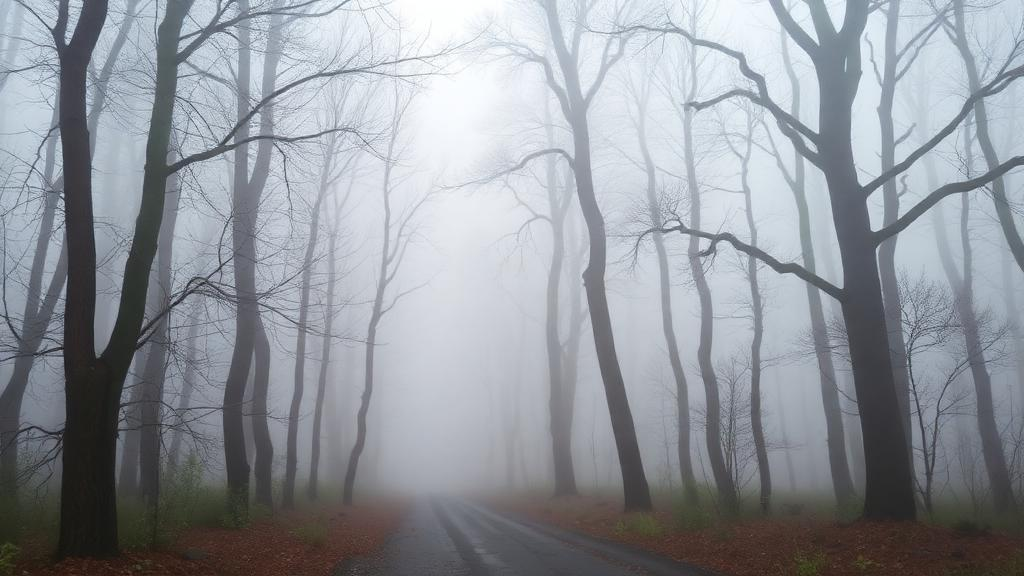
Participants rated each image on a single-item measure of perceived restorative potential, embedded in a scenario describing the mental fatigue of daily life and the desire to find places that could restore depleted cognitive resources. They also declared their place preference. The results of a mixed-factorial analysis of variance were striking. High contrast images, think of a sun-dappled scene with strong shadows, were rated as more restorative than low contrast images, such as a foggy or overcast view. Nature images outperformed urban ones. And place preference moderated the environment effect in exactly the predicted direction: participants rated settings congruent with their identity as significantly more restorative than incongruent ones, an effect that was dramatically larger for the nature-preferring group, with a standardised difference of 3.54 between their congruent and incongruent ratings.
The second study raised the stakes by changing the stimuli themselves. Instead of researcher-selected photographs, 159 participants, mostly UK residents, viewed sixty-six images uploaded by Study 1 participants who had been asked to submit photographs of environments they considered highly restorative. These participant-provided images, dubbed the ReNUE set, were again luminance-matched and sorted into high and low contrast subsets by environment type. The broad pattern replicated: high contrast and nature images received higher restorative ratings overall, and the nature-preferring majority again rated congruent nature scenes far above everything else. But two surprises emerged that complicate any tidy narrative about visual processing.
The first surprise was a significant interaction between contrast and environment type that had been absent in Study 1. In the ReNUE set, low contrast nature images were rated more restorative than high contrast nature images, reversing the overall contrast advantage, while urban images showed the expected pattern, with high contrast scenes rated far above low contrast ones. Low contrast urban images were, in fact, rated as essentially non-restorative by both preference groups. The researchers suggest that the participant-provided nature images may have depicted unmanaged landscapes that, despite their soft visual qualities, could have been perceived as unsafe, a possibility consistent with Stress Reduction Theory’s requirement that nature be non-threatening to confer benefits. The second surprise concerned the urban-preferring minority, who in Study 2 rated incongruent nature images more highly than their preferred urban scenes, echoing earlier findings that people with urban preferences tend to perceive a broader range of environments as potentially restorative.
What do these findings mean for the dominant theories of environmental restoration? Neither Attention Restoration Theory nor Stress Reduction Theory specifies which visual characteristics should trigger the positive emotions or involuntary attention they invoke. The independent contrast effect observed in both studies, small to medium in size, is therefore not predicted by either framework, but it fits comfortably within the perceptual fluency account, which holds that environments processed with lower cognitive effort are liked more and experienced as more restorative. Higher contrast stimuli have previously been linked to perceptual fluency and positive affect, and contrast is known to guide eye movements and fixations across a scene, potentially increasing engagement with the very features that later drive restoration. In this view, contrast may be one of the first visual signals that sets the emotional and attentional cascade in motion.
The methodological contribution is equally notable. By manipulating a single low-level visual property while holding mean luminance constant, the studies avoid the confounding that has muddied earlier work in which multiple image features varied simultaneously. By replicating the place preference moderation across two qualitatively different image sets and participant groups, the researchers strengthen the case that this top-down, identity-driven factor is a genuine and previously under-accounted influence on restoration research. Indeed, they argue that some portion of the reported gap between nature and urban environments in restorative studies may simply reflect the unmeasured preferences of participants, many of whom self-identify as country people. In both experiments, roughly two-thirds to nearly three-quarters of participants reported a nature preference, meaning the field’s standard samples may systematically inflate nature’s apparent advantage.
The practical implications reach into urban design and public health. If high contrast elements, bright light playing against shadow, signal wellbeing in the way that bright daylight does, designers might deliberately incorporate such features to enhance the perceived restorative quality of streets and squares. Conversely, the finding that low contrast urban scenes were rated as having virtually no restorative potential by either group offers a caution against flat, visually muted streetscapes. At the same time, the authors are careful about limits: perceived restorative potential is not actual restoration, the samples were young, English-speaking, and Western, and the cross-sectional design cannot establish causation. Future work, they suggest, should pair these judgements with physiological measures, eye-tracking, and real-world mobile assessment tools, and should move beyond the nature-urban dichotomy to include urban green and blue spaces. What emerges is a picture of restoration as a conversation between retina and identity, in which the eye of the beholder, quite literally, helps decide where the mind goes to recover.
Subject of Research: Effects of visual contrast and place preference on the perceived restorative potential of natural and urban environments
Article Title: Is restoration in the ‘eye’ of the beholder? contrast and place preference effects on the perceived restorative potential of natural and urban environments
Article References: Wilkie, S., & Delicato, L. (2026). Is restoration in the ‘eye’ of the beholder? contrast and place preference effects on the perceived restorative potential of natural and urban environments. Current Psychology, 45(19), Article 1572. https://doi.org/10.1007/s12144-026-10110-y
Image Credits: AI Generated
DOI: 10.1007/s12144-026-10110-y
Keywords: environmental psychology, restorative environments, visual contrast, place preference, attention restoration theory, stress reduction theory, perceptual fluency, social identity, urban design, nature and wellbeing, visual perception, perceived restorative potential
Cite Scienmag News
Glenn Wilkins. (October 3, 2026). Why a Foggy Forest May Restore You Better Than a Sunny Street. Scienmag. https://scienmag.com/why-a-foggy-forest-may-restore-you-better-than-a-sunny-street/
Glenn Wilkins. "Why a Foggy Forest May Restore You Better Than a Sunny Street." Scienmag, 3 October 2026, https://scienmag.com/why-a-foggy-forest-may-restore-you-better-than-a-sunny-street/. Accessed 3 October 2026.
Glenn Wilkins. "Why a Foggy Forest May Restore You Better Than a Sunny Street." Scienmag. October 3, 2026. https://scienmag.com/why-a-foggy-forest-may-restore-you-better-than-a-sunny-street/


