


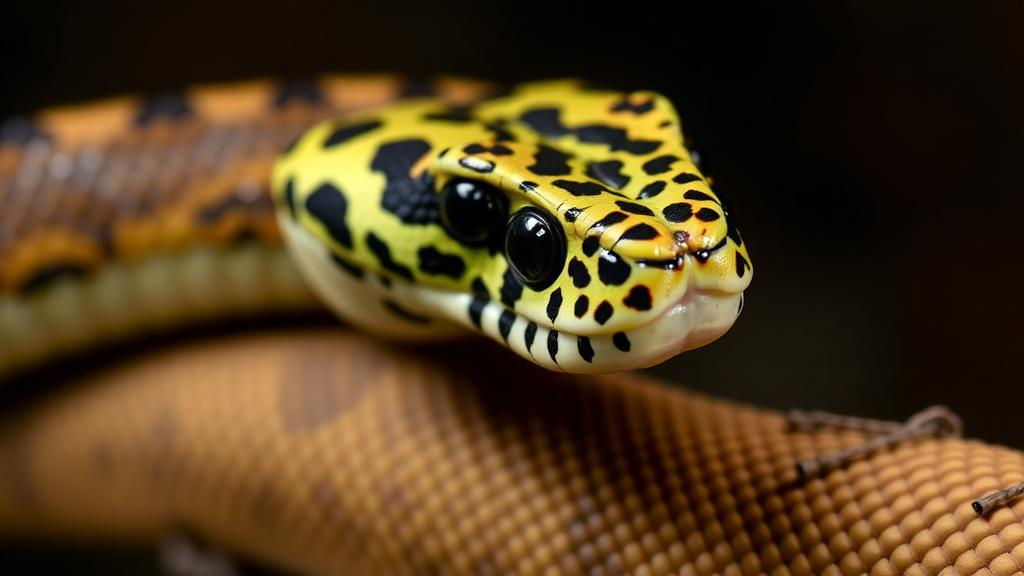
The horned, sand-swimming vipers of the genus Cerastes have long fascinated herpetologists and venom researchers alike. These arid-adapted snakes, which include the iconic Sahara horned viper, are among the most recognizable predators of the Palearctic deserts, yet the genetic architecture underlying one of their most striking traits — their venom — has remained largely unexplored at the level of whole genomes. A new study published in BMC Genomics by Gabriel Mochales-Riaño of the Institute of Evolutionary Biology (CSIC-Universitat Pompeu Fabra) in Barcelona and an international team of collaborators has now used whole genome sequencing to dissect the evolutionary history of the three recognized species of the genus, Cerastes cerastes, Cerastes gasperettii and Cerastes vipera, and to probe the structural variation hidden within the gene regions that encode their toxins.
The research addresses one of the central challenges of modern evolutionary biology: connecting genomic change to phenotypic differentiation. Most traits that matter in nature — from body size to disease resistance — are shaped by many genes acting together in complex, polygenic architectures, which makes it notoriously difficult to trace which genomic changes actually drive differences between organisms. Venom offers a rare exception. It is produced in a specialized secretory gland, governed by a modular regulatory system, and composed largely of proteins drawn from a limited and recurrent set of toxin gene families. That combination of biological focus and genomic tractability has made venom a leading model for genotype–phenotype studies, and the Cerastes system provides an ideal natural laboratory in which to exploit it.
To reconstruct the evolutionary history of the genus, the team generated whole genome sequencing data from 27 individuals spanning the three species across their desert ranges. Whole genomes are the richest source of information available for this kind of work, capturing not only the single-letter changes in DNA sequence that most population genetic studies rely on, but also the larger rearrangements — deletions, duplications, insertions and other structural variants — that reshape genes and chromosomes. The analyses showed that whole genome data broadly confirmed earlier inferences about population structure, phylogenomic relationships and introgression, the movement of genes between species through hybridization, that had been drawn from genome-wide datasets. Crucially, however, the whole genome approach delivered finer resolution, sharpening the picture of how these desert vipers are related to one another and where their lineages have exchanged genes.
Beyond resolving relationships, the study brought a conservation dimension into sharp focus. The researchers applied conservation genomic analyses to relict populations of Cerastes cerastes in Arabia, and the results revealed pronounced genomic consequences of long-term isolation. Relict populations — small, stranded remnants of once-larger distributions — often accumulate the signatures of isolation over thousands of generations: reduced genetic diversity, elevated inbreeding and the loss of rare variants that could buffer a population against environmental change. The Arabian populations of the horned viper carry exactly this kind of genomic burden, a finding that matters not only for understanding the species’ history but also for any effort to manage and protect these isolated desert lineages in a region where habitats are under increasing pressure.
The most striking results, however, concern the venom-encoding genes themselves. When the team examined the major toxin gene regions across individuals and species, they detected extensive structural variation, both between species and within them. Structural variation of this kind can have outsized effects on gene function. A deletion can remove a toxin gene entirely; a duplication can multiply its output; a rearrangement can alter how a gene is regulated. Because venom composition is ultimately a product of which toxin genes are present, in how many copies, and under what regulatory control, these large-scale genomic differences are prime candidates for explaining why closely related vipers can produce chemically distinct venoms.
Indeed, the pattern the researchers observed is consistent with previously reported differences in venom composition among Cerastes species. Earlier toxinological work on these snakes had documented variation in the protein makeup of their venoms, but the genomic basis of that variation had not been resolved. By showing that the toxin gene regions themselves are structurally fluid — reshuffled and reorganized across the genus — the study provides a plausible genomic mechanism for the venom differences that venom analysts had already measured at the protein level. The authors are careful in their framing: the findings suggest that genomic structural changes may contribute to variation in venom composition, linking structure to function in a way that invites further experimental work.
Technically, the study illustrates why whole genome sequencing is transforming venom research. Traditional approaches to toxin evolution have often focused on transcriptomes, sequencing the messenger RNA expressed in venom glands, which reveals which toxin genes are active but says little about the underlying genomic landscape — how many copies of a gene exist, how they are arranged, or what variants are silently carried but not expressed. Genomes capture all of that, and they also allow researchers to reconstruct the demographic history of the species carrying the venom genes. In the Cerastes study, the same dataset served double duty, resolving both the species’ evolutionary past — population structure, phylogeny and introgression — and the structural dynamics of the toxin loci that shape their most famous phenotype.
The genus Cerastes itself makes a compelling subject for this kind of integrative work. These vipers are exquisitely adapted to life in some of the harshest environments on Earth, from the Saharan sands of North Africa to the arid reaches of the Arabian Peninsula. Their sidewinding locomotion, sand-burrowing habits and cryptic coloration are classic desert adaptations, and their distributions have been shaped by the dramatic climatic oscillations of the Palearctic over millions of years. Understanding how isolation, adaptation and gene flow have sculpted their genomes — and how those processes have interacted with the evolution of their venom — requires exactly the combination of population genomics, phylogenomics and toxin-gene analysis that the Barcelona-led team deployed.
The study also carries a broader message about how complex adaptive traits evolve. Venom is not the product of a single gene or a simple switch; it is a modular, evolvable cocktail whose composition can shift as toxin gene families expand, contract and diversify. The extensive structural variation documented across Cerastes toxin regions suggests that the raw material for venom evolution is abundant even within and between closely related species, and that large-scale genomic rearrangements — not just point mutations — are part of the engine driving that diversification. For evolutionary biologists, this reinforces the value of integrative genomic approaches that look across scales, from species trees to chromosome structure, to disentangle the multiple processes shaping adaptation.
For conservationists and venom researchers alike, the implications are tangible. The genomic fragility of relict Arabian C. cerastes populations underscores the need to consider genetic health, not just census numbers, when assessing the status of isolated desert wildlife. And for anyone interested in the biology of venom — from antivenom development to the search for novel therapeutic compounds — the finding that toxin gene architecture varies extensively across a single viper genus is a reminder that venom’s diversity begins deep in the genome. The full study, published open access in BMC Genomics, is available to readers under a Creative Commons license, with the data and analyses offering a foundation for the next generation of work connecting desert viper genomes to the venoms that make these snakes such formidable desert hunters.
Subject of Research: Population genomics and structural variation of venom-encoding genes in the desert viper genus Cerastes
Article Title: Population genomics unravel structural variation of venom-encoding genes across the desert viper genus Cerastes
Article References: Population genomics unravel structural variation of venom-encoding genes across the desert viper genus Cerastes. (n.d.). https://doi.org/10.1186/s12864-026-13357-8
Image Credits: AI Generated
DOI: 10.1186/s12864-026-13357-8
Keywords: Cerastes, desert vipers, venom, population genomics, structural variation, toxin genes, whole genome sequencing, phylogenomics, introgression, conservation genomics, Arabian Peninsula, BMC Genomics
Cite Scienmag News
Juliet Wilcox. (October 3, 2026). Desert Viper Genomes Reveal Structural Shake-Ups in Venom Genes. Scienmag. https://scienmag.com/desert-viper-genomes-reveal-structural-shake-ups-in-venom-genes/
Juliet Wilcox. "Desert Viper Genomes Reveal Structural Shake-Ups in Venom Genes." Scienmag, 3 October 2026, https://scienmag.com/desert-viper-genomes-reveal-structural-shake-ups-in-venom-genes/. Accessed 3 October 2026.
Juliet Wilcox. "Desert Viper Genomes Reveal Structural Shake-Ups in Venom Genes." Scienmag. October 3, 2026. https://scienmag.com/desert-viper-genomes-reveal-structural-shake-ups-in-venom-genes/


