


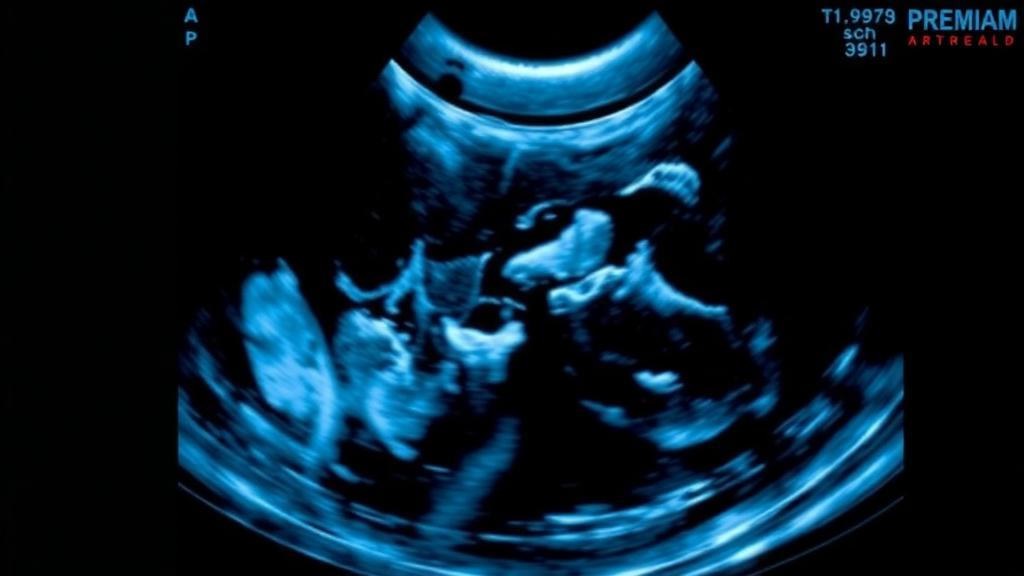
For women facing breast cancer surgery, one of the most consequential questions is not whether chemotherapy will work, but how the tumor will respond to it. Neoadjuvant chemotherapy, drugs given before an operation rather than after, can dramatically shrink breast tumors, and in some patients it erases visible disease altogether. Yet the geometry of that shrinkage matters enormously. A tumor that contracts inward from all sides, like a deflating balloon, leaves behind a well-defined boundary that surgeons can safely target. A tumor that fragments or melts away unevenly leaves scattered malignant cells across a wider field, making it far harder to preserve healthy breast tissue. A new study from Zhongda Hospital at Southeast University in Nanjing, published in BMC Medical Imaging, reports that a routine ultrasound technique performed before treatment even begins can forecast which of these two scenarios is likely to unfold, potentially transforming how surgeons plan breast-conserving operations.
The research team, led by Chenrui Pan, Bingjie Yang and Huiming Shen as joint first authors under corresponding author Jia Li, focused on contrast-enhanced ultrasound, or CEUS. Unlike conventional ultrasound, which relies on the natural reflectivity of tissues, CEUS injects microbubble contrast agents into the bloodstream. These bubbles, far smaller than red blood cells, course through the tumor’s vasculature and echo sound waves back to the probe, allowing clinicians to watch blood flow through a lesion in real time. Because a tumor’s blood supply is one of the most intimate records of its biology, encoding how it grows, invades and dies, the technique offers a dynamic portrait of tumor physiology that static images cannot match. The researchers asked a deceptively simple question: could the vascular fingerprint of a breast tumor, captured before a single dose of chemotherapy, predict the pattern in which that tumor would later shrink?
To answer it, the team retrospectively analyzed 64 breast cancer patients who underwent neoadjuvant chemotherapy followed by surgery between June 2018 and May 2023 at their institution. After the operations, pathologists examined the removed tissue and sorted the patients into two groups according to their tumor shrinkage pattern, or TSP. Thirty-eight patients, 59.4 percent of the cohort, showed concentric shrinkage, the inward, uniform contraction that leaves a discrete residual tumor border. The remaining 26 patients, 40.6 percent, showed non-concentric shrinkage, the scattered, irregular response that complicates surgical planning. This postoperative pathology served as the ground truth against which the pretreatment imaging and clinical data were tested.
Before treatment began, each patient’s tumor was characterized with both qualitative and quantitative CEUS parameters alongside a panel of clinical features. The quantitative measures included time to peak, abbreviated TTP, which records how quickly the contrast agent reaches its maximum concentration within the lesion, a direct readout of vascular density and perfusion efficiency. The qualitative assessments included the presence of penetrating vessels, arteries that plunge from surrounding tissue into the tumor body and feed its core. The clinical variables spanned the familiar molecular markers of breast oncology: estrogen receptor, progesterone receptor, and human epidermal growth factor receptor 2, or HER2, the driver protein targeted by some of the most effective drugs in modern breast cancer therapy.
Using univariable and multivariate logistic regression, the researchers distilled this collection of variables down to four independent predictors of the shrinkage pattern: progesterone receptor status, HER2 status, time to peak on contrast-enhanced ultrasound, and the presence of penetrating vessels. Each survived statistical scrutiny with a P value below 0.05, meaning the associations were unlikely to have arisen by chance. The combination is biologically coherent. Hormone receptor and HER2 status define the tumor’s molecular subtype, which shapes how it responds to cytotoxic and targeted drugs. Perfusion kinetics and penetrating vessel architecture, meanwhile, describe the tumor’s plumbing, the delivery network that determines whether chemotherapy reaches every corner of the lesion at lethal concentrations. A tumor with sluggish perfusion or a chaotic, invasive vascular supply may respond in a patchwork fashion, dying here and persisting there, while a well-perfused tumor may contract as a coherent whole.
From these four predictors, the team constructed a nomogram, a graphical scoring tool that assigns weighted points to each variable and sums them into a probability estimate. Such tools are prized in clinical medicine because they translate complex multivariate statistics into something a clinician can use at the bedside. When the researchers tested the nomogram’s discriminatory power using receiver operating characteristic analysis, the results were striking. The area under the curve reached 0.910, with a 95 percent confidence interval of 0.835 to 0.984, placing the model well above the 0.5 threshold of random guessing and into the range considered clinically useful. In practical terms, the tool achieved a sensitivity of 81.6 percent, correctly identifying most patients destined for concentric shrinkage, and a specificity of 88.5 percent, correctly flagging most of those whose tumors would shrink non-concentrically.
The clinical stakes of this prediction are considerable. Breast-conserving surgery, which removes the tumor with a margin of healthy tissue while sparing the rest of the breast, has become the preferred operation for many early-stage patients because it preserves body image and avoids the physical and psychological burden of mastectomy. But when chemotherapy has shrunk a tumor non-concentrically, the residual disease may be scattered in strands and nests far from the original lesion’s apparent border. Operating on the assumption of concentric shrinkage in such a patient risks leaving malignant cells behind, a local recurrence waiting to happen. Conversely, patients whose tumors are predicted to shrink concentrically may be counseled with greater confidence that breast conservation is feasible. A pretreatment forecast of shrinkage pattern gives the surgical team a head start on that conversation, months before the pathology report arrives.
The study’s reliance on pretreatment imaging is what sets it apart from much of the existing literature. Many predictive models in neoadjuvant breast cancer care depend on mid-treatment assessments, requiring clinicians to wait for one or more chemotherapy cycles before imaging can offer guidance. A model built entirely from pretreatment CEUS and baseline clinical features can inform the very first treatment-planning discussion, potentially influencing the choice of surgical strategy, the sequencing of therapy, and even the design of clinical trials that stratify patients by expected response pattern. The technique itself is also widely available and comparatively inexpensive, since contrast-enhanced ultrasound is performed with standard ultrasound equipment and does not involve ionizing radiation, an advantage over repeated CT or MRI-based monitoring.
As with any retrospective study of 64 patients at a single center, the findings require validation in larger, multi-institutional cohorts before they can reshape clinical guidelines. The authors themselves note that the work was approved by the ethics committee of Zhongda Hospital and funded by the Jiangsu Provincial Commission of Health and Family Planning, and the article was published open access on 29 September 2026. Still, the convergence of molecular markers and vascular imaging into a single predictive framework points toward a broader shift in oncology: the idea that the answer to how a tumor will respond is already written into its biology, waiting to be read. With microbubbles, a probe and a well-trained eye, clinicians may soon peer into that biology before the first infusion, and plan surgery around a future they can see coming.
Subject of Research: Predicting breast cancer tumor shrinkage patterns after neoadjuvant chemotherapy using pretreatment contrast-enhanced ultrasound and clinical features
Article Title: Prediction of tumor shrinkage patterns to neoadjuvant chemotherapy based on pretreatment contrast-enhanced ultrasound and clinical features in breast cancer
Article References: Pan, C., Yang, B., Shen, H., Wang, Y., Han, J., & Li, J. (2026). Prediction of tumor shrinkage patterns to neoadjuvant chemotherapy based on pretreatment contrast-enhanced ultrasound and clinical features in breast cancer. BMC Medical Imaging. https://doi.org/10.1186/s12880-026-02837-8
Image Credits: AI Generated
DOI: 10.1186/s12880-026-02837-8
Keywords: breast cancer, neoadjuvant chemotherapy, contrast-enhanced ultrasound, tumor shrinkage patterns, breast-conserving surgery, nomogram, HER2, progesterone receptor, time to peak, penetrating vessels, predictive markers, oncology
Cite Scienmag News
Nathaniel Bowman. (October 3, 2026). Ultrasound Scan Before Chemotherapy Predicts How Breast Tumors Will Shrink. Scienmag. https://scienmag.com/ultrasound-scan-before-chemotherapy-predicts-how-breast-tumors-will-shrink/
Nathaniel Bowman. "Ultrasound Scan Before Chemotherapy Predicts How Breast Tumors Will Shrink." Scienmag, 3 October 2026, https://scienmag.com/ultrasound-scan-before-chemotherapy-predicts-how-breast-tumors-will-shrink/. Accessed 3 October 2026.
Nathaniel Bowman. "Ultrasound Scan Before Chemotherapy Predicts How Breast Tumors Will Shrink." Scienmag. October 3, 2026. https://scienmag.com/ultrasound-scan-before-chemotherapy-predicts-how-breast-tumors-will-shrink/


