


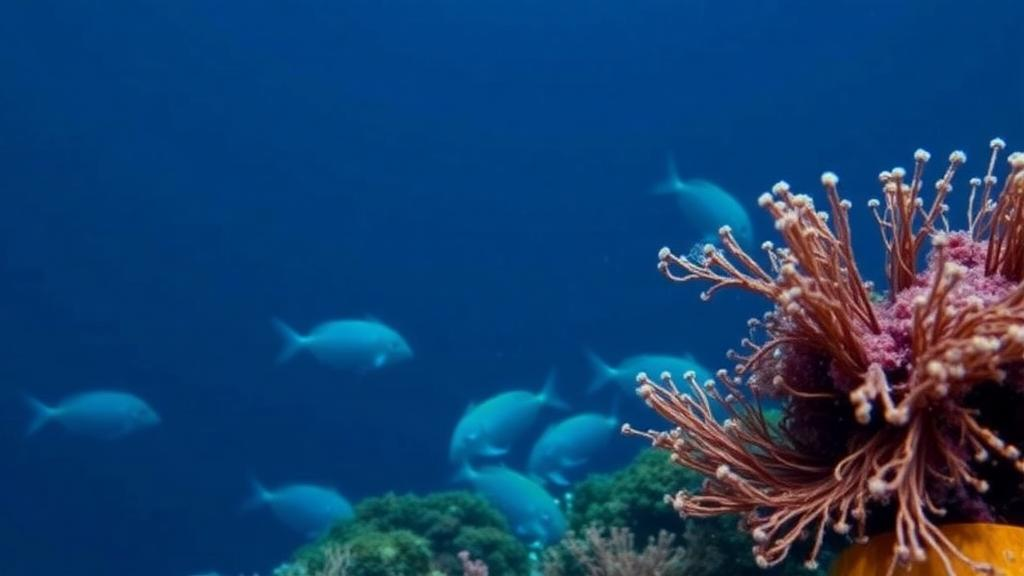
The ocean covers more than 70 percent of the Earth’s surface, and within its coral reefs, deep-sea habitats, and mangrove forests lives a level of biodiversity that terrestrial environments can rarely match. A new peer-reviewed review argues that this biological wealth remains one of the most underutilized resources in modern medicine. The paper, published in Letters in Functional Foods by researchers affiliated with institutions in Ghaziabad, Uttar Pradesh, India, surveys the field of marine pharmacognosy, the study of medically useful compounds derived from marine organisms. Its central claim is straightforward: the same chemical ingenuity that allows sponges, algae, corals, tunicates, and marine microorganisms to survive in some of the planet’s harshest conditions has already produced approved drugs, and it is likely to produce many more if the scientific and conservation communities can learn to harvest it responsibly.
The logic behind marine pharmacognosy rests on a simple evolutionary principle. Organisms living in extreme or highly competitive environments, such as coral reefs crowded with rivals or the deep sea where pressure is crushing and light is absent, often evolve unique chemical compounds as survival tools. Some of these molecules deter predators, others help an organism compete for space on a crowded reef, and still others allow cells to function under conditions that would kill most life on Earth. For drug hunters, this chemical arms race represents an enormous library of biologically active molecules that have already been tested by millions of years of natural selection. Unlike a randomly synthesized compound, a marine natural product has a demonstrated capacity to interact with living systems, which makes it a promising starting point for drug development.
The review, authored by Shivani Verma, Somesh Saxena, and corresponding author Raj Kumari Kataria, was assembled from peer-reviewed literature retrieved from three major scientific databases: Scopus, PubMed, and Web of Science. Rather than attempting an exhaustive catalog of every marine compound ever described, the authors deliberately focused on the modern tools that are transforming how discovery happens. High-throughput screening, which enables researchers to rapidly test large numbers of compounds for biological activity, features prominently in their analysis, as do computational biology and genomics. The review also narrows its attention to two detailed case studies of marine-derived drugs that have reached the clinic, trabectedin and vidarabine, using them to illustrate both the promise and the practical difficulties of translating ocean chemistry into medicine.
Trabectedin stands as one of the most celebrated success stories in the field. Derived originally from the sea squirt Ecteinascidia turbinata, a tunicate found in Caribbean and Mediterranean waters, the compound was developed into an approved treatment for soft tissue sarcoma and relapsed ovarian cancer in several regions of the world. Its journey from a slow-growing marine invertebrate to a pharmacy shelf illustrates a recurring theme in marine drug development: the organism that produces a valuable compound is often rare, slow to reproduce, or difficult to cultivate, which makes extracting enough material directly from nature impractical. Solutions have included aquaculture, partial chemical synthesis, and microbial production routes, each of which carries its own technical and economic trade-offs that the review examines in detail.
Vidarabine tells a different but equally instructive story. Isolated from a marine sponge-associated microorganism, this nucleoside analog became one of the early antiviral agents used against herpes virus infections, demonstrating that marine sources can yield not only anticancer agents but also compounds active against viruses. Together, the two case studies span the therapeutic spectrum that marine natural products have touched so far, from cytotoxic molecules that kill cancer cells to antivirals that interfere with viral replication. The review uses this breadth to argue that the ocean’s medicine cabinet is not a narrow specialty but a genuinely diverse source of pharmacological leads, one that includes alkaloids, peptides, nucleosides, and many other chemical classes.
The technological toolkit driving current discovery has changed dramatically from the era when marine drug hunting meant dredging samples and testing crude extracts by hand. High-throughput screening now allows thousands of compounds to be evaluated against disease targets in days rather than months. Computational biology adds the ability to model how a candidate molecule will interact with proteins and receptors before it is ever synthesized in quantity, narrowing the pipeline early and saving resources. Genomic sequencing of marine organisms reveals the biosynthetic gene clusters responsible for producing their chemical weapons, which means researchers can identify promising pathways even in microbes that cannot yet be grown in the laboratory. Synthetic biology then offers a route to reproducing those molecules in tractable host organisms, bypassing the need to harvest the original source.
Yet the review is candid about the barriers that continue to slow the field. Many marine compounds occur naturally only in minute quantities, often as fractions of a percent of the organism’s body mass, which makes direct extraction costly and frequently impossible at commercial scale. The supply problem has historically killed otherwise promising drug candidates, a phenomenon so common in natural products research that it has shaped entire strategies around total synthesis and analog development. Beyond economics, overharvesting poses serious sustainability and conservation risks. A sponge that took decades to grow cannot be stripped from a reef without ecological consequences, and deep-sea ecosystems in particular are fragile, slow to recover, and still poorly understood. The authors argue that these constraints are not peripheral concerns but central design problems for the next generation of marine drug discovery.
The review’s answer to this tension is a firm insistence that sustainable sourcing must sit at the heart of marine pharmacognosy going forward. Synthetic production in the laboratory or in engineered microbes can decouple drug supply from ecosystem damage, while environmentally responsible harvesting practices can protect the organisms and habitats that remain the field’s inspiration. The authors also highlight deep-sea exploration and green chemistry as strategies that can expand the search for new compounds without repeating the extractive mistakes of the past. Green chemistry, which emphasizes processes that reduce or eliminate hazardous substances, aligns naturally with a field whose raw materials come from ecosystems that cannot tolerate industrial abuse. The overarching message is that drug discovery and marine biodiversity protection need not be in conflict; with advanced technology and genuine conservation commitments, both goals can be pursued together.
The urgency of that dual mandate is sharpened by the public health challenges the review identifies, above all antibiotic resistance. As resistance to existing antibiotics spreads worldwide, the need for novel chemical scaffolds with mechanisms of action unlike current drugs has become acute, and marine microorganisms in particular are known producers of antimicrobial compounds. The review frames marine pharmacognosy as a contributor to addressing this and other urgent health threats, provided that the pipeline from ocean organism to approved medicine can be made faster, cheaper, and cleaner. Whether the next trabectedin or vidarabine emerges from a coral reef sponge, a deep-sea microbe, or a fermentation tank programmed with sponge genes will depend on how well the field integrates the tools and the ethics it now has at its disposal.
For now, the review by Verma, Saxena, and Kataria serves as both a status report and a warning. The ocean has already given medicine drugs that fight cancer and viral infection, and the diversity of its reefs, sediments, and microbial communities suggests that this is only the beginning. But the same ecosystems that generate these molecules are under pressure from warming waters, pollution, and habitat destruction, meaning the window for discovery may be closing even as the science accelerates. The authors’ conclusion is that the future of marine pharmacognosy depends on treating the ocean not as a mine to be emptied but as a living library to be read carefully, with every extraction weighed against the health of the source. In that framing, conservation is not an obstacle to the next breakthrough but the condition that makes it possible.
Subject of Research: Marine pharmacognosy and the discovery of bioactive drug compounds from ocean organisms
Article Title: Review surveys the ocean's medicine cabinet, from cancer-fighting alkaloids to antiviral compounds
Article References: Review surveys the ocean's medicine cabinet, from cancer-fighting alkaloids to antiviral compounds. (n.d.). Original publication
Image Credits: AI Generated
DOI: Not provided
Keywords: marine pharmacognosy, drug discovery, trabectedin, vidarabine, marine natural products, high-throughput screening, genomics, synthetic biology, sustainability, ocean biodiversity, antibiotic resistance, deep-sea exploration
Cite Scienmag News
Violet Maxwell. (October 3, 2026). Ocean Life Yields Cancer and Antiviral Drug Clues in New Review. Scienmag. https://scienmag.com/ocean-life-yields-cancer-and-antiviral-drug-clues-in-new-review/
Violet Maxwell. "Ocean Life Yields Cancer and Antiviral Drug Clues in New Review." Scienmag, 3 October 2026, https://scienmag.com/ocean-life-yields-cancer-and-antiviral-drug-clues-in-new-review/. Accessed 3 October 2026.
Violet Maxwell. "Ocean Life Yields Cancer and Antiviral Drug Clues in New Review." Scienmag. October 3, 2026. https://scienmag.com/ocean-life-yields-cancer-and-antiviral-drug-clues-in-new-review/


