


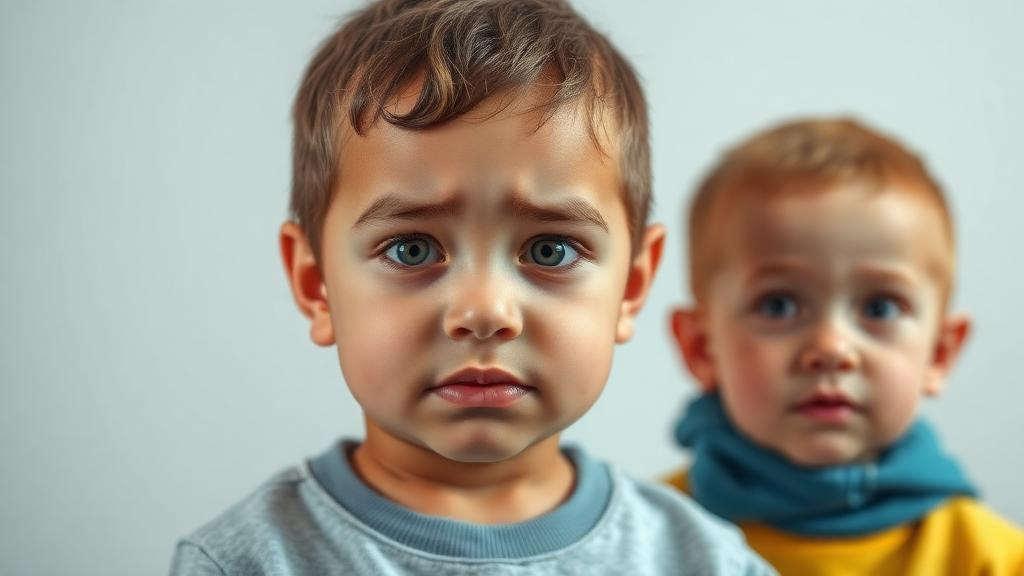
For a child undergoing cancer treatment, the hospital ward can be an isolating world of needles, scans, and long stretches away from friends and school. A new cross-sectional study from researchers at Ataturk University in Erzurum, Türkiye, adds a striking psychological dimension to that picture: children with cancer who have difficulty identifying and describing their own emotions— a trait known as alexithymia—also tend to experience markedly higher levels of social anxiety. The findings, published in BMC Cancer, suggest that the way young patients process their inner emotional lives may be a key, and previously underappreciated, driver of the social difficulties that shadow them through prolonged treatment.
Alexithymia, a term coined in the 1970s, literally translates from Greek as “no words for emotions.” People high in this trait struggle to recognize what they are feeling, to distinguish emotions from bodily sensations, and to communicate feelings to others. It is not a psychiatric disorder in itself, but a personality dimension that varies across the population and is associated with a range of mental health vulnerabilities. In children, alexithymia can interfere with the development of emotional awareness at a stage when such skills are still being built. For young cancer patients, whose daily lives are saturated with fear, pain, and uncertainty, the inability to put feelings into words could plausibly make an already overwhelming experience even harder to navigate socially.
The research team, led by Sümeyye Ekici and Arzu Sarıalioğlu of the Department of Child Health and Diseases Nursing, together with Bahar Çiftçi, set out to measure both alexithymia and social anxiety in a clinical pediatric population and to test whether the two constructs are statistically linked. They recruited 142 children and adolescents aged 10 to 18 years who had been diagnosed with cancer at least six months earlier, treating them in a pediatric hematology and oncology clinic over a twelve-month period from January to December 2025. The six-month threshold matters, because it ensured that participants were not simply responding to the acute shock of diagnosis but were living with the ongoing reality of cancer and its treatment.
Data collection relied on two validated instruments: the Children’s Alexithymia Scale, which captures difficulties in identifying feelings, describing feelings, and externally oriented thinking, and the Social Anxiety Scale for Children, which assesses fear of negative evaluation and social avoidance and distress. A sociodemographic form recorded background variables including age, gender, family type, and the duration of illness. Ethical approval came from the Atatürk University Faculty of Medicine Clinical Research Ethics Committee, and written informed consent was obtained from parents or legal guardians, with written assent also taken from the children themselves after age-appropriate explanation of the study.
The results were consistent across both measurement and modeling approaches. On average, the children showed moderate levels of alexithymia and moderate levels of social anxiety. More importantly, the two traits moved together: social anxiety scores rose in parallel with total alexithymia scores, a positive association captured by a Spearman correlation coefficient of 0.233, statistically significant at p = 0.005. When the researchers examined the individual facets of alexithymia, the strongest link belonged to difficulty identifying emotions, with a correlation of 0.263 (p = 0.002). In other words, the children who most often could not tell what they were feeling were also the ones most likely to fear judgment and withdraw from social situations.
Correlation alone, however, cannot rule out the possibility that age, gender, family structure, or the length of illness explains the apparent connection. To address this, the team used hierarchical multiple linear regression, entering age, gender, family type, and illness duration in a first block of predictors, and then adding total alexithymia in a second block to test its incremental contribution. The outcome was decisive. Even after adjustment for those demographic and clinical factors, total alexithymia remained independently associated with social anxiety, with an unstandardized coefficient of 0.678 and a p-value below 0.001. Illness duration and family type also contributed significantly to the model, which together explained 20.8 percent of the variance in social anxiety scores—an adjusted R² of 0.208, a substantial share for psychosocial research in this population.
The independent roles of illness duration and family type deserve particular attention. Longer time since diagnosis was associated with social anxiety in the regression model, hinting that the social costs of cancer may accumulate rather than fade as treatment stretches on: missed school months, shifting friendships, visible treatment side effects, and a growing sense of being different from peers. Family type, meanwhile, points to the household environment as a modulating force. Children’s emotional development is deeply embedded in family context, and the structure and resources of the family may shape both how much emotional expression is modeled at home and how much support a child receives in coping with the social fallout of illness. The authors frame this as a multidimensional psychosocial vulnerability experienced across the cancer trajectory, rather than a single-factor problem.
From a mechanistic standpoint, the link between alexithymia and social anxiety is biologically and psychologically plausible. Accurate identification of one’s own emotions is thought to be a foundation for interpreting the emotions of others; children who cannot read their internal states may also struggle to model what peers are thinking, which fuels uncertainty in social encounters and, over time, avoidance. In a pediatric oncology ward, this loop can be compounded by the illness itself. Fatigue, pain, and medication effects can blur the boundary between bodily sensations and emotional states, making it genuinely harder for a child to distinguish nausea from nervousness or treatment-related discomfort from sadness. A child who cannot disentangle those signals may respond to ambiguous social situations with heightened vigilance and retreat.
The clinical implications, the researchers argue, fall squarely within the domain of nursing practice. Because the study was conducted in a pediatric hematology and oncology clinic by nursing faculty, its recommendations are oriented toward bedside care: routine assessment of alexithymia in pediatric oncology settings could help identify children at elevated risk of social anxiety before the problem becomes entrenched. Interventions led by nurses that support emotion recognition, emotional expression, and communication—while taking account of how long the child has been ill and what kind of family environment they return to—may improve psychosocial adjustment during what are often years of intermittent treatment. Such approaches could include structured emotional literacy activities, guided conversations that help children name feelings, and family-inclusive strategies that extend emotional support beyond the hospital walls.
The study’s design does impose limits on interpretation. As a cross-sectional investigation, it captures a single moment in time and cannot establish whether alexithymia causes social anxiety, whether social withdrawal dulls emotional skills, or whether both arise from a third factor such as illness burden. The sample of 142 children from a single clinic, while respectable for this kind of research, also leaves open questions about how findings generalize across institutions and cultures. Still, the statistical rigor of the hierarchical modeling, the use of validated child-specific instruments, and the careful ethical framework give the results weight. What emerges is a clear and actionable signal: in childhood cancer care, attending to survival alone is not enough. The quiet children who cannot say what they feel may be carrying a second, invisible burden—one that clinicians can now screen for, and potentially relieve, with the tools of emotional support.
Subject of Research: The relationship between alexithymia and social anxiety in children and adolescents undergoing cancer treatment
Article Title: Alexithymia and social anxiety in pediatric oncology: a cross-sectional study
Article References: Ekici, S., Sarıalioğlu, A., & Çiftçi, B. (2026). Alexithymia and social anxiety in pediatric oncology: a cross-sectional study. BMC Cancer. https://doi.org/10.1186/s12885-026-16793-7
Image Credits: AI Generated
DOI: 10.1186/s12885-026-16793-7
Keywords: pediatric oncology, childhood cancer, alexithymia, social anxiety, emotional development, nursing, psychosocial adjustment, cross-sectional study, emotion recognition, family context, adolescent health, BMC Cancer
Cite Scienmag News
Nathaniel Bowman. (October 3, 2026). Children With Cancer Who Struggle to Name Feelings Face Higher Social Anxiety. Scienmag. https://scienmag.com/children-with-cancer-who-struggle-to-name-feelings-face-higher-social-anxiety/
Nathaniel Bowman. "Children With Cancer Who Struggle to Name Feelings Face Higher Social Anxiety." Scienmag, 3 October 2026, https://scienmag.com/children-with-cancer-who-struggle-to-name-feelings-face-higher-social-anxiety/. Accessed 3 October 2026.
Nathaniel Bowman. "Children With Cancer Who Struggle to Name Feelings Face Higher Social Anxiety." Scienmag. October 3, 2026. https://scienmag.com/children-with-cancer-who-struggle-to-name-feelings-face-higher-social-anxiety/


