


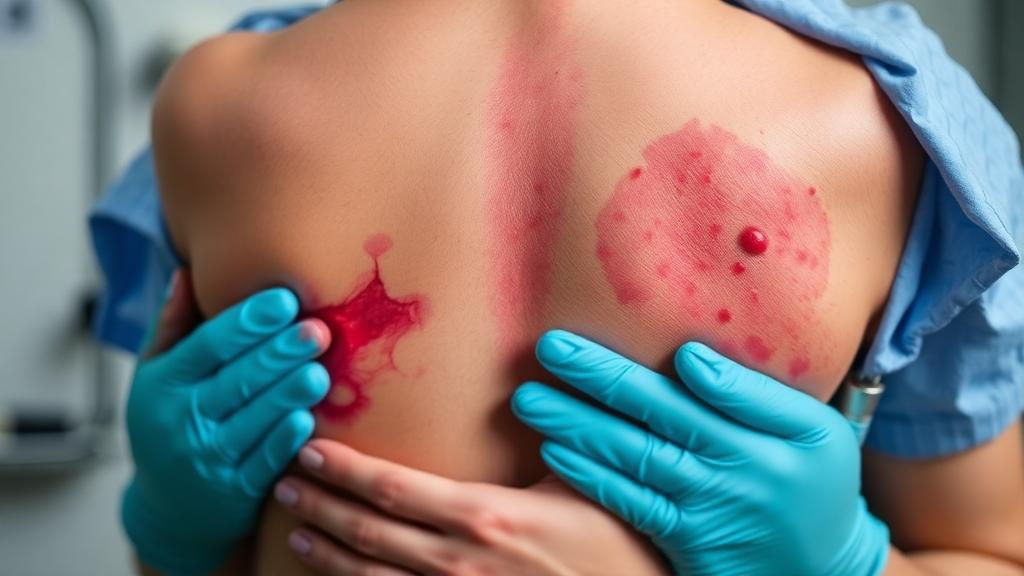
When a flare of hidradenitis suppurativa strikes, the pain can be so severe that patients with an established dermatologist still end up in the emergency department. That paradox sits at the heart of a new qualitative study published in Archives of Dermatological Research, which set out to answer a deceptively simple question: when the disease worsens, why do some patients go to the emergency room while others call their dermatology clinic? The answer, the researchers found, is not a matter of access alone. Even patients who already have a specialist are pushed toward emergency care by a tangle of individual and structural forces, from unbearable pain to after-hours clinic closures to the memory of being stigmatized by emergency staff during a previous visit.
Hidradenitis suppurativa, often abbreviated HS, is a chronic, recurrent inflammatory skin condition that causes painful nodules, abscesses, and draining tunnels, known as sinus tracts, most commonly in the armpits, groin, and beneath the breasts. It is driven by inflammation of hair follicles and immune dysregulation rather than poor hygiene, yet patients have long battled the misconception that the disease reflects uncleanliness. The condition follows a relapsing course, with flares that can erupt suddenly, progress unpredictably, and produce some of the highest rates of emergency department use in all of dermatology. Previous quantitative work has shown that many patients rely on emergency care rather than outpatient visits, and that pain is a dominant feature of those encounters. What has been missing is a detailed account of the decision-making that unfolds in the hours after a flare begins.
To fill that gap, a team led by researchers at Harvard Medical School and Brigham and Women’s Hospital, including first authors Natalie M. Baker and Karla Santiago-Soltero, conducted semi-structured interviews with adults who had recently sought care for a flare. The study is part of a broader sequential mixed-methods project, meaning an earlier quantitative analysis of patient-specific factors associated with emergency visits directly shaped the interview guide. Participants were recruited from a dermatology specialty clinic at an academic medical center and from surrounding emergency departments within the same geographic catchment area. To be eligible, patients had to speak English, be adults, have established care with an HS specialist, and have recently presented to either an emergency department or a dermatology clinic for a flare. Interviews ran from February 2024 through January 2025.
In total, twenty patients were interviewed: nine who had gone to an emergency department and eleven who had visited a dermatology clinic for their flare. The group’s demographics mirrored the broader HS population, with a mean age of thirty-seven years, eighty-five percent female participants, and a racially diverse composition that included forty-five percent White, thirty percent African American, ten percent mixed heritage, ten percent Asian, and ten percent Hispanic or Latino participants. Transcripts were analyzed using qualitative thematic analysis, a method in which researchers code recurring ideas across interviews and refine them into broader themes, continuing until thematic saturation was reached, the point at which new interviews stop producing new themes. A grounded-theory approach was then used to build a conceptual framework from those themes, letting the explanation emerge from the data rather than testing a predetermined hypothesis.
The analysis surfaced twelve primary themes that shaped whether patients chose the emergency department or the dermatology clinic during a disease exacerbation. On the side of emergency care, the strongest driver was severe pain that failed to respond to at-home management. When over-the-counter measures and prescribed strategies ran out and the pain kept climbing, the emergency room became the only option patients felt they had. Recommendations from providers or family members also pushed patients toward emergency care, as did a specific and understandable worry: concern that the flare might represent an infection rather than a routine HS exacerbation. Distinguishing a painful HS nodule from a bacterial abscess that needs drainage is genuinely difficult, even for clinicians, and patients carry that uncertainty with them.
Yet the same emergency departments that patients turned to in desperation were also described as places to avoid. Negative prior experiences acted as powerful barriers to returning, and two stood out: stigmatization and painful procedures. Patients described feeling judged, a wound that cuts deep in a disease already burdened by misconceptions about hygiene and body weight. They also recalled emergency interventions, such as incision and drainage, that were excruciating. This creates a painful loop: uncontrolled symptoms send patients to the emergency department, the experience there leaves them reluctant to return, and the next flare finds them hesitating until the pain becomes unbearable again. The study’s authors argue that this dynamic is a key reason emergency utilization remains high even among patients who, on paper, should not need it.
Dermatology clinics, by contrast, earned loyalty for reasons that emergency settings struggle to match. Positive relationships with providers were a major facilitator of clinic use, as was the sense of receiving comprehensive care that addressed the disease over time rather than one crisis at a time. Patients who trusted their specialists and felt known by them preferred to wait for clinic availability rather than default to the emergency room. Those therapeutic alliances, the interviews suggest, are not a soft luxury but a functional component of the health system, steering patients toward continuity of care and away from fragmented acute encounters that rarely change the disease’s long-term trajectory.
But the clinic route had its own structural limits, and the study catalogs them precisely. Restricted clinic availability, especially outside standard business hours, was the dominant barrier, since flares do not respect the nine-to-five schedule. Extended wait times for appointments meant that by the time a slot opened, a manageable flare could have escalated into an emergency. Perhaps most insidiously, the unpredictable progression of flares made planning impossible: patients could not know in the morning whether a tender spot would settle down by evening or explode into an abscess overnight. That uncertainty pushes patients toward the setting that is always open, even when they would prefer the setting that knows them best. The timing mismatch between flare behavior and clinic operations is, in effect, a design flaw that the emergency department silently absorbs.
The findings point toward concrete fixes. The researchers suggest that improving after-hours access to urgent dermatologic care could intercept many of the flares that currently land in emergency departments, an idea supported by emerging work on walk-in dermatology appointments for HS and atopic dermatitis. They also call for the development of evidence-based guidelines for at-home treatment strategies, so that patients facing a flare in the middle of the night have a validated playbook instead of guesswork. Written action plans, already tested in randomized trials for HS patient education, and patient support tools such as the HS Foundation’s Papaya app represent steps in that direction. Enhanced education for both patients and providers, particularly around differentiating HS flares from infection, could reduce both unnecessary emergency visits and the stigmatizing encounters that follow them.
What makes the study resonate beyond dermatology is its methodological honesty. By grounding the conceptual framework in patients’ own narratives rather than administrative billing data, the researchers captured the lived arithmetic of a flare: how much pain, how much fear, how much trust, and how many phone calls before a decision is made. The interviews also add texture to earlier population-level findings, including studies documenting low use of dermatology ambulatory encounters among HS patients and analyses of pain management at United States emergency department visits. The research was funded by the HS Foundation’s Danby Research Grant Program and a Dermatology Foundation Clinical Career Development Award. For a disease affecting an estimated one percent or more of the population, often beginning in young adulthood and disproportionately affecting women, the message is clear: reducing emergency utilization will require not just better access, but a system designed around the unpredictable, painful, and deeply personal reality of the flare itself.
Subject of Research: Patient decision-making in flare management and emergency department use in hidradenitis suppurativa
Article Title: Flare management perspectives among patients with hidradenitis suppurativa: a qualitative study
Article References: Baker, N. M., Santiago-Soltero, K., Narayana, A., Oke, O. H., DeWane, M. E., Cohen, S. R., Barbieri, J. S., Noe, M., & Charrow, A. P. (2026). Flare management perspectives among patients with hidradenitis suppurativa: a qualitative study. Archives of Dermatological Research, 318(1), Article 496. https://doi.org/10.1007/s00403-026-04907-x
Image Credits: AI Generated
DOI: 10.1007/s00403-026-04907-x
Keywords: hidradenitis suppurativa, flares, emergency department, dermatology, qualitative research, thematic analysis, pain management, stigmatization, health care utilization, patient experience, access to care, after-hours care
Cite Scienmag News
Ophelia Keating. (October 2, 2026). Why Patients With This Painful Skin Disease Keep Landing in the Emergency Room. Scienmag. https://scienmag.com/why-patients-with-this-painful-skin-disease-keep-landing-in-the-emergency-room/
Ophelia Keating. "Why Patients With This Painful Skin Disease Keep Landing in the Emergency Room." Scienmag, 2 October 2026, https://scienmag.com/why-patients-with-this-painful-skin-disease-keep-landing-in-the-emergency-room/. Accessed 2 October 2026.
Ophelia Keating. "Why Patients With This Painful Skin Disease Keep Landing in the Emergency Room." Scienmag. October 2, 2026. https://scienmag.com/why-patients-with-this-painful-skin-disease-keep-landing-in-the-emergency-room/


