


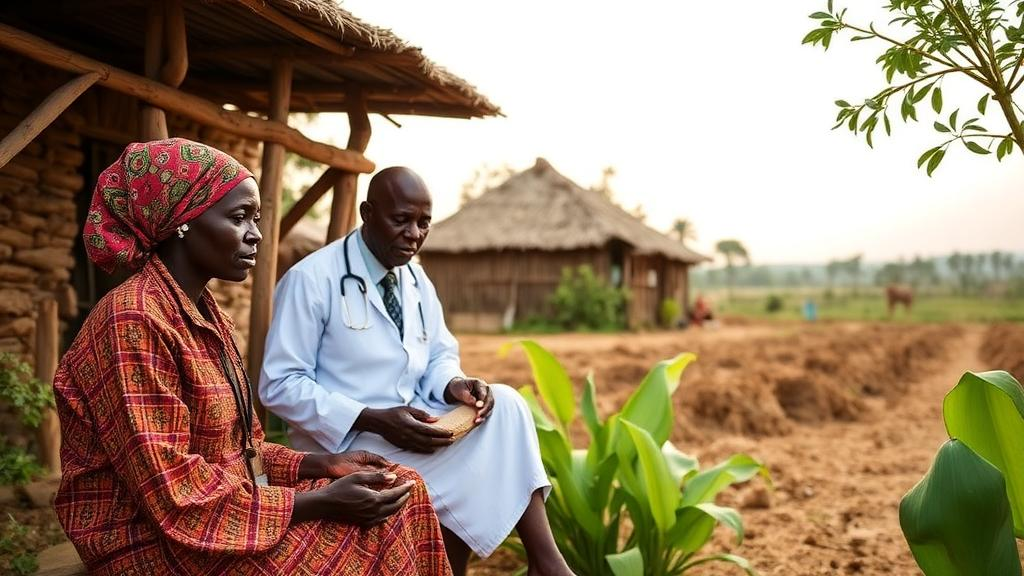
In the rural health facilities of Metekel Zone in northwest Ethiopia, a quiet and largely invisible practice is unfolding alongside modern antiretroviral therapy and tuberculosis treatment. Patients living with HIV/AIDS and those being treated for TB are frequently turning to herbal medicines, often without telling the doctors, nurses, and pharmacists responsible for their care. A new qualitative study, published in BMC Complementary Medicine and Therapies, has now documented how healthcare professionals on the front lines experience and interpret this hidden layer of treatment, revealing a landscape of safety concerns, cultural loyalty, and communication gaps that could shape how integrated care is delivered across similar settings.
The research team, led by Mamo Feyissa Senbeta of Addis Ababa University together with colleagues Teferi Gedif Fenta, Kaleab Asres, and Tsige Gebre-Mariam, employed a qualitative descriptive design built around key informant interviews. Twenty-five healthcare professionals who provide direct care to HIV/AIDS and TB patients in selected facilities across Metekel Zone were interviewed, with conversations audio recorded, transcribed verbatim, and then systematically coded and thematically analyzed using the qualitative analysis software MAXQDA 2020. The choice of a qualitative approach is significant: rather than counting how many patients use herbal remedies, the study sought to understand the texture of professional experience, the reasoning behind counseling decisions, and the structural conditions that make herb-drug interactions so difficult to detect in practice.
Thematic analysis of the interviews surfaced six major themes capturing the range of professional encounters with herbal medicine use. Perhaps the most striking finding was the deep divide in what clinicians actually observed. Some healthcare professionals reported having no direct encounters with herbal medicine users at all, a gap the researchers attribute to patient non-disclosure or to the failure of routine clinical assessment to probe for concurrent traditional remedy use. Others, working in the same zone and caring for similar patient populations, described encounters spanning the full clinical spectrum: patients presenting with relief of symptoms after taking plant-based preparations, but also cases of severe toxicity, advanced AIDS, and even fatalities that clinicians linked to herbal medicine use alongside or instead of prescribed therapy.
This inconsistency in reported encounters is not merely a curiosity of qualitative research; it points to a structural blind spot in clinical practice. When patients conceal their herbal medicine use, whether out of fear of judgment, anticipation of disapproval, or simple belief that traditional remedies are not relevant to biomedical care, the pharmacological dialogue between clinician and patient breaks down. Antiretroviral therapy and anti-tuberculosis drugs are among the most interaction-prone medications in clinical use, with narrow therapeutic windows and dependence on metabolic enzymes such as those of the cytochrome P450 family. Plant constituents can induce or inhibit these pathways, alter drug absorption, or add hepatotoxic and nephrotoxic burdens, meaning that undisclosed co-use can silently undermine treatment efficacy or precipitate harm that is misattributed to disease progression.
The counseling behaviors reported by the healthcare professionals were equally varied, and this variability emerged as a central theme. Some clinicians advised patients against using herbal medicines entirely, taking a prohibitive stance grounded in the unknown composition and unquantified risk of most local preparations. Others adopted harm-reduction strategies, recommending that patients separate the timing of herbal medicine use from their antiretroviral therapy or anti-TB medications, a pragmatic attempt to reduce the chance of direct pharmacokinetic interaction. Still others suggested limiting herbal remedies to topical use only, confining application to the skin where systemic absorption and interaction potential are lower. The absence of a standardized counseling protocol means that a patient’s guidance may depend less on evidence than on which professional happens to be on duty.
Underlying all of these counseling positions was a consistent current of safety concern. The interviewed professionals expressed considerable worry about toxicity, herb-drug interactions, and the potential for herbal medicine use to drive disease progression, particularly when remedies substituted for or delayed effective biomedical treatment. These concerns are grounded in well-documented pharmacological realities. Herbal preparations are chemically complex mixtures whose active constituents, concentrations, and contaminants vary with plant species, harvest conditions, preparation method, and storage. Without quality control, dose standardization, or interaction studies, neither clinician nor patient can know what a given decoction contains or how it will behave in a body already metabolizing combination antiretroviral therapy and months of anti-TB chemotherapy.
Yet the study’s authors are careful to note that the healthcare professionals did not dismiss herbal medicine out of hand. The same clinicians who voiced safety concerns also acknowledged the powerful cultural, economic, and accessibility factors that drive patients toward plant-based remedies. In rural Ethiopia, traditional medical practitioners are embedded in community life, trusted across generations, and often geographically and financially more accessible than formal health services. Anecdotal claims of efficacy circulate through social networks and reinforce use. For patients managing the stigma, cost, and lifelong demands of HIV care, or the exhausting six-month regimen of TB treatment, herbal medicine can represent continuity with cultural identity, a perceived supplement to incomplete relief, or simply the most reachable option when clinics are distant and drug supplies uncertain.
The consequence of this collision between biomedical and traditional systems, the study concludes, is compromised integrated care. Inadequate assessment means clinicians rarely ask about herbal use; limited counseling means patients receive inconsistent or no guidance; and patient non-disclosure means that even motivated clinicians are working without essential information. The researchers recommend a multi-pronged response: improved communication between patients and providers, formal training of healthcare professionals on herbal medicine and its interaction potential, dedicated research into the safety and efficacy of commonly used Ethiopian remedies, and collaboration between the formal health system and traditional practitioners rather than mutual exclusion. Such collaboration, the findings suggest, could convert a hidden risk into a managed, monitored component of patient care.
The significance of the work extends well beyond Metekel Zone. The World Health Organization has long recognized that traditional and complementary medicine use is widespread across sub-Saharan Africa, particularly among people living with HIV/AIDS, and that the evidence base for safety in combination with antiretroviral therapy remains thin. Studies of this kind, which capture the lived experience of providers rather than simply surveying prevalence, are essential for designing interventions that clinicians will actually adopt. The Ethiopian context adds urgency: with one of the largest HIV-positive populations in the region and an expanding rural health infrastructure, the country is well positioned to pioneer models of integrated care that formally acknowledge, assess, and counsel on herbal medicine use rather than pretending it does not exist.
Funded in part by the German Academic Exchange Service and Germany’s Federal Ministry of Education and Research through the Tri-Sustain Project, and conducted under the ethical approval of Addis Ababa University’s School of Pharmacy, the study offers a candid portrait of a health system negotiating between two medical worlds. Its message to the global health community is direct: wherever antiretroviral therapy and tuberculosis treatment meet deep traditions of plant-based healing, patient safety depends on asking the right questions, training providers to answer them, and building bridges to the traditional practitioners that patients already trust. Until then, the most dangerous ingredient in a rural Ethiopian patient’s treatment regimen may be silence.
Subject of Research: Healthcare professionals' experiences with herbal medicine use among HIV/AIDS and tuberculosis patients in rural Ethiopia
Article Title: Experiences and perspectives of healthcare professionals on herbal medicine use among HIV/AIDS and tuberculosis patients in Metekel Zone, northwest Ethiopia: a qualitative descriptive study
Article References: Senbeta, M. F., Fenta, T. G., Asres, K., & Gebre-Mariam, T. (2026). Experiences and perspectives of healthcare professionals on herbal medicine use among HIV/AIDS and tuberculosis patients in Metekel Zone, northwest Ethiopia: a qualitative descriptive study. BMC Complementary Medicine and Therapies. https://doi.org/10.1186/s12906-026-05624-8
Image Credits: AI Generated
DOI: 10.1186/s12906-026-05624-8
Keywords: herbal medicine, HIV/AIDS, tuberculosis, Ethiopia, healthcare professionals, herb-drug interactions, antiretroviral therapy, qualitative research, traditional medicine, patient safety, Metekel Zone, integrated care
Cite Scienmag News
Ophelia Keating. (October 1, 2026). Herbal Remedies and HIV Care Collide in Rural Ethiopia, Clinicians Warn. Scienmag. https://scienmag.com/herbal-remedies-and-hiv-care-collide-in-rural-ethiopia-clinicians-warn/
Ophelia Keating. "Herbal Remedies and HIV Care Collide in Rural Ethiopia, Clinicians Warn." Scienmag, 1 October 2026, https://scienmag.com/herbal-remedies-and-hiv-care-collide-in-rural-ethiopia-clinicians-warn/. Accessed 2 October 2026.
Ophelia Keating. "Herbal Remedies and HIV Care Collide in Rural Ethiopia, Clinicians Warn." Scienmag. October 1, 2026. https://scienmag.com/herbal-remedies-and-hiv-care-collide-in-rural-ethiopia-clinicians-warn/


