


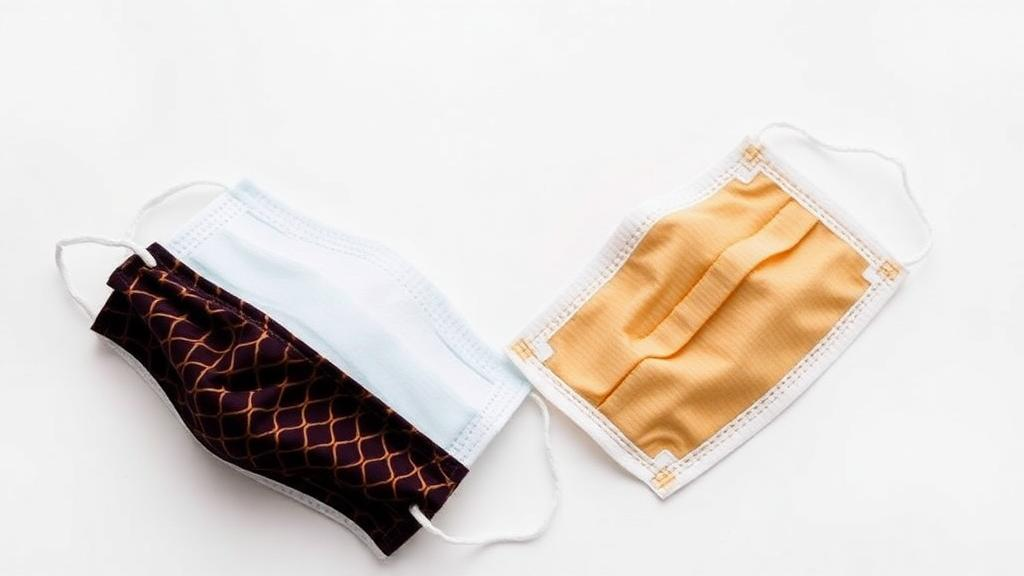
Billions of surgical masks and protective gowns were consumed worldwide during the pandemic years, and most of them ended up in landfills or incinerators. These products are made from nonwoven polypropylene, a lightweight and versatile plastic that is notoriously difficult to recycle when it arrives as mixed, contaminated post-consumer waste. A new study published in Polymer Bulletin by researchers at the University of Engineering and Technology in Lahore, working with the Environmental Protection Department of the Government of the Punjab, now shows that this troublesome waste stream can be transformed into something far more valuable than its original form: high-performance nanocomposites reinforced with carbon nanotubes and graphene nanoplatelets.
The research team, led by Urwa Arshad and corresponding author Sobia Naseem, tackled one of the central obstacles in plastics recycling: the fact that recycled polymers typically suffer degraded properties compared with virgin material, which limits them to low-value applications. Rather than accepting this downgrading, the group set out to upgrade recycled nonwoven polypropylene by introducing tiny amounts of carbon-based nanofillers, materials renowned for their exceptional stiffness, thermal resilience and aspect ratios. The goal was to determine whether the reinforcement effects documented for virgin polypropylene could be reproduced in a genuinely post-consumer feedstock, and to map precisely how filler type and loading govern the outcome.
Methodologically, the study stands out for its dual-step processing route. Instead of feeding nanofillers directly into a melt mixer, where hydrophobic carbon particles tend to clump into micron-scale agglomerates, the researchers first dispersed carbon nanotubes and graphene nanoplatelets in an aqueous medium assisted by ultrasonication. High-frequency sound waves generate intense cavitation bubbles that break apart nanotube bundles and exfoliate platelets before they ever meet the polymer. This pre-dispersion was then combined with the polypropylene in a twin-screw extruder, where controlled shear and residence time distributed the fillers through the molten matrix. The team tested loadings of 0.25, 0.5 and 1 weight percent for each filler, a deliberately narrow window designed to locate the tipping point between useful reinforcement and counterproductive agglomeration.
The results reveal a strikingly consistent pattern: less is more. At low loadings of 0.25 to 0.5 weight percent, scanning electron microscopy showed uniform dispersion of both nanofillers throughout the recycled matrix, and tensile testing confirmed that mechanical performance peaked at the lowest loading of 0.25 weight percent. When the filler content was pushed to 1 weight percent, however, the particles began to cluster, creating stress-concentrating defects that degraded the composite’s tensile behavior. This concentration-dependent boundary is a well-known phenomenon in nanocomposite science, but demonstrating it clearly in a recycled, nonwoven-derived matrix provides practical guidance for anyone attempting to industrialize the process: the sweet spot lies well below the loadings that intuition might suggest.
Thermal analysis told an equally compelling story. Thermogravimetric measurements showed that the temperature of maximum degradation, Tmax, shifted upward by as much as 53 degrees Celsius with 0.25 weight percent graphene nanoplatelets, and by 42 degrees Celsius with 0.5 weight percent carbon nanotubes, relative to neat recycled polypropylene. For a material recovered from discarded protective equipment, such a dramatic improvement in thermal stability is remarkable, and it suggests that the nanofillers act as both physical barriers to volatile degradation products and as efficient heat sinks within the matrix. In practical terms, a recycled compound that withstands temperatures tens of degrees higher can tolerate more aggressive processing and serve in more demanding end uses.
Differential scanning calorimetry added another layer of insight by revealing a strong nucleation effect. The crystallization temperature of the recycled polypropylene rose from 103.23 degrees Celsius to approximately 115 degrees Celsius in the presence of the nanofillers. This shift means the polymer chains crystallize earlier and more readily as the melt cools, because the carbon surfaces provide templates on which lamellae can grow. Faster, more complete crystallization at higher temperatures translates into shorter molding cycles and potentially more uniform crystalline morphology, both of which matter enormously in industrial polymer processing. The effect also indicates that the fillers were not merely inert inclusions but active participants in shaping the material’s microstructure.
Spectroscopic evidence helped explain why the low-loading composites performed so well. Fourier-transform infrared spectroscopy confirmed strong interfacial interactions between the carbon nanofillers and the polypropylene matrix, arising from a combination of partial chemical bonding and physical adsorption. In nanocomposites, the interface is everything: load transfer from the weak polymer to the strong filler occurs across this boundary, and any gap or poor wetting undermines the reinforcement. The FTIR findings, combined with the morphological observations, indicate that the ultrasonication-assisted pre-dispersion step succeeded in delivering well-separated particles that the molten polymer could then wet and bond with effectively during twin-screw blending.
Not every property followed the same concentration trend, and this nuance is one of the study’s most useful contributions. While tensile performance declined at 1 weight percent loading, Shore D hardness increased progressively with filler content, rising by up to 13.7 percent across the range tested. This divergence makes physical sense: hardness is a surface and bulk resistance to indentation that benefits from the mere presence of rigid particles, even when those particles cluster, whereas tensile strength is exquisitely sensitive to agglomerate-induced flaws. The lesson for product designers is that the optimal formulation depends on the target property, and that a single loading cannot simultaneously maximize every mechanical characteristic.
The broader significance of the work lies in its circular-economy framing. Post-consumer personal protective equipment represents an expanding yet largely unrecycled fraction of global municipal solid waste, and nonwoven polypropylene in particular has few established recycling pathways because the fabric form complicates sorting and reprocessing. By demonstrating a scalable melt-blending route that converts this waste into functional nanocomposites, the Lahore team offers a template that builds on their earlier work on upscale recycling of nonwoven polypropylene using novel blending methods. The processing equipment involved, namely ultrasonic baths and twin-screw extruders, is standard in polymer manufacturing, which means the approach does not require exotic infrastructure to be adopted at industrial scale.
There remain, of course, questions that the study’s preview data do not fully resolve, including the economics of collecting and sanitizing PPE waste, the consistency of feedstock quality, and the long-term durability of the composites in service. The authors note that data are available on request, and the work was supported by the Pakistan Science Foundation under its Competitive Research Program. Still, the central message is clear and provocative: the mountains of discarded masks and gowns that symbolize a global health crisis need not be a permanent environmental liability. With the right nanoscale engineering, they can be reborn as thermally stable, mechanically reinforced materials, proving that even the most problematic plastic waste can be upgraded rather than merely disposed of.
Subject of Research: Upcycling post-consumer PPE polypropylene waste into carbon nanofiller-reinforced nanocomposites
Article Title: Dual-step melt blended recycled polypropylene nanocomposites: interfacial behavior and reinforcement effects of carbon nanofillers
Article References: Arshad, U., Gill, Y. Q., Ijaz, M. W., Naseem, S., & Rizwan, M. (2026). Dual-step melt blended recycled polypropylene nanocomposites: interfacial behavior and reinforcement effects of carbon nanofillers. Polymer Bulletin, 83(12), Article 656. https://doi.org/10.1007/s00289-026-06717-7
Image Credits: AI Generated
DOI: 10.1007/s00289-026-06717-7
Keywords: recycled polypropylene, carbon nanotubes, graphene nanoplatelets, nanocomposites, PPE waste recycling, melt blending, thermal stability, tensile properties, crystallization, nonwoven waste, circular economy, interfacial interactions
Cite Scienmag News
Neil Sanderson. (October 1, 2026). Discarded Masks Turned Into High-Performance Nanocomposites With Carbon Nanofillers. Scienmag. https://scienmag.com/discarded-masks-turned-into-high-performance-nanocomposites-with-carbon-nanofillers/
Neil Sanderson. "Discarded Masks Turned Into High-Performance Nanocomposites With Carbon Nanofillers." Scienmag, 1 October 2026, https://scienmag.com/discarded-masks-turned-into-high-performance-nanocomposites-with-carbon-nanofillers/. Accessed 1 October 2026.
Neil Sanderson. "Discarded Masks Turned Into High-Performance Nanocomposites With Carbon Nanofillers." Scienmag. October 1, 2026. https://scienmag.com/discarded-masks-turned-into-high-performance-nanocomposites-with-carbon-nanofillers/


