


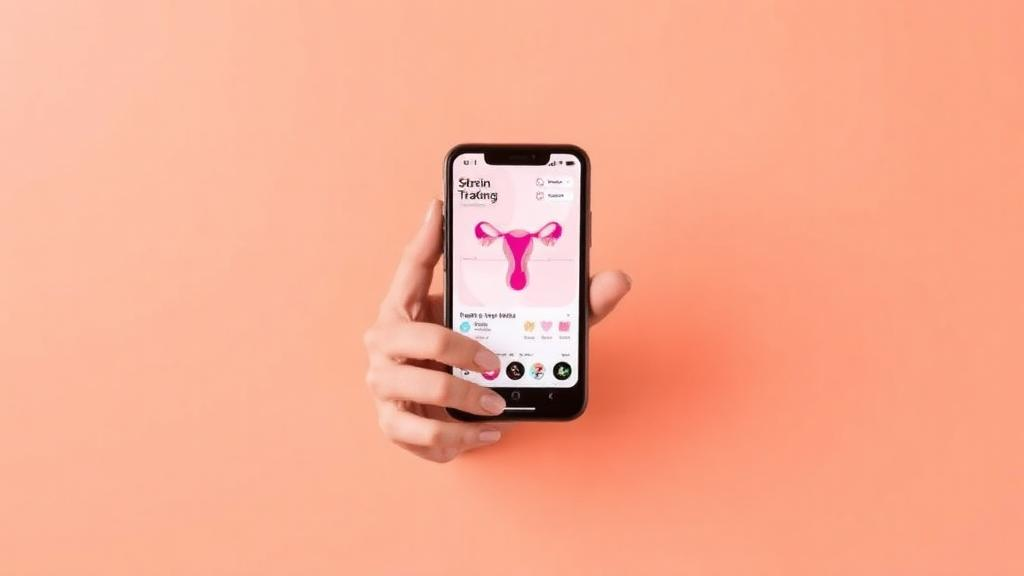
A group of researchers writing in The BMJ has issued a pointed challenge to one of the fastest-growing corners of the consumer health technology industry, arguing that digital menstrual tracking and the practices built around it are being promoted far ahead of the evidence that supports them. Katharine Lee and her colleagues contend that menstrual cycle tracking apps and related “femtech” tools, which are marketed aggressively to women and girls on social media and by technology companies, risk creating more harm than benefit. Their commentary, published as a peer-reviewed piece in the journal, calls for critical interrogation of a sector that has largely escaped the scrutiny applied to other health technologies.
The core of the argument is deceptively simple: the scientific case for the central claims made by these products has not been made. Menstrual tracking apps promise to scientifically analyse personal data to improve health, wellbeing, and performance based on where a user is in her menstrual cycle. A companion practice, known as “cycle syncing,” encourages users to adjust their diet and exercise routines according to menstrual cycle phases. Yet Lee and colleagues argue that neither menstrual tracking nor cycle syncing has been convincingly shown to improve health or other performance measures. In other words, the foundational premise of a multibillion-dollar product category rests on evidence that the authors describe as lacking.
The sports science literature is central to their critique. Cycle syncing content frequently draws on the idea that athletic training should be matched to hormonal fluctuations, with harder sessions scheduled in certain phases and recovery prioritised in others. But decades of sports science research, the authors note, show no overall effect of menstrual cycle phase on performance, injury risk, or health. Where effects have been found, they have been trivial in magnitude and highly individualised, meaning they do not generalise into the phase-based training prescriptions that circulate widely online. Research on phase-based dietary interventions intended to reduce menstrual cycle symptoms or improve performance is similarly inconclusive, highly individualised, or speculative. The physiological variation between individuals, and even within the same individual across cycles, overwhelms the average differences that can be attributed to cycle phase.
There is also a deeper technical problem with the products themselves. Even if menstrual phase did correspond with meaningful fluctuations in health, performance, or vulnerability to injury in individuals, Lee and colleagues explain that simple digital tracking technologies cannot reliably predict such variation. Consumer apps typically rely on self-reported data, such as the start and end dates of bleeding, and infer cycle phases from calendar arithmetic rather than direct hormonal measurement. Unlike clinical tools that measure luteinising hormone, progesterone metabolites, or basal body temperature with validated protocols, most apps produce phase estimates with substantial uncertainty. Presenting those estimates to users as actionable scientific insight, the authors argue, misrepresents what the underlying data can actually support.
Beyond the weak evidence base, the commentary catalogues a set of serious risks that the authors say accompany digital cycle tracking technologies. These include wasted time and labour, as users invest effort in logging data and adjusting their lives around predictions of uncertain validity. They include unwanted surveillance, since menstrual data can reveal intimate information about fertility, pregnancy, and health status. They include risks to health data privacy, an area where consumer health apps in many jurisdictions face weaker regulatory protections than medical devices. And they include a subtler harm: these products may distract from, or even threaten, broader efforts to advance women’s health by redirecting attention and resources toward commercial tools of unproven value.
The authors are unusually direct about the stakes. “These apps have the potential for widespread impact on the wellbeing of women and girls,” they warn, yet the evidence that these digital tools can actually help in the management of menstrual conditions, boost health, and provide insights into exercise and nutritional needs is lacking. That combination, wide reach paired with thin evidence, is what elevates the issue from a niche debate about app design to a public health concern. Menstrual tracking is among the most common health-related uses of smartphone technology, and the audience for cycle syncing content on platforms such as social media skews young, meaning many users encounter these claims before they have the background to evaluate them.
The commentary does not stop at diagnosis; it offers a set of suggestions for addressing the risks. The authors call for strengthening protections for consumer and employee data, a pointed reference to the ways menstrual information collected by apps could be used by employers, insurers, or data brokers. They call for improving user awareness of how data are used, so that people who download a tracking app understand what happens to the intimate information they enter. And they advise clinicians to recommend apps to patients only when those apps meet stringent standards, effectively asking the medical profession to act as a gatekeeper against products that have not demonstrated clinical utility. Taken together, these measures would shift the burden of proof from users and regulators onto the companies making health claims.
Other voices in the field, the authors note, have emphasised the need to regulate misleading marketing and to resist the commercial co-option of feminist activist rhetoric. This critique addresses the way femtech products often frame themselves as empowerment, using the language of bodily autonomy and self-knowledge to sell subscription services. The authors also point to an opportunity in the communication landscape itself: tailoring health communication approaches to the social media environments where users actually encounter cycle syncing content. Meeting misleading narratives about hormones and health on the platforms where they spread, rather than in journals or clinics alone, may help build public trust in more credible sources and counteract inaccurate claims before they harden into beliefs.
The authors conclude that health practitioners, regulators, and the general public must be aware of, and work to address, the risks that these consumer technologies pose to women’s health. The commentary appears in The BMJ, with the article titled “Digital menstrual tracking risks creating more harm than benefit,” and is classified as a commentary or editorial drawing on the authors’ expertise across sports science, women’s health, and research on technology and the body. Its publication reflects a growing willingness among researchers to challenge the evidence base of consumer health products that have scaled faster than the science behind them.
For users, the practical message is one of calibrated scepticism rather than outright prohibition. Tracking one’s cycle for personal awareness is not inherently harmful, and menstrual health remains an under-researched field where better tools could genuinely help. The problem, as Lee and colleagues frame it, is the gap between what the technology can deliver and what its marketing promises: apps that cannot reliably predict hormonal variation are being sold as instruments of optimised performance and health insight. Until the evidence catches up, and until data protections and marketing standards are strengthened, the authors argue that the slick presentation of digital menstrual cycle tracking and the scientifically suspect practice of cycle syncing deserve not enthusiasm but scrutiny, and in some cases resistance.
Subject of Research: Evidence and risks of digital menstrual cycle tracking apps and cycle syncing practices
Article Title: Digital menstrual tracking risks creating more harm than benefit, argue experts
Article References: Digital menstrual tracking risks creating more harm than benefit, argue experts. (n.d.). Original publication
Image Credits: AI Generated
DOI: Not provided
Keywords: menstrual tracking, femtech, cycle syncing, health apps, data privacy, women's health, sports science, The BMJ, digital health, surveillance, misleading marketing, consumer health technology
Cite Scienmag News
Denise Maddox. (October 1, 2026). Menstrual tracking apps may do more harm than good, experts warn. Scienmag. https://scienmag.com/menstrual-tracking-apps-may-do-more-harm-than-good-experts-warn/
Denise Maddox. "Menstrual tracking apps may do more harm than good, experts warn." Scienmag, 1 October 2026, https://scienmag.com/menstrual-tracking-apps-may-do-more-harm-than-good-experts-warn/. Accessed 1 October 2026.
Denise Maddox. "Menstrual tracking apps may do more harm than good, experts warn." Scienmag. October 1, 2026. https://scienmag.com/menstrual-tracking-apps-may-do-more-harm-than-good-experts-warn/


