


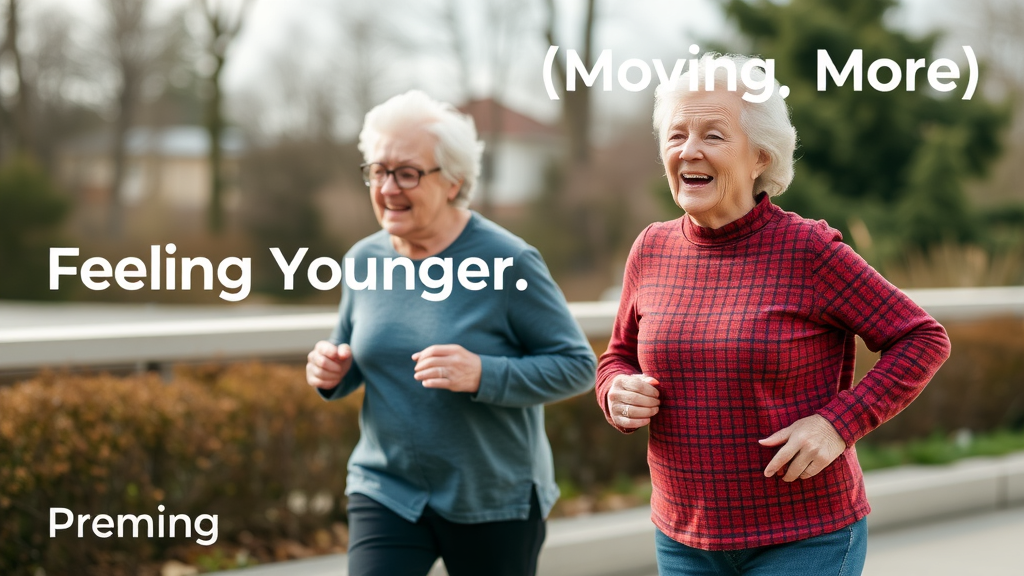
What keeps older adults coming back to the park at dawn, to the community gym, or to the tai chi group that meets under the trees? A new longitudinal study published in BMC Geriatrics suggests that the answer may run in a surprising psychological direction: it is not simply that a good exercise environment makes older people feel better about aging, but that older people who feel positively about aging go on to create and perceive better exercise environments around themselves. The finding, drawn from 697 Chinese older adults tracked across three waves, challenges a common assumption in health promotion and points to aging attitudes as a potential lever for sustaining physical activity in later life.
The research team, led by Chang Hu and Yuhan Chen, with corresponding author Shu Wen, set out to untangle a question that has long frustrated gerontologists and sport psychologists alike. Exercise is widely recognized as a cornerstone of healthy aging, supporting cardiovascular health, mobility, cognition, and emotional well-being. But the psychological machinery connecting the social and physical atmosphere of exercise settings to how older adults feel about their own bodies and about aging itself has remained murky. Most earlier studies were cross-sectional, capturing a single moment in time and therefore unable to say whether a supportive gym culture lifts self-esteem, whether self-esteem makes people perceive their gym as supportive, or whether both are simply reflections of some broader disposition.
To break that deadlock, the researchers employed a statistical approach known as the random-intercept cross-lagged panel model, or RI-CLPM. This technique has become increasingly influential in longitudinal psychology because it separates two kinds of effects that ordinary analyses tend to blur together. At the between-person level, the model asks whether people who generally report more favorable exercise atmospheres than their peers also generally report more positive aging attitudes. At the within-person level, it asks something subtly different and arguably more interesting: when a given individual’s perception of their exercise atmosphere rises above or falls below their own personal average, does that fluctuation predict a subsequent rise or fall in their aging attitudes, beyond what their personal baseline would predict?
This distinction matters because the two levels of analysis can yield opposite conclusions. A correlation across people might reflect stable traits or circumstances that make some individuals both happier and more active, while a genuine within-person effect would suggest that changing the environment for a particular person actually changes their psychology over time. Interventions built on cross-sectional evidence can therefore misfire, targeting the wrong lever entirely. By modeling three measurement waves in 697 older adults, the study could distinguish these possibilities with unusual clarity for research in this population.
The between-person results were straightforward. Older adults who generally perceived a more favorable exercise atmosphere, one that felt welcoming, encouraging, and conducive to activity, also reported more positive attitudes toward their own aging. In other words, across the sample as a whole, a better exercise climate and a sunnier outlook on growing older traveled together. This is consistent with a large body of work suggesting that the social context of physical activity, including companionship, normative support, and the sheer visibility of other active older people, colors how individuals interpret the aging process itself.
The within-person findings, however, told a more provocative story. Deviations in the perceived exercise atmosphere did not significantly predict subsequent deviations in aging attitudes. When an individual’s exercise environment improved relative to their own norm, that uptick did not reliably produce a more positive view of aging at the next measurement. The causal arrow, at least over the intervals studied, appeared to point the other way: older adults whose aging attitudes became more positive than their own baseline subsequently reported improvements in their perceived exercise atmosphere. In plain terms, feeling good about getting older seemed to lead people to experience their exercise settings more favorably, rather than the reverse.
The study also uncovered a bidirectional, mutually reinforcing relationship between the exercise atmosphere and physical self-esteem, the component of self-concept concerned with one’s perceived physical competence, strength, coordination, and appearance. When participants perceived a better exercise atmosphere, their physical self-esteem tended to rise at the next wave, and when physical self-esteem rose, participants in turn perceived their exercise atmosphere more positively. This reciprocal loop is exactly the kind of dynamic that cross-sectional designs cannot detect, and it suggests that even modest environmental improvements could, in principle, set off a self-sustaining cycle of confidence and engagement.
Why would aging attitudes shape the perception of exercise environments rather than the other way around? The authors’ findings align with theoretical frameworks in social gerontology that treat attitudes toward aging as self-fulfilling prophecies. Decades of research, including longitudinal work on age stereotypes, have linked negative views of aging to worse health outcomes, slower recovery from disability, and even reduced longevity. One plausible mechanism is motivational: older adults who view aging as a period of continued growth and capability are more likely to seek out activity, interpret social cues in exercise settings as supportive rather than intimidating, and persist when conditions are imperfect. Conversely, those who see aging as inevitable decline may withdraw from communal exercise spaces, perceive the same environment as exclusionary, and disengage, feeding a downward spiral of inactivity and negative self-appraisal.
The practical implications are considerable. Public health campaigns and community programs have often invested heavily in upgrading the material and social infrastructure of exercise, building fitness trails, organizing group classes, and training instructors to foster welcoming climates. The new results do not diminish the value of such investments, particularly given the reinforcing loop between atmosphere and physical self-esteem, but they suggest that infrastructure alone may not change how older adults feel about aging. Programs that directly target aging attitudes, for example through intergenerational contact, media literacy around age stereotypes, or structured reflection on positive role models of later life, could be a missing complement. If positive aging attitudes lead older adults to perceive and perhaps cultivate better exercise environments, then attitude-focused interventions might function as a catalyst that makes environmental investments pay off more fully.
Several caveats frame the findings. The sample consisted of 697 older adults in China, a cultural context in which communal exercise in parks and public squares is a prominent feature of daily life, and generalization to other settings will require replication. The study relied on self-reported perceptions, which, while psychologically meaningful, may not correspond perfectly to objectively measured qualities of exercise settings. And although the RI-CLPM design strengthens causal inference relative to cross-sectional work, it cannot rule out all alternative explanations, and the intervals between waves constrain what kinds of temporal dynamics can be detected. The authors also note that the study received no external funding and was conducted with ethics approval in accordance with the Declaration of Helsinki, with written informed consent from all participants.
Even with those limitations, the study adds a genuinely novel piece to the puzzle of exercise adherence in later life, a problem with enormous stakes as populations worldwide age. Dropout from physical activity programs among older adults remains stubbornly high, and the psychological determinants of persistence are still poorly mapped. By showing that the relationship between environment and outlook is asymmetric, with aging attitudes doing more predictive work than the atmosphere itself at the within-person level, the research reframes the intervention target. The park bench, the swimming pool, and the dance class still matter, but the study suggests that how older adults carry their expectations of aging into those spaces may matter more, and that helping people feel positively about the years ahead could be one of the most effective ways to keep them moving through them.
Subject of Research: Longitudinal relationships between exercise atmosphere, physical self-esteem, and aging attitudes in older adults
Article Title: Longitudinal associations among exercise atmosphere, physical self-esteem, and aging attitudes in older adults
Article References: Hu, C., Chen, Y., Wang, X., & Wen, S. (2026). Longitudinal associations among exercise atmosphere, physical self-esteem, and aging attitudes in older adults. BMC Geriatrics. https://doi.org/10.1186/s12877-026-08355-0
Image Credits: AI Generated
DOI: 10.1186/s12877-026-08355-0
Keywords: aging attitudes, exercise atmosphere, physical self-esteem, older adults, longitudinal study, RI-CLPM, healthy aging, physical activity, health psychology, sport psychology, geriatrics, age stereotypes
Cite Scienmag News
Beatrice Stafford. (September 26, 2026). Feeling Younger, Moving More: How Aging Attitudes Drive Exercise Habits in Older Adults. Scienmag. https://scienmag.com/feeling-younger-moving-more-how-aging-attitudes-drive-exercise-habits-in-older-adults/
Beatrice Stafford. "Feeling Younger, Moving More: How Aging Attitudes Drive Exercise Habits in Older Adults." Scienmag, 26 September 2026, https://scienmag.com/feeling-younger-moving-more-how-aging-attitudes-drive-exercise-habits-in-older-adults/. Accessed 26 September 2026.
Beatrice Stafford. "Feeling Younger, Moving More: How Aging Attitudes Drive Exercise Habits in Older Adults." Scienmag. September 26, 2026. https://scienmag.com/feeling-younger-moving-more-how-aging-attitudes-drive-exercise-habits-in-older-adults/


