


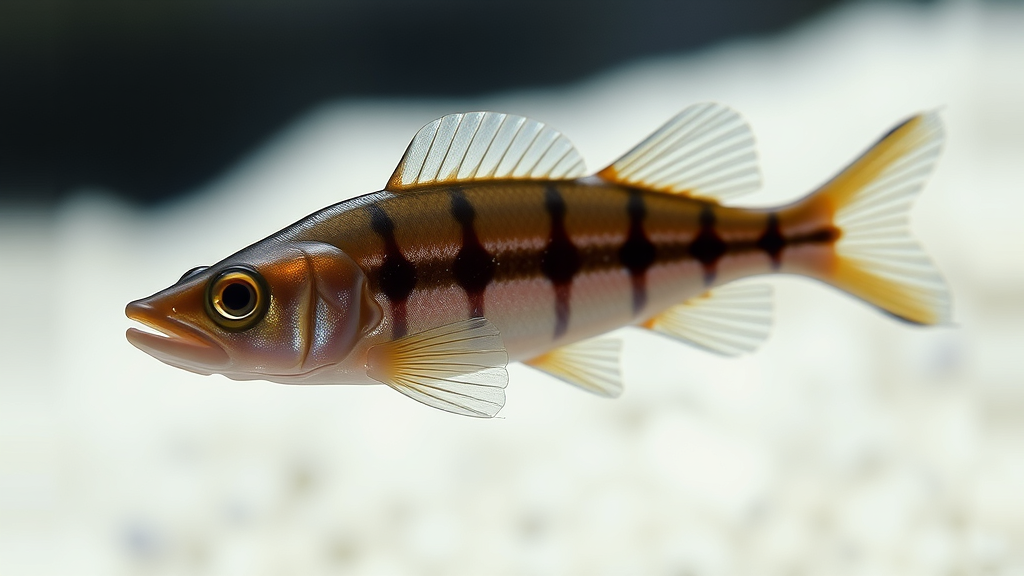
When a tsunami taller than ten meters slammed into the Pacific coast of northeastern Japan on 11 March 2011, it did more than devastate towns and reshape shorelines. In Otsuchi Town, Iwate Prefecture, the waves and the land subsidence that accompanied the Great East Japan Earthquake carved out a new freshwater pond in the town center, an accidental laboratory of evolution. Into this pond, the tsunami carried marine Japan Sea stickleback, Gasterosteus nipponicus, swept in from the sea, while the receding backwash pulled a freshwater population of threespine stickleback, Gasterosteus aculeatus, down from upstream habitats. Two closely related fish species that had been separated by geography and ecology suddenly found themselves sharing the same water, and they began to hybridize. What happened next, documented across nine years of genomic sampling, offers one of the most detailed real-time views ever obtained of how species boundaries survive catastrophic environmental disturbance.
A research team spanning the National Institute of Genetics, Hokkaido University, Gifu Kyoritsu University, Kyoto University, Ishinomaki Senshu University, Nagoya University, Keio University, The University of Tokyo, and Tokyo University of Marine Science and Technology seized on this rare natural experiment. Their findings, published in Nature Ecology & Evolution, track the hybrid population from the immediate aftermath of the hybridization event through approximately ten generations, because the stickleback in this pond complete a generation in roughly one year. The central result is striking: although hybridization was extensive, the foreign genome was systematically and rapidly eliminated, and by 2020 the population had returned to an almost entirely G. aculeatus genomic composition, as if the evolutionary intrusion of G. nipponicus had never happened.
The scale of the initial mixing was substantial. In 2012, just one year after the tsunami, 38 percent of the individuals sampled in the pond were hybrids. That figure represents a massive pulse of gene flow between two species whose reproductive isolation had accumulated over evolutionary time. In theory, such a pulse could dissolve the boundary between the species entirely, swamping the distinctive adaptations of each lineage in a flood of recombined genes. In practice, the opposite occurred. Across the following years, genomic regions derived from G. nipponicus declined steadily and rapidly throughout the genome, generation after generation, until almost none remained.
The pattern of that decline was not uniform, and this is where the study delivers its most technically revealing insights. The researchers focused on genomic regions containing major reproductive isolation loci, the stretches of DNA that govern traits keeping the two species apart. These include loci associated with freshwater adaptation, with the tendency to migrate to the sea, with mate choice, and with hybrid male sterility. Regions carrying these major barriers showed particularly rapid losses of G. nipponicus ancestry. Hybrids carrying maladaptive alleles at these loci, whether because they inherited inappropriate habitat preferences, disrupted migratory behavior, impaired mating signals, or reduced fertility, contributed fewer offspring to subsequent generations, and their foreign DNA was stripped from the population with unusual speed.
Yet the major loci told only part of the story. When the team modeled the observed genome-wide removal using individual-based simulations, they found that a handful of strong reproductive barriers could not account for the sheer breadth and pace of the purge across all ten generations. The simulations pointed instead to a second, more diffuse mechanism: numerous weak genetic incompatibilities distributed throughout the genome. Each individual incompatibility exerts only a modest fitness cost, but collectively, spread across thousands of genomic positions, they act like a genome-wide filter, steadily eroding foreign ancestry wherever it appears. The combination of a few powerful barriers and many subtle ones appears to explain how the species boundary was reasserted so decisively.
“There were two major surprises in this study,” said Takuya Hosoki and Jun Kitano, two of the researchers involved. “First, we did not expect genomic regions associated with major reproductive barriers to be purged so rapidly. Second, we were surprised that most of the foreign genome continued to disappear over subsequent generations. An important next question is whether this combination of a few strong reproductive barriers and many weak genetic incompatibilities represents a general mechanism by which species boundaries are maintained after hybridization.” Their framing captures why the work resonates beyond stickleback biology: it addresses a mechanism that may operate broadly across the tree of life.
The study occupies a nearly unique position in the literature on speciation. Evolutionary biologists have long inferred how reproductive isolation is maintained by comparing genomes of species that hybridize today, reconstructing past events from patterns of shared and divergent DNA. But direct, longitudinal observation of a natural population from the moment of interspecific contact through roughly ten subsequent generations is exceptionally rare. Most such events go undetected, or sampling begins long after the outcome has been decided. The Otsuchi pond population, born of a documented catastrophe and monitored almost from its inception, allowed the researchers to watch the progressive removal of foreign genomic regions as it unfolded, rather than inferring it from its end state.
The findings carry implications well beyond a single Japanese pond. As human activity and climate change dismantle geographic barriers and shift habitats, previously separated species are being brought into contact at an accelerating pace. Hybridization between native and introduced species, between range-shifting neighbors, and between populations fragmented by habitat alteration is becoming an increasingly common consequence of environmental disruption. The Otsuchi results suggest that species boundaries may be more resilient than a single hybridization pulse would imply, provided that reproductive barriers are numerous and distributed across the genome. But they also show that the outcome depends on the architecture of those barriers, and that genomic erosion of foreign ancestry can proceed remarkably quickly, within a decade, when selection acts on many fronts simultaneously.
For conservation biologists, the study offers both reassurance and caution. Reassurance, because extensive hybridization does not necessarily doom a species to genetic dissolution; the threespine stickleback genome effectively rejected the invader’s DNA. Caution, because the mechanisms that achieved this rejection, habitat-specific adaptation, behavioral mate choice, and sterility of hybrid males, depend on ecological conditions that disturbance itself may undermine. If the freshwater habitat that favored G. aculeatus had been unstable, or if hybrid males had remained fertile, the trajectory could have differed substantially. The pond in Otsuchi thus stands as a vivid reminder that evolution operates on observable timescales, and that a single geological event can open a window onto one of biology’s deepest questions: how life maintains the boundaries between kinds even when the world insists on mixing them.
Subject of Research: Post-hybridization genomic purging of foreign DNA in a tsunami-formed stickleback population
Article Title: The 2011 tsunami triggered interspecific hybridization, yet species boundaries were maintained
Article References: The 2011 tsunami triggered interspecific hybridization, yet species boundaries were maintained. (n.d.). Original publication
Image Credits: AI Generated
DOI: Not provided
Keywords: stickleback, hybridization, speciation, tsunami, genomics, reproductive isolation, Great East Japan Earthquake, evolutionary biology, Gasterosteus aculeatus, Gasterosteus nipponicus, genetic incompatibilities, Nature Ecology & Evolution
Cite Scienmag News
Juliet Wilcox. (September 26, 2026). Nine-Year Genomic Study Shows Tsunami-Forced Stickleback Hybrids Purged Foreign DNA Within a Decade. Scienmag. https://scienmag.com/nine-year-genomic-study-shows-tsunami-forced-stickleback-hybrids-purged-foreign-dna-within-a-decade/
Juliet Wilcox. "Nine-Year Genomic Study Shows Tsunami-Forced Stickleback Hybrids Purged Foreign DNA Within a Decade." Scienmag, 26 September 2026, https://scienmag.com/nine-year-genomic-study-shows-tsunami-forced-stickleback-hybrids-purged-foreign-dna-within-a-decade/. Accessed 26 September 2026.
Juliet Wilcox. "Nine-Year Genomic Study Shows Tsunami-Forced Stickleback Hybrids Purged Foreign DNA Within a Decade." Scienmag. September 26, 2026. https://scienmag.com/nine-year-genomic-study-shows-tsunami-forced-stickleback-hybrids-purged-foreign-dna-within-a-decade/


