


Few technologies expose the gulf between molecular biology and public acceptance as starkly as CRISPR–Cas genome editing. In medicine, the technology is broadly celebrated as a therapeutic breakthrough, with gene-editing treatments moving from laboratory bench to clinic. In plant breeding, and particularly in Europe, the very same molecular toolkit remains mired in controversy. That contrast is puzzling to scientists, because many genome-edited plants carry genetic changes that are indistinguishable from those produced by conventional breeding methods, and therefore do not pose any higher risk to health or the environment. This paradox—identical mutations welcomed in one context and rejected in another—sits at the heart of a new commentary published in Nature Plants by Elke Barbez, Joachim Boldt and Jürgen Kleine-Vehn of the University of Freiburg.
The authors argue that the explanation for this paradox cannot be found in the biology of the edited plants themselves. Instead, they contend, it lies in the way the technology is embedded within broader social structures. To make that argument, they reach back several decades, before CRISPR was invented, to the work of the German-born Canadian physicist and philosopher of technology Ursula M. Franklin, who lived from 1921 to 2016. In her book The Real World of Technology, first delivered as lectures in 1989 and published in 1990, Franklin developed a framework that the Freiburg researchers believe helps explain why genome-edited crops have met such different receptions on either side of the Atlantic and across sectors of application.
Franklin’s central insight was that technologies are never merely tools. In her view, every technology is in fact an entire system, shaped jointly by regulation, markets, institutions and culture. A genome-editing enzyme such as Cas9 is, on this reading, only the visible tip of a much larger formation that includes patent regimes, seed markets, food-safety authorities, agricultural traditions, media narratives and consumer expectations. Franklin’s work explored how such technological systems influence power, authority and everyday life, and in this respect her thinking echoes ideas developed earlier by social historians and philosophers such as Michel Foucault, Lewis Mumford and Jacques Ellul, all of whom analyzed technology as a force that organizes society rather than a neutral instrument within it.
Applying this framework to CRISPR reveals why the risk-based argument familiar from plant science has failed to settle the debate. European regulation of genome-edited plants has its origins in a 2018 ruling of the Court of Justice of the European Union, which held that organisms produced by new mutagenesis techniques fall within the scope of existing genetically modified organism legislation. That judgment entrenched a regulatory pathway built on traceability and labelling requirements established for transgenic organisms, including the traceability and labelling framework laid down by European rules from 2003. Under such a system, a plant whose genome differs from a conventionally bred counterpart by only a small deletion or point mutation can nonetheless be classified, tracked and labelled as a genetically modified organism, even though the molecular outcome is one that traditional breeding could also have produced.
From a technical standpoint, the distinction is indeed difficult to defend on scientific grounds. Genome editing with CRISPR–Cas typically introduces small insertions, deletions or base substitutions at targeted loci. Conventional mutagenesis breeding, which has been practiced for decades using chemical or radiation treatments, produces random mutations across the genome and is exempt from the strict genetically modified organism rules in many jurisdictions. Site-directed nuclease editing is, in effect, a more precise version of mutagenesis, with far fewer unintended changes to monitor. The 2014 analysis by Frank Hartung and Jürgen Schiemann, cited in the commentary, examined precisely these questions of equivalence and risk. Yet, as the Freiburg team emphasizes, the regulatory treatment of a product does not track its biological properties but its production process—a decision that is legal and political rather than scientific.
The policy landscape, however, has begun to shift. In 2023 the European Commission put forward a proposal for a regulation on plants obtained by certain new genomic techniques and their food and feed, seeking to differentiate between categories of genome-edited plants according to the type of genetic change involved. That process culminated in June 2026 with Regulation (EU) 2026/1388 on plants obtained by certain new genomic techniques and their products, which amends the earlier 2017/625 regulation on official controls. This legislative move represents an attempt to build a more differentiated system, one that can distinguish targeted edits indistinguishable from conventional breeding outcomes from more extensive modifications. For the commentary’s authors, the episode illustrates Franklin’s point in real time: the technology’s fate is being decided not in the laboratory but in the architecture of rules, institutions and market arrangements that surround it.
What, then, would a sustainable innovation system for CRISPR in plant science look like? The commentary’s argument suggests several components. First, regulation must be technically coherent, meaning that the category into which a plant falls should reflect the nature and scale of the genetic change rather than the method used to create it. Second, transparency and traceability need to serve public trust rather than functioning as ends in themselves; if consumers cannot see how decisions are made, labelling schemes risk becoming symbolic battlegrounds rather than informative tools. Third, the benefits of the technology must be distributed in ways that farmers, breeders and consumers can recognize, since an innovation system that concentrates value in a few patent holders is unlikely to sustain broad social license. Fourth, public engagement has to treat citizens as participants in shaping the system, not merely as audiences to be persuaded of its safety.
The contrast between medicine and agriculture sharpens this point. In therapeutic applications, genome editing is evaluated within a well-established institutional framework of clinical trials, ethics committees and health technology assessment, and it addresses conditions that individual patients and their families experience as urgent and personal. In plant breeding, by contrast, the same molecular intervention is situated within agricultural systems marked by long-running debates over industrial farming, seed ownership, pesticide use and the concentration of the food supply. The technology is not judged in isolation; it inherits the anxieties and political commitments attached to the system it enters. Franklin’s framework makes this inheritance explicit, and it explains why campaigns that focus exclusively on communicating the molecular facts have repeatedly failed to move public opinion in the European agricultural context.
The economists’ perspective adds a further layer. The commentary invokes Kenneth Boulding, whose work on economic imagery and evolution emphasized that societies live by narratives and images as much as by material flows. Genome-edited plants, in this light, compete not only on agronomic performance but on the story they are embedded in—are they a continuation of human stewardship of crops, or an escalation of corporate control over the food chain? Building a durable innovation system means attending to that narrative infrastructure deliberately: who is seen to benefit, who is seen to decide, and what risks are seen to matter. The authors’ use of Franklin and Boulding signals that the scientific community must engage these questions on their own terms rather than dismissing them as misunderstandings of the science.
Ultimately, the Freiburg commentary makes a claim that reaches beyond plant biology to the governance of emerging technologies in general. CRISPR–Cas is a genuinely transformative tool, capable of precise, targeted and increasingly diverse genetic interventions, and its technical trajectory continues to accelerate. Whether that capability translates into societal benefit in agriculture depends on assembling the surrounding system—regulation, markets, institutions and culture—into a configuration that is scientifically sound, economically viable, socially trusted and ethically defensible. The new European regulatory framework of 2026 offers an opening, but the deeper lesson from Franklin is that no single ruling settles the matter. A sustainable innovation system is not a finished artifact but an ongoing practice of aligning technological capability with public values, and the genome-editing debate in plant science is now one of its most instructive real-world tests.
Subject of Research: Societal and regulatory dimensions of CRISPR genome editing in plant breeding
Article Title: CRISPR beyond biology: building a sustainable innovation system
Article References: Barbez, E., Boldt, J., & Kleine-Vehn, J. (2026). CRISPR beyond biology: building a sustainable innovation system. Nature Plants, 12(9), 1648-1649. https://doi.org/10.1038/s41477-026-02410-9
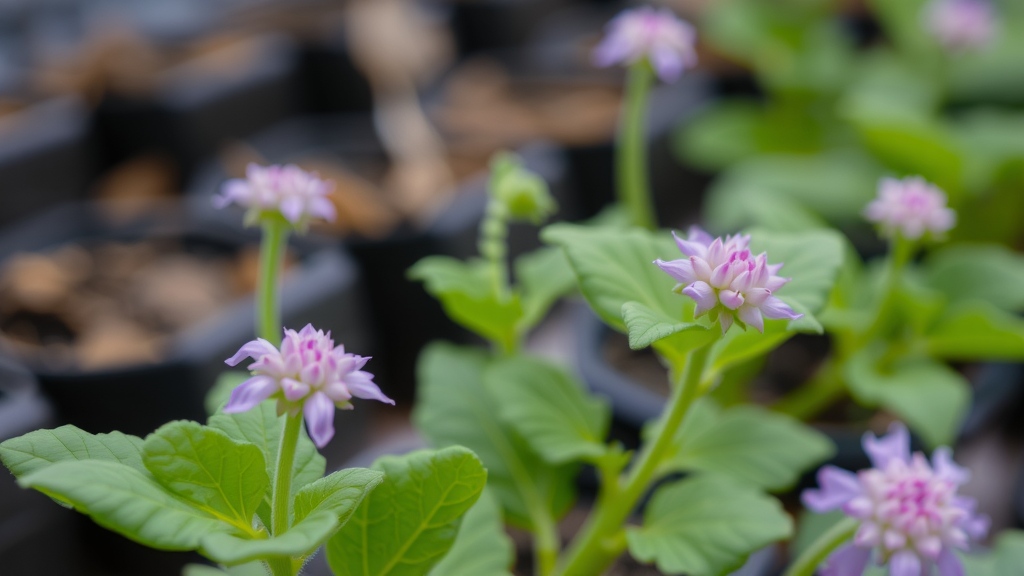
Image Credits: AI Generated
DOI: 10.1038/s41477-026-02410-9
Keywords: CRISPR, genome editing, plant breeding, Ursula Franklin, EU regulation, new genomic techniques, agricultural biotechnology, science policy, public acceptance, GMO legislation, innovation systems, Nature Plants
Cite Scienmag News
Juliet Wilcox. (September 26, 2026). CRISPR Beyond the Lab: Why Genome-Edited Plants Need a Sustainable Innovation System. Scienmag. https://scienmag.com/crispr-beyond-the-lab-why-genome-edited-plants-need-a-sustainable-innovation-system/
Juliet Wilcox. "CRISPR Beyond the Lab: Why Genome-Edited Plants Need a Sustainable Innovation System." Scienmag, 26 September 2026, https://scienmag.com/crispr-beyond-the-lab-why-genome-edited-plants-need-a-sustainable-innovation-system/. Accessed 26 September 2026.
Juliet Wilcox. "CRISPR Beyond the Lab: Why Genome-Edited Plants Need a Sustainable Innovation System." Scienmag. September 26, 2026. https://scienmag.com/crispr-beyond-the-lab-why-genome-edited-plants-need-a-sustainable-innovation-system/


