


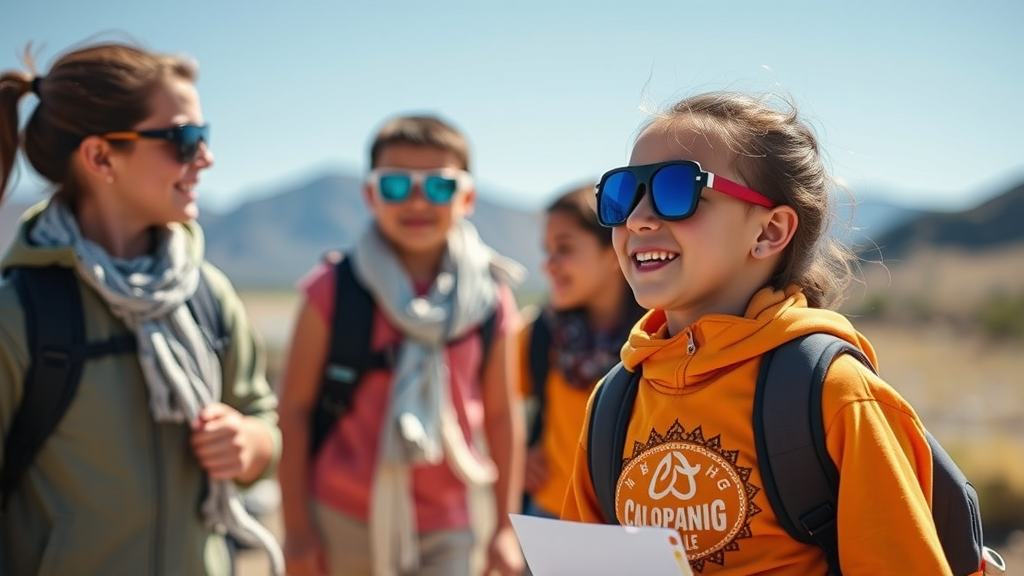
High in the Peruvian Andes, where the thin atmosphere lets ultraviolet radiation slam into the skin with unusual force, a simple classroom experiment has delivered one of the clearest signals yet that sun-safety behavior can be taught. Researchers tested a twelve-session educational program called INTI among third-year secondary students at a rural school sitting above 3,800 meters, and found that teenagers who took part reported significantly better photoprotection habits, attitudes, and knowledge than classmates who did not. The findings, published in Public Health in Practice, arrive against a sobering backdrop: roughly eighty percent of lifetime solar skin damage accumulates before age eighteen, and in the Andes that damage begins under some of the most intense UV conditions on the planet.
The biology behind the risk is unforgiving. Ultraviolet radiation inflicts structural damage on DNA in skin cells, and while the body’s antioxidant repair mechanisms normally cope, saturation of those systems tips the balance toward carcinogenesis. Chronic exposure also degrades skin structure, suppresses immune defenses in the skin, and damages the eyes, contributing to cataracts, keratitis, and pterygium. At altitude the danger is amplified because UV radiation travels a shorter distance through the atmosphere before striking the skin. Peru’s national weather service classifies UV levels across much of the Andean region as extremely high, and the country’s Ministry of Health recorded 3,525 cases of skin cancer between 2021 and 2023. Malignant melanoma, the most aggressive form of the disease, is the third most common cancer among Peruvians aged fifteen to thirty-nine, yet an estimated nine in ten cases are attributable to UV exposure, which makes it one of the most preventable cancers anywhere.
What makes the Andean situation distinctive is that sun exposure is not a seasonal or recreational hazard but a constant of daily life. Outdoor agricultural work, walking to school, and everyday recreation all unfold under a relentless sun, and in many rural communities this exposure is so normalized that it is not perceived as a health risk at all. Adolescents are particularly exposed through school activities and farm labor, while often lacking access to health information and services. Previous photoprotection studies in Peru and across Latin America have focused mostly on urban or peri-urban primary school children, leaving rural high-altitude adolescents, the group facing the highest cumulative UV loads, largely unstudied.
The research team, led by Yadhira Grecia Otazu Masco, Lizbeth Huarilloclla Ramos, and Lucy Puno-Quispe, worked with thirty-seven students aged thirteen to seventeen at a public rural school. With only two intact third-year sections available, one classroom of eighteen students served as the control group and the other, nineteen students, received the intervention. The design was quasi-experimental: both groups completed identical assessments before and after the two-month program, and the researchers used analysis of covariance to statistically adjust for any baseline differences between the groups. Notably, no students dropped out or were excluded, so the final sample matched the full enrolled cohort.
The INTI program itself was built for the classroom rather than the clinic. It consisted of twelve in-person sessions of forty-five minutes each, delivered twice weekly over two months, a duration chosen because habit-formation research suggests healthy behaviors typically need two to five months to consolidate. The sessions progressed from the biology of sun exposure and skin phototypes through sunburn, protective practices, sunscreen use, the emotional dimensions of skin health, the value of early prevention, nutrition and hydration, and even the legislation surrounding sun protection. Each session followed the ARDE methodology, a four-stage pedagogical structure of animation, reflection, demonstration, and evaluation, which pushed students beyond passive listening into repeated hands-on practice.
Measurement relied on the CHACES questionnaire, a validated Spanish-language instrument covering sun-exposure habits, attitudes, and knowledge of sunburn prevention. The team first checked content validity with a panel of seven expert judges, five physicians and two community health nurses, yielding an Aiken’s V coefficient of 0.91, then pilot-tested the instrument with fifteen comparable secondary students, producing a preliminary Cronbach’s alpha of 0.73. Baseline testing confirmed the two classrooms started on equal footing, with no statistically significant pretest differences in knowledge, habits, or attitudes.
The posttest results showed a consistent advantage for the INTI group across all three dimensions. After adjusting for baseline scores, the intervention group scored significantly higher on knowledge (F = 4.93, p = 0.033), habits (F = 20.3, p < 0.001), and attitudes (F = 6.03, p = 0.019). The largest effect, by a wide margin, appeared in habits, which accounted for roughly thirty-seven percent of the variance in posttest scores, a substantial effect size for an educational intervention. The pattern behind this number is revealing: the control group’s habit scores actually declined from pretest to posttest while the experimental group’s rose, and that divergence, rather than a mere difference in improvement rates, drove the adjusted difference. Attitudes barely moved in the control group, suggesting this dimension may resist change without direct intervention, while knowledge improved in both classrooms, hinting that some informational gains may occur regardless of a formal program.
The researchers attribute the outsized habit effect to the structure of INTI itself. Because several sessions were organized around repeated practice and demonstration, drawing on the reflection and demonstration stages of the ARDE methodology, the program may have engaged the behavioral machinery of habit formation more directly than purely cognitive lessons could. This interpretation aligns with a broader literature: a multicomponent sun-safety intervention with 106 middle schoolers improved knowledge and attitudes, and systematic reviews of school-based photoprotection programs across childhood and adolescence consistently report gains in both knowledge and protective behavior. The Andean results also contrast sharply with findings among adult agricultural workers, many of whom remained unaware of the risks of prolonged exposure and reluctant to use sunscreen, suggesting that reaching people before adulthood, when habits are still plastic, may be the decisive window.
The study’s context matters as much as its statistics. Earlier work has shown that parental knowledge of photoprotection predicts children’s protective practices, and that parent-targeted education can improve children’s sun behaviors, pointing toward a natural extension of INTI that brings caregivers into the program. Gender differences in photoprotection habits documented elsewhere also argue for tailored content. And while digital tools such as a facial-aging web application have produced sustained behavior change over three-month follow-ups, follow-up duration alone does not reliably predict lasting protection; poverty and limited access to health services, both prevalent in rural Puno, shape whether protective habits take root at all.
The authors are appropriately candid about the limits of their evidence. Randomization occurred at the classroom level with only one classroom per condition, so group membership is confounded with classroom membership and the independence of individual observations may not hold. Convenience sampling, the small sample of thirty-seven, and the absence of data on family influence, economic constraints, or cultural norms all restrict generalizability, and the self-reported outcomes were captured at a single posttest point, leaving open whether the changes persist. Still, as preliminary evidence, the study makes a compelling case for embedding photoprotection education in rural school curricula, training teachers and health staff, and ensuring access to UV protection products in regions where the sun is an inescapable fact of geography. For the teenagers of the high Andes, whose skin absorbs a lifetime of ultraviolet damage before they finish secondary school, twelve structured classroom sessions may prove one of the cheapest and most effective cancer-prevention tools available.
Subject of Research: Effectiveness of a school-based photoprotection education program among adolescents in a high-altitude rural Andean region
Article Title: Effectiveness of INTI educational program on photoprotection among adolescents in high-altitude rural Andean school: A quasi-experimental study
Article References: Otazu Masco, Y. G., Huarilloclla Ramos, L., & Puño-Quispe, L. (2026). Effectiveness of INTI educational program on photoprotection among adolescents in high-altitude rural Andean school: A quasi-experimental study. Public Health in Practice, 12, Article 100853. https://doi.org/10.1016/j.puhip.2026.100853
Image Credits: AI Generated
DOI: 10.1016/j.puhip.2026.100853
Keywords: photoprotection, UV radiation, skin cancer, adolescents, Andes, Peru, sun safety education, quasi-experimental study, public health, melanoma prevention, school health program, high altitude
Cite Scienmag News
Nathaniel Bowman. (September 23, 2026). School Program Boosts Sun-Safety Habits in High-Altitude Andean Teens. Scienmag. https://scienmag.com/school-program-boosts-sun-safety-habits-in-high-altitude-andean-teens/
Nathaniel Bowman. "School Program Boosts Sun-Safety Habits in High-Altitude Andean Teens." Scienmag, 23 September 2026, https://scienmag.com/school-program-boosts-sun-safety-habits-in-high-altitude-andean-teens/. Accessed 23 September 2026.
Nathaniel Bowman. "School Program Boosts Sun-Safety Habits in High-Altitude Andean Teens." Scienmag. September 23, 2026. https://scienmag.com/school-program-boosts-sun-safety-habits-in-high-altitude-andean-teens/


