


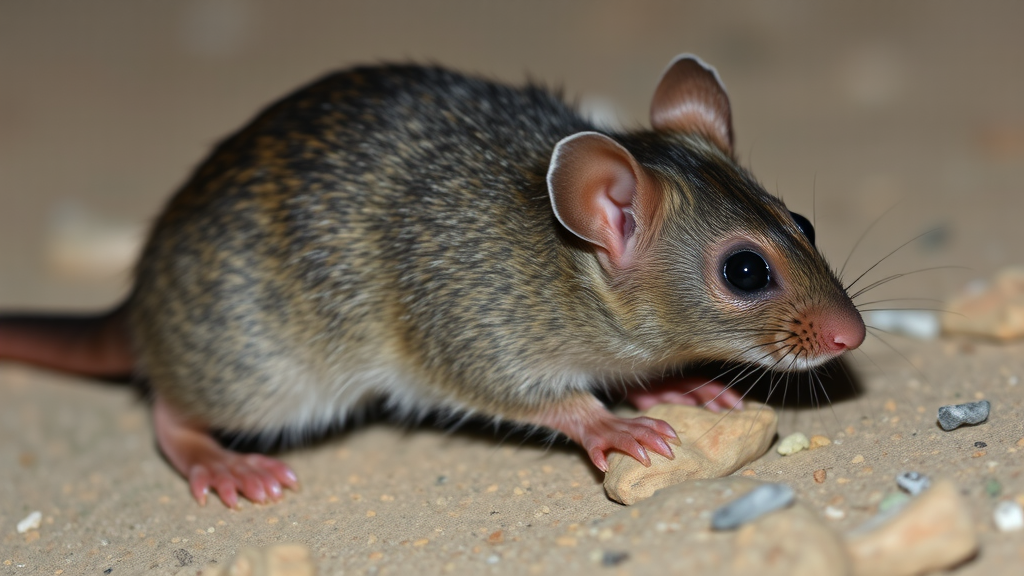
A tick-borne parasite capable of causing human disease has been detected for the first time in wild rodents across Pakistan, according to a new study published in Veterinary Medicine and Science. Researchers screened 284 wild rats and mice trapped from seven districts in Punjab and Khyber Pakhtunkhwa provinces and found that roughly 12 percent carried Babesia microti, a single-celled protozoan parasite that invades red blood cells and is increasingly recognized as an emerging threat to human health in many parts of the world. The findings provide the first molecular evidence that this zoonotic pathogen circulates among rodent populations in Pakistan, a country where no human cases of babesiosis have yet been formally reported but where undiagnosed infections may be occurring unnoticed.
Babesia microti belongs to a group of apicomplexan parasites transmitted to animals and humans through the bite of infected hard ticks. In North America, the primary vector is Ixodes scapularis, while Ixodes ricinus serves this role in Europe and Ixodes persulcatus in Asia. Humans are incidental hosts, and human babesiosis has been documented across the United States, Europe and Asia. The parasite primarily infects small rodents, particularly the white-footed mouse, which acts as its principal natural reservoir, although infections have occasionally been reported in domestic animals such as cats and dogs. Because transovarial transmission in ixodid ticks has not been reported, the parasite depends on an enzootic cycle linking ticks and small mammals, with rodents serving as a continuous source of infection for feeding ticks. Beyond tick bites, humans can acquire the parasite through contaminated blood transfusion, organ transplantation and congenital transmission from an infected mother to her foetus.
In most infected people the disease remains asymptomatic, but symptoms typically emerge after an incubation period of one to four weeks and include chills, fever, sweating, fatigue and haemolytic anaemia resulting from the repeated rupture of infected red blood cells. The preferred treatment in humans combines the antiprotozoal drug atovaquone with the antibiotic azithromycin. Rodents are central to the epidemiology of this disease because they are widely distributed, adapt readily to diverse habitats and often live in close proximity to humans. Approximately 200 rodent species are known to harbour more than 60 zoonotic diseases caused by bacteria, viruses and parasites. Pakistan alone hosts 43 documented rodent species, ranging from common mice and rats to porcupines, desert gerbils and giant flying squirrels, yet these animals have rarely been screened for pathogens, with only a handful of reports concerning Toxoplasma gondii and single reports of Hepatozoon and Lankesterella species in local rats and mice.
To address this gap, the research team trapped wild rodents between October 2023 and September 2024 from four districts in Punjab, namely Rajanpur, Dera Ghazi Khan, Multan and Sargodha, and three districts in Khyber Pakhtunkhwa, namely Upper Dir, Mardan and Buner. Using the Thrusfield formula for prevalence studies with an expected prevalence of 10 percent, a 95 percent confidence level and 5 percent precision, they calculated a minimum required sample of 138 animals but nearly doubled this by capturing 284 rodents to improve the reliability of their estimates. Live traps baited with fruit, sweets and biscuits, along with glue traps, were deployed opportunistically at agricultural fields, houses, storage sites and commercial shops. Captured animals were identified to species using standard taxonomic keys, combed for ectoparasites, euthanized under deep isoflurane anaesthesia and sampled by direct cardiac puncture. Blood was collected into tubes containing EDTA anticoagulant, with complete blood counts performed the same day and remaining samples frozen for molecular analysis. All procedures were approved by the ethical review committee of Bahauddin Zakariya University in Multan and conducted in accordance with ARRIVE guidelines.
The trapped animals comprised three species: 137 black rats (Rattus rattus), 80 brown rats (Rattus norvegicus) and 67 house mice (Mus musculus), with males making up 54 percent of the sample. Genomic DNA was extracted from blood using a commercial purification kit and screened by polymerase chain reaction targeting a species-specific region of the parasite’s 18S ribosomal RNA gene, following primers originally described by Persing and colleagues. The assay amplified a 238-base-pair fragment in 35 of the 284 samples, an overall prevalence of 12 percent. Positive controls came from a previously confirmed B. microti-positive dog blood sample from the same laboratory, and distilled water served as the negative control in every run. Representative amplicons from two brown rats, one black rat and one house mouse were confirmed by bidirectional sequencing, submitted to GenBank under accession numbers PQ538588 through PQ538591 and included in phylogenetic analysis.
Prevalence varied modestly among species, with 16 percent of brown rats, 13 percent of black rats and 6 percent of house mice testing positive, though a chi-square comparison found these differences statistically non-significant. District-level patterns were more striking despite lacking statistical significance in binary logistic regression models that used Rajanpur as the reference district. Among brown rats, prevalence peaked at 42 percent in Sargodha; among black rats, at 28 percent in Mardan; and among house mice, at 25 percent in Buner. Notably, every infected house mouse came from Khyber Pakhtunkhwa, while none of the mice from Punjab tested positive, whereas both rat species carried infections in both provinces. Fisher’s exact tests showed that infection was not confined to either sex in any of the three species, and no ticks were detected on any of the trapped rodents, a finding the authors attribute to the temporary nature of tick attachment during blood feeding, seasonal variation in tick activity, host grooming behaviour and the timing of trapping.
Phylogenetic analysis of the partial 18S rRNA sequences, performed in MEGA X using the Maximum Likelihood method with a Kimura 2-parameter model and a discrete gamma distribution, placed all four Pakistani rodent sequences in a single cluster. The sequences showed 100 percent identity with B. microti previously detected in dog and cat blood samples from Pakistan, and 99.49 percent identity with isolates from house mice in Japan and France and from the grey red-backed vole Myodes rufocanus in Russia. They were clearly distinct from 18S rRNA sequences of Babesia leo, Babesia felis, Babesia vulpes and Babesia rodhaini detected in felines and rodents across South Africa, Mozambique, the Czech Republic and Japan, with Cytauxzoon brasiliensis serving as the outgroup. This close relationship between rodent and domestic animal isolates within Pakistan suggests that the same parasite lineage circulates across multiple host species in the country, reinforcing the value of the 18S rRNA gene as a conserved and widely validated marker for sensitive detection, even though its resolution for fine-scale genotypic differentiation remains limited.
The study also documented measurable costs of infection in the rodent hosts. Infected house mice weighed significantly less than uninfected mice, although the observational design prevents any conclusion about causation, since age, nutrition, reproductive condition and concurrent infections could all contribute. In black rats, infection was associated with significantly reduced total white blood cell counts, lymphocyte counts and red blood cell counts. In brown rats, lymphocytes and mean corpuscular volume were significantly decreased while mean corpuscular haemoglobin concentration was significantly elevated. These changes align with the established biology of Babesia infection, in which sporozoites injected by an infected tick invade erythrocytes and undergo asexual replication, with the repeated rupture of infected red blood cells during merozoite release producing haemolytic anaemia. The authors caution that multiple haematological parameters were compared with separate t-tests without adjustment for multiple comparisons, so significant findings should be interpreted carefully and validated in larger samples.
Compared with surveys elsewhere, the Pakistani prevalence of 12 percent sits near the middle of a wide global range, from 0.6 percent in social voles in Turkey and 1.4 percent in Irish wood mice and bank voles to 22 percent among small rodents in Chile, with intermediate figures reported from China, South Korea, Turkey, Lithuania and mainland Southeast Asia. Such variation likely reflects differences in climate, geography, sampling season, host age and immunity, and tick density. The study had limitations: trapping was opportunistic and trap numbers varied by site, potential risk factors such as age, body condition, habitat and season were not evaluated, and the absence of blood smear examination means detection relied entirely on molecular methods, so the reported prevalence reflects molecular detection rather than confirmed active parasitemia and cannot distinguish low-level from heavy infections. No human babesiosis cases have been reported in Pakistan, but limited awareness, inadequate diagnostic facilities and underrecognition of tick-borne diseases, particularly in rural areas, mean undiagnosed infections remain a real possibility. The researchers call for integrated surveillance combining molecular diagnostics with microscopy, investigation of rodent-associated ticks for B. microti and other pathogens, and broader epidemiological studies to evaluate the zoonotic risk that these infected rodents may pose to people and animals across the region.
Subject of Research: First molecular detection and genetic characterization of the tick-borne zoonotic parasite Babesia microti in wild rodents in Pakistan
Article Title: Molecular Detection, Epidemiology and Genetic Diversity of Babesia microti Infecting Wild Rodents
Article References: Munir, H. M., Naeem, M., Ijaz, M., Ullah, S., Usman, M., Nasir, Z. U. R., Khan, A., Almaary, K. S., Bouallegue, A., Mengistie, A. A., & Iqbal, F. (2026). Molecular Detection, Epidemiology and Genetic Diversity of Babesia microti Infecting Wild Rodents. Veterinary Medicine and Science, 12(5), Article e71196. https://doi.org/10.1002/vms3.71196
Image Credits: AI Generated
DOI: 10.1002/vms3.71196
Keywords: Babesia microti, babesiosis, rodents, Pakistan, tick-borne disease, zoonosis, 18S rRNA, phylogenetics, haemolytic anaemia, Rattus norvegicus, Rattus rattus, Mus musculus
Cite Scienmag News
Kristina Jarvis. (September 22, 2026). Hidden Parasite Found in Wild Rats and Mice Across Pakistan Raises Zoonotic Concerns. Scienmag. https://scienmag.com/hidden-parasite-found-in-wild-rats-and-mice-across-pakistan-raises-zoonotic-concerns/
Kristina Jarvis. "Hidden Parasite Found in Wild Rats and Mice Across Pakistan Raises Zoonotic Concerns." Scienmag, 22 September 2026, https://scienmag.com/hidden-parasite-found-in-wild-rats-and-mice-across-pakistan-raises-zoonotic-concerns/. Accessed 22 September 2026.
Kristina Jarvis. "Hidden Parasite Found in Wild Rats and Mice Across Pakistan Raises Zoonotic Concerns." Scienmag. September 22, 2026. https://scienmag.com/hidden-parasite-found-in-wild-rats-and-mice-across-pakistan-raises-zoonotic-concerns/


