


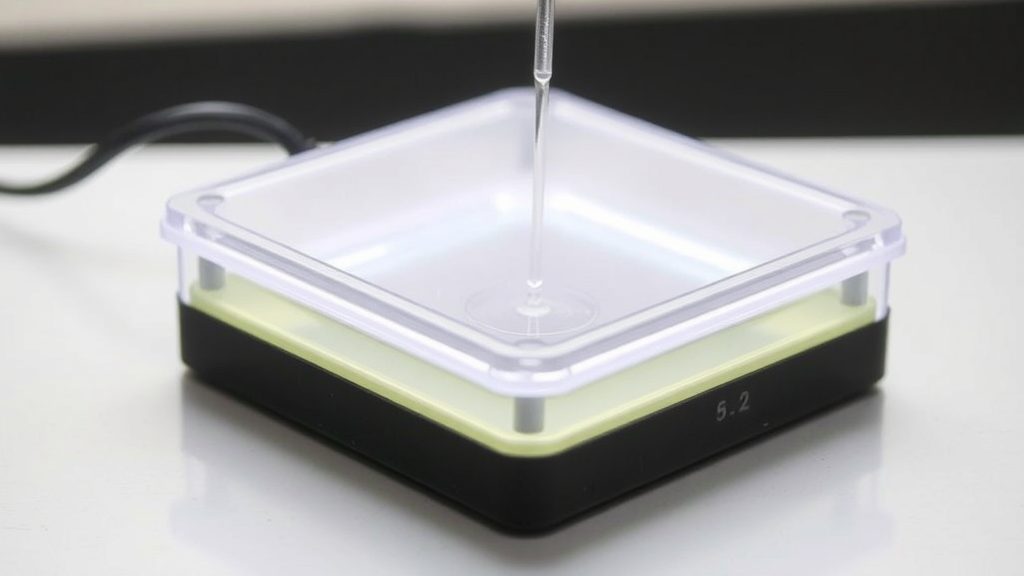
A small, modular electrochemical flow cell that costs roughly $300 to build and can be assembled from openly published drawings has been described in full technical detail by researchers seeking to make laboratory-scale flow electrochemistry more reproducible and accessible. The device, known as the Gen 2 flow cell, offers an active electrode area of just 2.55 square centimeters and an internal volume of about one milliliter per half-cell, yet its performance metrics closely match those of substantially larger commercial and research cells. By publishing complete design files, fabrication instructions, assembly protocols, and validation data under open-source licenses, the team behind the hardware hopes to lower the barriers that have long kept sophisticated flow cell experimentation confined to well-funded laboratories.
Electrochemical flow systems underpin a strikingly broad range of technologies, from redox flow batteries that store grid-scale energy to carbon dioxide electrolyzers that convert waste gas into useful chemicals, and from water remediation to the recovery of critical materials and the synthesis of electrofuels. In all of these fields, progress depends on systematically screening electrolyte chemistries, electrode materials, membranes, flow field geometries, and operating conditions. Because the number of possible combinations grows explosively, researchers benefit enormously from platforms that allow many experiments to run quickly and cheaply. Existing commercial flow cells, however, tend to be either expensive or rigid in the materials and components they accept, which has led academic groups to design bespoke cells whose documentation rarely supports easy reproduction by others.
The new design addresses five primary considerations: small sample volume, chemical stability, scalable performance, flow field variety, and low cost. Its flow field architecture is loosely based on a 25-square-centimeter subscale cell developed at the former United Technologies Research Center, and comparative measurements confirmed that the smaller device delivers performance consistent with that larger predecessor, meaning results obtained with it remain representative of bigger systems. Because the cell is so small, it behaves much like a differential element within a larger cell, minimizing the influence of spatial heterogeneities that can confound measurements in bigger hardware. The compact footprint also means smaller electrodes, membranes, and electrolyte volumes are needed, easing bottlenecks associated with synthesizing expensive or laboriously prepared materials.
The heart of the device is a stack of components held between two polypropylene diffusers. Each diffuser compresses the stack, distributes electrolyte to the back of the flow field, and provides standard threaded ports for fluidic connections. Interchangeable flow fields, milled from resin-impregnated graphite, distribute electrolyte through the porous electrode while doubling as electronic current collectors. The design accommodates the canonical geometries familiar from fuel cell research: flow-through, interdigitated, serpentine, and parallel configurations. Interdigitated and flow-through fields are favored in flow battery work, while serpentine and parallel patterns are more common in gas-fed systems. Custom geometries are also possible, and insulating or transparent flow fields, potentially 3D printed, open the door to pressure-drop studies and optical interrogation of flow behavior.
Gaskets play a deceptively critical role. Cut from skived polytetrafluoroethylene in thicknesses ranging from one to ten thousandths of an inch, they create a pocket for the electrode, set the electrode compression, and seal each half-cell from its counterpart and the outside world. The authors note a trade-off: relatively incompressible gaskets give precise control over electrode compression but seal less reliably, while compressible alternatives such as silicone or expanded PTFE seal better but complicate compression estimates. Low surface tension solvents like acetonitrile pose particular sealing challenges, which expanded PTFE addresses at the cost of reusability. The stackable gasket approach accepts electrodes from roughly ten micrometers to one millimeter in thickness and supports membranes and separators from commercial products such as Celgard, Daramic, Nafion, and Fumasep, as well as bespoke ceramic composites and emerging materials.
Assembly follows a carefully scripted sequence. Alignment pins position each component, electrodes are centered within gasket stacks chosen to achieve a target compression, typically around twenty percent, and bolts are tightened in a star pattern with incremental torque, progressing from three to fourteen pound-inches, to ensure uniform compression across the cell. The authors document even the smallest details, from wrapping Teflon tape clockwise around barbed fittings to avoiding over-tightening, which they found empirically to induce leaks. Beyond the cell itself, the paper describes the balance of plant in unusual depth: peristaltic or diaphragm pumps, chemically compatible tubing kept short and narrow to minimize holdup, reservoirs configured so inlets and outlets avoid bypassing the bulk electrolyte, and potentiostats or battery cyclers for electrical control.
Operation can proceed in several configurations. In a single-electrolyte setup, the same solution circulates through both half-cells, minimizing concentration gradients and crossover effects, which makes the configuration ideal for polarization and impedance measurements. In a symmetric cell, two independent reservoirs hold identical electrolytes that can be initialized at different states of charge, permitting cycling experiments without the complications of pairing two distinct redox couples. Full-cell configurations with distinct chemistries on each side are equally supported. The team also describes optional enhancements, including reference electrodes, elevated-temperature operation with heaters and feedback control, gas-tight fittings for pressurized work, humidifiers to suppress solvent evaporation, and inline sensors for conductivity or spectroscopic monitoring.
Validation was performed with a well-characterized aqueous electrolyte of potassium ferricyanide and potassium ferrocyanide in potassium chloride, using heat-treated carbon paper electrodes, a Daramic separator, and interdigitated flow fields. Three operators ran identical protocols on different channels of the same potentiostat, spanning impedance spectroscopy from one megahertz to five millihertz, polarization measurements up to 150 milliamperes per square centimeter, and twenty cycles of galvanostatic charge-discharge. To quantify variability rigorously, the authors introduced a framework distinguishing marginal repeatability, which captures variability from rebuilding the same cell with identical components, from total repeatability, which additionally reflects differences between operators and nominally identical parts. Polarization results showed total variability roughly twice the marginal component, indicating that component and operator differences matter more than the assembly process itself.
Cycling results were particularly encouraging. Electrolyte utilization averaged about 84 percent, consistent with literature values for ferricyanide cells, and coulombic efficiencies ranged from 99.4 to 99.9 percent, approaching the theoretical maximum. Coefficients of variation for discharge capacity and coulombic efficiency were small, and pre- and post-cycling polarization curves showed negligible changes, suggesting the cell components survive cycling unaltered. The authors also outline extensions of the platform, including pressure-drop measurements to estimate electrode permeability, capacitance-based estimates of electrochemical surface area, bulk electrolysis with superior mass transport compared to stirred batch cells, and operation inside gloveboxes for air-sensitive chemistries.
The broader significance of the work lies in its insistence on experimental rigor. Reproducibility crises have touched many fields, and a recent multi-institutional study highlighted replicability challenges in redox flow cell testing. By documenting not just a device but a complete methodology, including cleaning procedures, troubleshooting guides for leaks, shorts, and volume imbalances, and a statistical framework for assessing repeatability, the authors aim to improve cross-laboratory comparability across the growing flow battery literature. The cell has already been adopted by numerous research groups whose published studies provide newcomers with benchmark datasets, and its flexibility positions it well for emerging applications in carbon dioxide capture, critical materials recovery, and electrofuel production. For a field where small differences in cell hardware can obscure genuine material effects, a well-documented, inexpensive, and adaptable platform may prove as valuable as any single scientific result it helps produce.
Subject of Research: An open-source, low-cost small-area electrochemical flow cell for reproducible redox flow battery and electrolyzer testing
Article Title: A flexible small-scale electrochemical flow cell
Article References: A flexible small-scale electrochemical flow cell. (n.d.). https://doi.org/10.1016/j.ohx.2026.e00834
Image Credits: AI Generated
DOI: 10.1016/j.ohx.2026.e00834
Keywords: electrochemical flow cell, redox flow battery, open-source hardware, electrochemical impedance spectroscopy, polarization measurements, flow fields, carbon electrodes, membranes and separators, repeatability, energy storage, carbon dioxide electrolysis, laboratory instrumentation
Cite Scienmag News
Bethany Barker. (September 22, 2026). Open-Source Flow Cell Puts Low-Cost Electrochemistry Testing in Every Lab. Scienmag. https://scienmag.com/open-source-flow-cell-puts-low-cost-electrochemistry-testing-in-every-lab/
Bethany Barker. "Open-Source Flow Cell Puts Low-Cost Electrochemistry Testing in Every Lab." Scienmag, 22 September 2026, https://scienmag.com/open-source-flow-cell-puts-low-cost-electrochemistry-testing-in-every-lab/. Accessed 22 September 2026.
Bethany Barker. "Open-Source Flow Cell Puts Low-Cost Electrochemistry Testing in Every Lab." Scienmag. September 22, 2026. https://scienmag.com/open-source-flow-cell-puts-low-cost-electrochemistry-testing-in-every-lab/


