


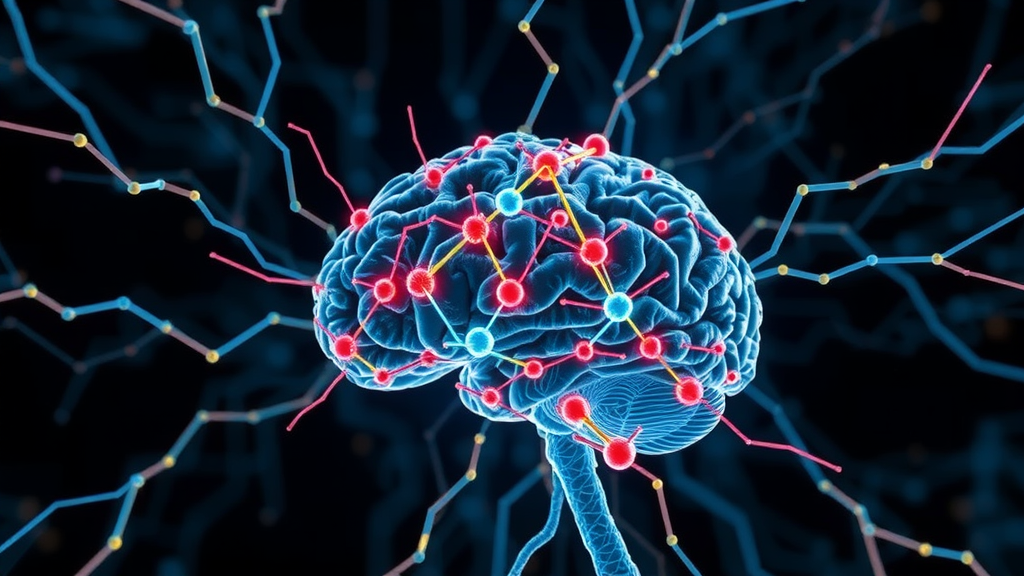
Researchers affiliated with the Research Foundation for the State University of New York have unveiled a new computational and hardware platform designed to probe one of the most stubborn questions in modern neuroscience: how the microscopic junctions between neurons go wrong in complex neurological disorders. The technology pairs a specialized artificial neural network, called the ASD interrogator or ASDint, with a dedicated hardware architecture known as the Synaptic Neuronal Circuit, or SyNC. Together, the two components are engineered to model and analyze synaptic dysfunctions associated with Autism Spectrum Disorder and related conditions with a level of biological realism and computational speed that conventional tools have struggled to achieve. The innovation, which is patent pending and available for licensing, arrives at a moment when the scientific community is increasingly convinced that synaptopathies, or diseases rooted in malfunctioning synapses, sit at the heart of many neurodevelopmental and neuropsychiatric conditions.
The motivation behind the platform stems from a persistent gap in the computational neuroscience toolbox. Autism Spectrum Disorders involve intricate, layered disruptions in synaptic signaling, particularly at glutamatergic synapses, the primary excitatory junctions in the mammalian brain. These synapses rely on the neurotransmitter glutamate and are central to learning, memory and the fine calibration of neural circuits during development. Existing software models, however, fall short of capturing the dynamic behavior of these junctions, especially the role of retrograde messengers, signaling molecules that travel backward from the postsynaptic neuron to the presynaptic terminal to modulate how much neurotransmitter is released. Because this feedback loop is crucial to synaptic plasticity, its omission from standard spiking neural network models limits how faithfully researchers can simulate disease states. The result, researchers say, has been a bottleneck in understanding how synaptic dysfunction emerges and progresses, and consequently in designing therapeutics that address the underlying biology rather than just its outward symptoms.
ASDint, the software heart of the platform, is a neural network model purpose-built for glutamatergic synapse analysis. Rather than treating neurons and synapses as generic computational units, the model extends the traditional spiking neural network framework, in which artificial neurons communicate through discrete electrical pulses much like their biological counterparts, by explicitly incorporating retrograde messenger dynamics. This addition introduces a layer of biological accuracy that allows the model to interpret synaptic activity the way a neurobiologist might: not merely as a one-way transmission of spikes, but as a continuous conversation between the two sides of the synapse. By encoding these bidirectional signaling mechanisms, ASDint can, in principle, represent the subtle shifts in synaptic strength and reliability that characterize synaptopathies, offering researchers a more faithful digital surrogate of the circuits they study in the laboratory.
The hardware component, SyNC, addresses the other half of the problem: speed. Biological synapses operate on millisecond timescales, and meaningful simulations of neural circuits require the model to run in real time, matching the pace of living tissue rather than lagging far behind it. SyNC functions as a biologically relevant neuron synapse simulation running continuously, leveraging either a novel GPU accelerator or a specialized application-specific integrated circuit, an ASIC, to deliver the computational throughput that real-time simulation demands. This hardware acceleration is what transforms the platform from a conceptual model into a practical research instrument. Where general-purpose computing can grind through such simulations slowly and at high energy cost, the ASIC implementation executes the synaptic computations efficiently, enabling rapid, automated analysis and making the system compatible with the workflows of experimental laboratories and biomedical research programs.
According to the technology overview released by the Research Foundation, the integration of software and hardware yields several distinct advantages. The neural network model is designed specifically for glutamatergic synapse analysis in ASD and related disorders, rather than being a general-purpose network retrofitted for the task. The SyNC architecture provides real-time biological relevance through its efficient ASIC design. The incorporation of retrograde messenger analysis into spiking neural networks delivers greater simulation accuracy than conventional approaches. The GPU or ASIC hardware path enhances computational efficiency and enables rapid processing of large-scale simulations. Crucially, the foundation describes the software platform as entirely novel, with no prior competing components, offering what it calls a unique and comprehensive solution. The combined system is intended to facilitate automated, compatible analysis useful both for basic research and for therapeutic development.
The range of applications suggested for the platform is correspondingly broad. In basic science, it could support research into the mechanisms of synaptic dysfunction in Autism Spectrum Disorders and other complex neurological conditions, giving investigators a controllable, reproducible environment in which to test hypotheses about how genetic and environmental factors perturb synaptic signaling. In translational research, the system could be used for the development and testing of therapeutic interventions targeting synaptopathies, allowing candidate drugs or stimulation protocols to be evaluated computationally before expensive biological validation. The platform also supports real-time simulation and assessment of neuron synapse activity for biomedical studies, and it offers a hardware-accelerated foundation for computational neuroscience and neuromorphic engineering, the emerging field that builds brain-inspired computing systems. Finally, the foundation highlights its potential to support interdisciplinary collaboration among academic, medical and technological institutions focused on neurological health.
The significance of a tool like this lies in the broader shift underway in how neurological disease is understood. Over the past two decades, large-scale genetic studies have linked hundreds of genes to autism risk, and a striking proportion of them encode proteins that function at the synapse. This convergence has led many researchers to frame ASD and related conditions fundamentally as synaptopathies, disorders whose roots lie in altered synaptic transmission, plasticity and circuit formation. Yet translating that genetic insight into mechanistic understanding requires models that can connect molecular-level perturbations to circuit-level dysfunction, a task that has proven computationally daunting. A platform that models glutamatergic synapses with retrograde signaling, and runs those models in real time on dedicated hardware, aims squarely at that middle ground between molecule and circuit, where many researchers believe the most actionable knowledge about these conditions will be found.
The commercialization trajectory of the technology is at an early but deliberate stage. The invention is protected under a pending patent, identified as US application 18/569,431, and is listed at Technology Readiness Level 4, a point at which a technology has been validated in the laboratory but has not yet been integrated into full-scale systems or field deployments. The Research Foundation for SUNY, which manages intellectual property and technology transfer for the State University of New York system, has made the technology available for licensing and is promoting it through SUNY TechConnect, the system’s online portal for licensing opportunities. The foundation frames the innovation as part of a wider portfolio of SUNY discoveries spanning artificial intelligence for the public good, quantum technologies, next-generation semiconductors and biotechnology, and it offers multiple pathways for turning university research into economic development.
For the research community, the arrival of a synapse-specific, hardware-accelerated modeling platform reflects a growing recognition that progress on complex neurological disorders will depend as much on better instruments as on better hypotheses. Simulations that run in real time can be coupled directly to experimental rigs, allowing closed-loop comparisons between living tissue and its digital counterpart, a workflow that is increasingly common in computational neuroscience and neuromorphic engineering. If the platform performs as described, it could shorten the distance between a synaptic hypothesis and a testable prediction, and give therapeutic developers a faster, cheaper screening layer before candidate treatments ever reach animal or clinical studies.
The researchers behind the platform are candid that improved tools for studying synaptopathies are a means to an end. The ultimate goal is a clearer picture of how synaptic dysfunction drives the progression of Autism Spectrum Disorders and other complex neurological conditions, and, on that foundation, the development of more effective treatments. Better models of glutamatergic synapses, running fast enough to be genuinely useful, could help identify which synaptic mechanisms are most worth targeting, and could accelerate the translation of laboratory findings into interventions that improve outcomes and quality of life for patients. In a field where the gap between genetic discovery and therapeutic impact has remained wide, a biologically faithful, real-time window into the synapse may prove to be one of the more consequential instruments to emerge from university technology transfer in recent years.
Subject of Research: A neural network and hardware platform for modeling synaptic dysfunction in autism spectrum disorder and related neurological conditions
Article Title: A neural net to identify impacts of synaptopathies in complex neurological disorders
Article References: A neural net to identify impacts of synaptopathies in complex neurological disorders. (n.d.). Original publication
Image Credits: AI Generated
DOI: Not provided
Keywords: autism spectrum disorder, synaptopathy, spiking neural networks, glutamatergic synapses, retrograde messengers, ASIC hardware, computational neuroscience, neuromorphic engineering, SUNY, technology transfer, neurological disorders, therapeutic development
Cite Scienmag News
Cassandra Pierce. (September 22, 2026). Neural network platform targets synaptic roots of autism and related disorders. Scienmag. https://scienmag.com/neural-network-platform-targets-synaptic-roots-of-autism-and-related-disorders/
Cassandra Pierce. "Neural network platform targets synaptic roots of autism and related disorders." Scienmag, 22 September 2026, https://scienmag.com/neural-network-platform-targets-synaptic-roots-of-autism-and-related-disorders/. Accessed 22 September 2026.
Cassandra Pierce. "Neural network platform targets synaptic roots of autism and related disorders." Scienmag. September 22, 2026. https://scienmag.com/neural-network-platform-targets-synaptic-roots-of-autism-and-related-disorders/


