


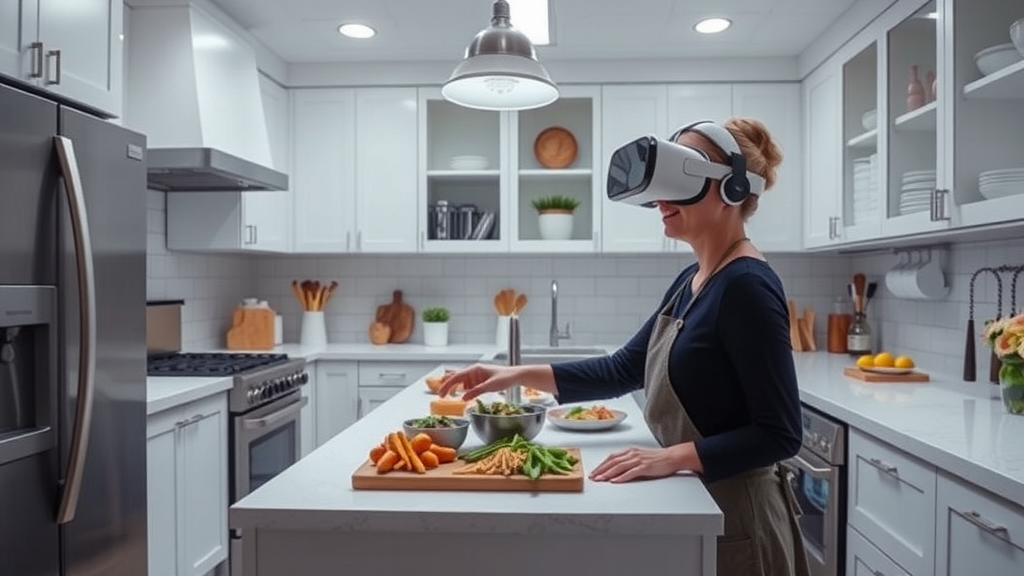
For people living with anorexia nervosa, the simple act of standing near a loaf of bread or a bar of chocolate can trigger a cascade of overwhelming emotions: fear, guilt, disgust and an urgent drive to escape. Exposure to feared foods is a cornerstone of many psychological treatments for eating disorders, because repeated, tolerated contact with the anxiety-provoking stimulus allows patients to learn that their distress rises, peaks and eventually falls, and that the feared consequences do not materialise. Yet real-world food exposure is difficult to deliver. Clinicians must source appropriate foods, control the environment, and coax patients through experiences they may find intolerable. A new study published in the Journal of Eating Disorders suggests that virtual reality could offer a practical, scalable and, crucially, acceptable alternative that patients themselves are willing to embrace.
In the study, a team of researchers from King’s College London, the University of Padova and Orygen at the University of Melbourne asked 71 patients with anorexia nervosa to complete a single five-minute exposure session inside a virtual kitchen. The scenario, delivered through a head-mounted display, presented a domestic kitchen stocked with foods of varying calorie contents, including many of the items patients most commonly avoid. The researchers were interested not only in whether the virtual environment could provoke realistic anxiety, but in how patients felt about the experience itself. To capture this, each participant took part in an individual semi-structured interview immediately after the exposure session, and the resulting transcripts were analysed thematically to identify recurring patterns in what patients valued, feared and wanted changed.
The study was designed as a randomised comparison of three versions of the virtual kitchen. Twenty-four participants experienced the kitchen alone, without any additional elements. Twenty-five were exposed to the kitchen alongside a virtual pet, described in the plain-language summary of the study as a pink elephant, intended to induce positive mood during the exposure. A further twenty-two encountered the kitchen together with an avatar that delivered a motivational message while the patient faced the threatening foods. These two additions were grounded in psychological theory: positive affect can broaden thinking and reduce defensive avoidance, while supportive communication from another person, even a virtual one, may lower the perceived social pressure that often surrounds eating situations in anorexia nervosa.
Thematic analysis of the interviews revealed four major themes. The first and perhaps most consequential was that patients regarded virtual reality as a credible and useful tool for exploring and changing their food-related difficulties. Rather than dismissing the virtual kitchen as a gimmick, participants described it as a safe bridge between the consulting room and the real world, a space where they could approach feared foods knowing that nothing they touched would actually be eaten, weighed or photographed. This sense of psychological safety did not eliminate anxiety, and the researchers did not intend it to. Instead, the environment elicited what the authors describe as tolerable levels of anxiety: enough emotional activation to make exposure meaningful, but not so much that patients disengaged or refused the task entirely. From a clinical standpoint, that balance is precisely what effective exposure requires, and it echoes the inhibitory learning model on which modern exposure treatments are built.
The second theme centred on personalisation. Participants did not want a one-size-fits-all kitchen; they wanted environments that reflected their own triggers, histories and stage of recovery. Their suggestions were detailed and practical: a choice of foods so that each person could work with items they genuinely feared rather than generic stand-ins, the ability to include environments that were personally challenging, and more opportunities to interact with the objects in the scene. Several participants proposed a virtual eating feature, which would allow them to rehearse the full sequence of approaching, selecting and consuming a feared food within the simulation before attempting it in reality. Others asked for a human-like avatar, suggesting that the current virtual figure did not fully carry the social qualities that make support feel genuine. These requests matter because personalisation is increasingly understood as a driver of engagement in digital therapeutics, and patients with eating disorders are notoriously prone to dropping out of treatments that feel irrelevant or coercive.
The third and fourth themes addressed the two experimental additions directly. The avatar and its motivational message were broadly acceptable, with patients valuing the idea of social support during exposure, though several argued that the message should be delivered before the exposure begins rather than during it, so that encouragement does not interrupt the very process of confronting and tolerating anxiety. The virtual pet, meanwhile, met with general enthusiasm. Patients welcomed the playful, warm presence of an animal companion, and many felt it lightened the emotional tone of the session without trivialising the task. The pet’s contribution to positive mood appeared to make the kitchen feel less clinical and more like a space the patient could inhabit at their own pace, which aligns with the study’s aim of testing whether mood-inducing elements can enhance inhibitory learning of food-related anxiety and avoidance.
Technically, the study illustrates why virtual reality is attractive for exposure-based treatments. A virtual kitchen can be generated once and deployed infinitely, ensuring that every patient encounters a consistent, controllable stimulus hierarchy that would be impractical to replicate with real food. Calorie content, packaging, quantity and placement of foods can be varied systematically across sessions, allowing therapists to grade exposure precisely as the patient progresses. The environment can also be safely repeated: a patient who becomes overwhelmed can step out instantly, and a patient who succeeds can return the next day without the logistical burden of shopping, preparation and waste. For conditions such as anorexia nervosa, where foods themselves carry intense symbolic and emotional charge, the ability to rehearse difficult situations with real consequences suspended is a genuine therapeutic advantage.
The qualitative design also highlights something that quantitative outcome measures often miss: the texture of patient experience. Participants described the headset environment as immersive enough to feel real, and their reported emotions suggested that the brain treats a convincing virtual kitchen much as it treats an actual one, activating the same fears and avoidance urges that clinicians hope to target. At the same time, patients maintained an awareness that they were in a simulation, which paradoxically enabled them to stay in the feared situation longer. This dual state, genuine emotional engagement held together with a background sense of safety, is exactly what researchers in cyberpsychology have proposed makes virtual reality a powerful middle ground between imagination-based exposure, which many patients struggle to sustain, and in vivo exposure, which many refuse to begin.
The findings come with appropriate caveats. The exposure sessions were brief and single-shot, and the study captured acceptability and feasibility rather than clinical efficacy; it remains to be shown whether repeated virtual kitchen sessions translate into reduced anxiety and avoidance around real food, and ultimately into better weight restoration and recovery. The sample was drawn from specialist eating disorder services, so responses among patients with less severe illness or in different care settings may differ. Nevertheless, the consistency of the four themes across 71 interviews, and the richness of the improvement suggestions, give the results a persuasive ecological validity. The study was funded by the Medical Research Council and supported by the Italian Ministry of Education and the National Institute for Health Research Biomedical Research Centre for Mental Health at South London and Maudsley NHS Foundation Trust and King’s College London.
What emerges most clearly is a message that resonates beyond eating disorder care: digital therapeutics succeed when patients are treated as co-designers rather than passive recipients. The participants in this study did not merely tolerate the virtual kitchen; they critiqued it, refined it and envisioned versions of it that might serve them better. Their collective verdict, that virtual food exposure is credible, acceptable and worth personalising, suggests that the road from laboratory simulation to routine clinical tool is shortening. If future trials confirm that these virtual kitchens help patients build more positive relationships with food, the headset may become as familiar a fixture of eating disorder treatment as the therapy room itself.
Subject of Research: Patients' experiences of virtual reality food exposure therapy in anorexia nervosa
Article Title: Patients’ experiences of virtual food exposure: a qualitative study of individual semi-structured interviews
Article References: Rowlands, K., Natali, L., Yu, P. H. M., Treasure, J., Valmaggia, L., Di Pietro, J., & Cardi, V. (2026). Patients’ experiences of virtual food exposure: a qualitative study of individual semi-structured interviews. Journal of Eating Disorders. https://doi.org/10.1186/s40337-026-01739-y
Image Credits: AI Generated
DOI: 10.1186/s40337-026-01739-y
Keywords: anorexia nervosa, virtual reality, food exposure, eating disorders, exposure therapy, digital therapeutics, anxiety, avatar, positive mood induction, qualitative research, personalisation, cyberpsychology
Cite Scienmag News
Glenn Wilkins. (September 22, 2026). Virtual Reality Kitchens Help Anorexia Patients Face Their Feared Foods. Scienmag. https://scienmag.com/virtual-reality-kitchens-help-anorexia-patients-face-their-feared-foods/
Glenn Wilkins. "Virtual Reality Kitchens Help Anorexia Patients Face Their Feared Foods." Scienmag, 22 September 2026, https://scienmag.com/virtual-reality-kitchens-help-anorexia-patients-face-their-feared-foods/. Accessed 22 September 2026.
Glenn Wilkins. "Virtual Reality Kitchens Help Anorexia Patients Face Their Feared Foods." Scienmag. September 22, 2026. https://scienmag.com/virtual-reality-kitchens-help-anorexia-patients-face-their-feared-foods/


