


Why do so many well-designed sustainability interventions fail to take root in everyday life? For three decades, the dominant answer has been a single word: inertia. People and institutions, the argument runs, resist change, and the task of policy is to overcome that resistance with greater resolve, smarter design and more speed. A sweeping new Perspective published in the journal Ambio argues that this diagnosis has become a conceptual dead end. Peter Sutoris of the University of Leeds contends that what sustainability research routinely labels inertia is often something altogether richer: patterned persistence, a structured form of continuity that carries moral commitments, ecological knowledge and protective strategies, and which should be read as signal rather than noise.
Sutoris defines social inertia as the patterned continuation of social trajectories shaped by historical pathways, embodied routines, institutional arrangements and cultural attachments. These trajectories can stabilise what communities value, including rhythms of work and learning, informal reciprocity, trusted routes and narrative attachments to place. But they can also carry exclusion, exploitation and violence. Reading persistence seriously, he argues, therefore forces an ethical question onto the research agenda: what is worth sustaining, and what would justify intervening? That question, he suggests, has been largely invisible in a field that treats continuity as a barrier to be dismantled.
The critique lands on an established vocabulary. Concepts such as carbon lock-in, path dependence, regime stability, behavioural inertia and institutional inertia all frame persistence as standing in the way of more sustainable futures. Carbon lock-in, for instance, explains how initial infrastructure choices generate increasing returns that foreclose alternatives. Regime stability describes the structural reproduction of socio-technical systems. Behavioural habit captures automatic individual responses to stable cues. Each is useful, Sutoris acknowledges, but each is mechanistic, and together they leave the cultural, embodied, narrative and political layers of persistence largely unexamined. Inertia has entered the literature as a black box: invoked to explain failure but rarely opened up.
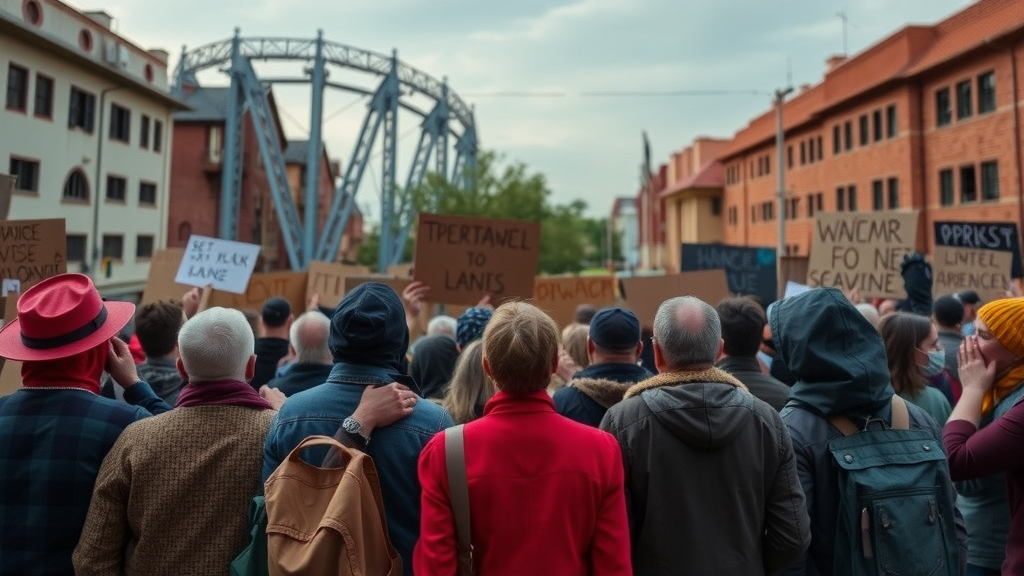
The consequences of that thin treatment are visible across the policy landscape. Failed carbon-pricing schemes, local opposition to wind power, polarised reactions to low-traffic neighbourhoods and contentious renewable-energy negotiations on communal land are routinely explained through labels such as NIMBYism, populism or protectionism. Sutoris argues that these dynamics are more accurately read as encounters between interventions and the multi-layered patterning of community life: rhythms of care and labour, attachments to place, hard-won institutional accommodations and moral economies that outside planners misrecognise as friction. What appears from above as irrational resistance may, from within a community, be protective persistence.
To give the concept analytical teeth, the Perspective proposes a five-part typology. Institutional inertia covers the administrative routines, governance structures, legal frameworks and infrastructures that privilege continuity, the best-mapped dimension in existing research. Embodied inertia refers to the habits, affective attachments, mobility patterns and bodily rhythms that organise daily life in ways that outlive policy change, a dimension grounded in practice theory and the new mobilities paradigm. Narrative inertia captures the stories societies tell about themselves, about progress, identity, place and the human relationship with nature, which condition how interventions are received and whether they endure.
The fourth and fifth dimensions are the least theorised. Ritual inertia refers to the cultural practices and temporal rhythms that anchor meaning across generations; anthropology, memory studies and performance studies have long shown that ritualised practice carries memory through the body and generates attachment and belonging. Ethnoecological research further demonstrates that ritual and ceremony are knowledge systems in their own right, organising relations to land, season and community, relations that Indigenous scholarship frames through conceptions of time and kinship that dominant transitions vocabularies cannot accommodate. Infrapolitical inertia, drawing on the political science of James C. Scott, names the dispersed, low-visibility forms of persistence by which subordinate groups protect time, dignity and reciprocity under unequal power: foot-dragging, false compliance, dissimulation, the quiet encroachment of the ordinary. What looks like passivity from above, in other words, is often a strategic achievement.
Crucially, the five dimensions interlock. A bureaucratic routine may be sustained by the embodied competence of officials, legitimised by stories of orderly governance, reproduced through the periodic ceremonies of public administration and worked around by those it fails to serve. Reading any one dimension in isolation flattens persistence into simplistic accounts. The framework also opens space for thinking about multiple inertias at once: the continuity of a technocratic transformation regime, with its standardised metrics and infrastructural dependencies, is itself an inertia, distinct from and sometimes in tension with the patterned continuities of the everyday lives it seeks to remake. Sustainability transformations, Sutoris suggests, are shaped less by a single inertia to be overcome than by the interplay of several.
If inertia is to be read rather than removed, the methods of sustainability science need to change. Quantitative behavioural studies, integrated assessment models and systems modelling, the Perspective argues, are poorly equipped to read phenomena constituted in culture, meaning and power, a critique long voiced within the field itself. Sutoris proposes a methodological orientation drawn from the humanities and interpretive social sciences, spanning past, present and imagined futures. Reading archives against the grain means treating gaps, hesitations and silences in official records as evidence rather than absence; a renewable-energy project that produced no controversy in the public record may have generated extensive quiet adjustment in the affected community. Oral history recovers the embodied, narrative and ritual dimensions of past interventions through living memory. And Future Design, a deliberative method in which participants deliberate as members of a future generation, allows researchers to read which forms of continuity carry the moral weight of the imagined good life. All such methods must be participatory, he insists, because the patterns at stake are legible only to those who live them, and comparative designs across structurally contrasting settings are essential to understanding why a pilot succeeds in one place and stalls in another.
The reframing connects with several wider currents of critique. It gives practical analytical work to the long-standing call for interpretive social sciences and humanities in sustainability research; it supplies a structured vocabulary for the cultural and place-based turn in adaptation studies; and it engages directly with decolonising scholarship that accuses the field of dismissing Indigenous and Global South knowledge systems as obstructive. An inertia lens treats those continuities as forms of knowledge to be read for their moral and ecological commitments rather than engineered away, while also sharpening the political-economic critique of technocratic blueprint thinking. It complements, too, the relational literatures that ask what must change at the level of values, by asking what is already present in communities worth engaging rather than overwriting.
The stakes could hardly be higher. Sustainability research faces a mounting ecological crisis alongside eroding public trust in the institutions of transformation, and interventions designed to address climate change and biodiversity loss are repeatedly received as impositions by the communities whose ways of life they reorganise. Part of that failure, the Perspective argues, lies in misreading patterned persistence as opposition. The conceptual move Sutoris proposes changes the field’s diagnostic starting point. Instead of asking why change fails, researchers should ask what the patterning of continuity reveals about the lives interventions seek to alter, and how that knowledge should enter conversations about transformation. Persistence, on this reading, is not the opposite of transformation but one of its conditions, and learning to read it well may prove one of the most urgent tasks facing the field.
Subject of Research: A cross-disciplinary framework reconceptualising social inertia as patterned persistence to improve sustainability transformation research.
Article Title: Reading persistence: Social inertia as a cross-disciplinary framework for sustainability transformation
Article References: Sutoris, P. (2026). Reading persistence: Social inertia as a cross-disciplinary framework for sustainability transformation. Ambio. https://doi.org/10.1007/s13280-026-02480-1
Image Credits: AI Generated
DOI: 10.1007/s13280-026-02480-1
Keywords: social inertia, sustainability transformation, patterned persistence, climate policy, carbon lock-in, practice theory, oral history, Future Design, decolonising research, community resistance, interpretive social science, Ambio
Cite Scienmag News
Sloane Callahan. (September 22, 2026). Persistence Is Not Obstruction: Rethinking Social Inertia for Sustainability Transformation. Scienmag. https://scienmag.com/persistence-is-not-obstruction-rethinking-social-inertia-for-sustainability-transformation/
Sloane Callahan. "Persistence Is Not Obstruction: Rethinking Social Inertia for Sustainability Transformation." Scienmag, 22 September 2026, https://scienmag.com/persistence-is-not-obstruction-rethinking-social-inertia-for-sustainability-transformation/. Accessed 22 September 2026.
Sloane Callahan. "Persistence Is Not Obstruction: Rethinking Social Inertia for Sustainability Transformation." Scienmag. September 22, 2026. https://scienmag.com/persistence-is-not-obstruction-rethinking-social-inertia-for-sustainability-transformation/


