


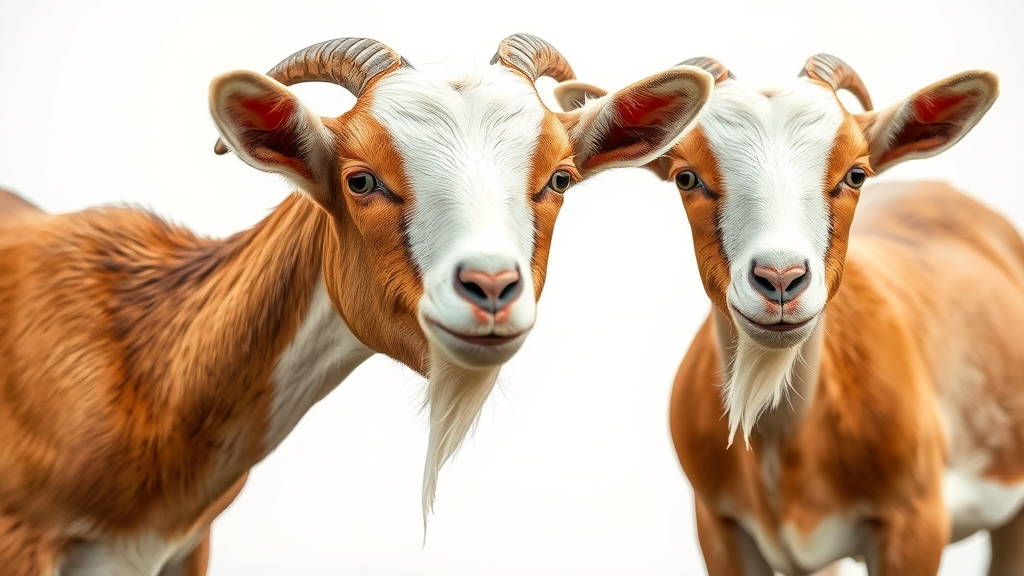
In the arid hills of southern Ethiopia, an indigenous breed of goat known as the Woyto-Guji has long survived on whatever the natural rangelands offer. Now, a carefully controlled feeding trial has shown that what these animals eat does not merely change how fast they grow; it visibly rewires their blood chemistry, their oxygen-carrying capacity and even their circulating testosterone. The findings, published in Veterinary Medicine and Science, offer some of the most detailed evidence yet that moving goats from open grazing to indoor, concentrate-based diets produces measurable shifts in the physiological markers that veterinarians use to judge health, fertility and resilience.
The research team, led by scientists working with Arba Minch University and the International Centre for Agricultural Research in the Dry Areas, set out to address a striking gap in livestock science. Numerous studies have examined how individual feed ingredients affect goat physiology under laboratory conditions, but few have directly compared the haematological and biochemical profiles of animals raised in the two dominant production systems of the tropical world: extensive range grazing and indoor concentrate feeding. Nor have breeding bucks, the animals on which herd fertility ultimately depends, received much scientific attention compared with does, kids or fattening stock.
The stakes are considerable. Goats were among the first ungulates humans domesticated, and across tropical and subtropical regions they remain a cornerstone of food security where crop farming is difficult. Yet range-based systems depend on seasonal pastures increasingly battered by drought, erratic rainfall and heat stress. During dry periods, grazing animals routinely face protein and energy shortfalls, parasitic burdens and anti-nutritional plant compounds, producing chronic undernutrition that erodes both growth and immunity. Concentrate supplementation has been proposed as a practical buffer, but its systemic consequences inside the animal had never been fully mapped in this context.
To do so, the researchers recruited forty intact yearling bucks, averaging roughly 22 kilograms, from smallholder flocks enrolled in a community-based breeding programme in the Konso Zone. Each animal passed a veterinary examination and was dewormed before the trial began. Following a fifteen-day adaptation period, the bucks were assigned in a randomized complete block design to one of four groups of ten, blocked by body weight. The control group grazed natural pasture for roughly ten hours a day across twenty-five hectares of botanically diverse rangeland, rotated every five days. The three indoor groups were penned individually and fed mixed rations in which roughage and concentrate were balanced at 60:40, 50:50 and 40:60 on a dry matter basis.
The diets were formulated from locally harvested forages, including native grasses, tree foliage from Tremenalia brownie and Cordia africana, and maize and sorghum stovers, blended with a commercial concentrate containing maize grain, wheat bran, wheat middlings, noug cake, vitamin premix and salt. Laboratory analysis confirmed that crude protein climbed steadily from 7.05 percent in the range fodder to 15.00 percent in the highest-concentrate ration, while neutral detergent fibre fell from nearly 59 percent to about 30 percent. Animals were fed at 3 percent of metabolic body weight in two daily portions, and blood was drawn from every buck six times over the ninety-day trial, before the morning meal.
The haematological results were clear. Haemoglobin concentration, red blood cell count and packed cell volume were all significantly elevated in the bucks fed the two highest-concentrate rations compared with the grazing controls. Red cell counts rose from 8.52 million cells per microlitre in the grazing group to as high as 12.45 million in the 50:50 group, and packed cell volume climbed from about 23 percent to nearly 36 percent. All values remained within clinical reference ranges for healthy goats, indicating that the shift reflects enhanced erythropoiesis and oxygen-carrying capacity rather than pathology. The moderate 60:40 diet produced intermediate values that did not differ statistically from either extreme.
Equally informative were the parameters that did not move. Mean corpuscular volume, mean corpuscular haemoglobin, mean corpuscular haemoglobin concentration, white blood cell counts and red cell distribution widths were statistically indistinguishable across all four groups, and nearly all fell within accepted reference intervals. The authors note that white cell counts across all treatments ran above typical laboratory reference values, which they interpret as an active immunological response to environmental challenge rather than disease; crucially, no buck showed signs of inflammation, anaemia, haemolysis or toxicity. In other words, concentrate feeding amplified the oxygen-transport arm of the blood without disturbing its immune or cellular architecture.
The serum chemistry told a complementary story. Total protein, albumin and glucose were all significantly higher in the concentrate-fed animals, with total protein peaking at 8.95 grams per decilitre in the 50:50 group against 6.22 in the grazing controls. Albumin rose from 2.51 to as much as 3.87 grams per decilitre, and glucose climbed from 43.5 to as much as 56.25 milligrams per decilitre. The grazing bucks’ glucose values actually dipped below the normal range for healthy goats, which the authors attribute to the metabolic demands of walking long distances on the range and to environmental stress, effectively a state of mild hypoglycaemia. Meanwhile, liver enzymes, urea and creatinine remained unchanged and clinically normal in every group, indicating that neither feeding system imposed hepatic or renal strain.
Perhaps the most striking result concerned reproduction. Serum testosterone was significantly higher in all three concentrate-fed groups, peaking at 16.25 nanograms per millilitre in the 50:50 diet compared with 8.50 in the grazing animals. Testosterone also correlated strongly with serum protein, albumin and glucose, reinforcing the link between nutritional status and endocrine function. Because circulating testosterone underpins libido, spermatogenic activity and male fertility, the finding suggests that concentrate feeding could enhance breeding-buck performance through endocrine pathways. Consistent with this, serum calcium was elevated in the highest-concentrate group, a mineral vital for neuromuscular function, bone development and sperm maturation, while sodium, potassium, chloride and phosphorus remained stable and within healthy limits.
Correlation analysis added mechanistic texture to the picture. Red cell counts tracked tightly with haemoglobin and packed cell volume, confirming that the oxygen-transport gains reflect genuine increases in circulating red cells. Serum protein moved in lockstep with albumin and testosterone, and the near-perfect correlation between the two red cell distribution indices matched patterns reported for other goat breeds worldwide. For smallholder farmers confronting shrinking pastures and a changing climate, the practical message is that upgrading the diet of breeding bucks does more than fatten them: it measurably enriches their blood, steadies their metabolism and potentially strengthens the reproductive engine on which the entire flock depends. The study positions routine blood profiling as an accessible, powerful tool for designing feeding strategies that safeguard goat health where it matters most.
Subject of Research: The effects of range grazing versus indoor concentrate-based feeding systems on the haematological, biochemical and reproductive blood markers of goat bucks.
Article Title: The Haematological and Biochemical Responses of Goat Bucks to Range Grazing and Indoor Concentrate‐Based Feeding Systems
Article References: Abraham, S., Kechero, Y., & Wamatu, J. (2026). The Haematological and Biochemical Responses of Goat Bucks to Range Grazing and Indoor Concentrate‐Based Feeding Systems. Veterinary Medicine and Science, 12(5), Article e71221. https://doi.org/10.1002/vms3.71221
Image Credits: AI Generated
DOI: 10.1002/vms3.71221
Keywords: goat bucks, Woyto-Guji goats, concentrate feeding, range grazing, haematology, serum biochemistry, testosterone, blood glucose, Ethiopia, livestock nutrition, packed cell volume, animal health
Cite Scienmag News
William Thompson. (September 20, 2026). Blood Signals Reveal How Feeding Systems Shape Goat Health and Fertility. Scienmag. https://scienmag.com/blood-signals-reveal-how-feeding-systems-shape-goat-health-and-fertility/
William Thompson. "Blood Signals Reveal How Feeding Systems Shape Goat Health and Fertility." Scienmag, 20 September 2026, https://scienmag.com/blood-signals-reveal-how-feeding-systems-shape-goat-health-and-fertility/. Accessed 20 September 2026.
William Thompson. "Blood Signals Reveal How Feeding Systems Shape Goat Health and Fertility." Scienmag. September 20, 2026. https://scienmag.com/blood-signals-reveal-how-feeding-systems-shape-goat-health-and-fertility/


