


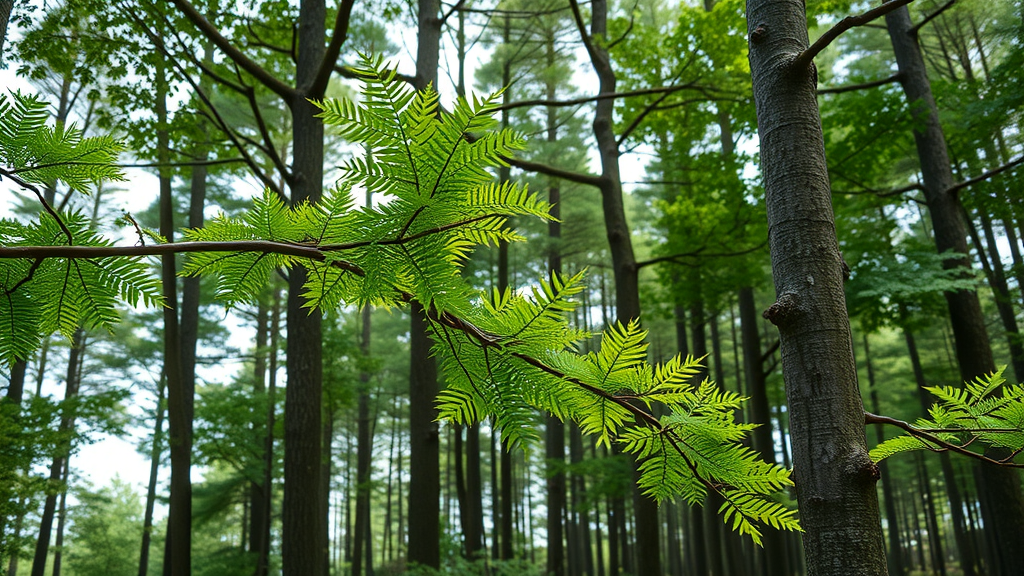
In the mist-shrouded evergreen forests of western China, one of the world’s most heavily nitrogen-polluted regions, scientists have uncovered a surprising twist in the story of how air pollution transforms ecosystems. A new field experiment shows that even in a forest already drenched by decades of atmospheric nitrogen deposition, adding more nitrogen still changes the leaf chemistry of the dominant tree species—and the trees show no sign of the much-feared condition known as nitrogen saturation. The findings, published in the journal Plant and Soil, challenge a long-standing assumption about how forests in high-deposition regions respond to continuing pollution, and they carry important implications for the future structure and function of subtropical ecosystems.
Nitrogen is the nutrient that most often limits plant growth, and human activities—from fossil fuel combustion to intensive agriculture—have more than doubled the amount of reactive nitrogen cycling through the global environment. When this nitrogen rains down on forests, it can fertilize trees, acidify soils, and shift the delicate balance of elements such as carbon, nitrogen, and phosphorus within living tissue. Ecologists have long predicted that forests receiving chronically high nitrogen inputs should eventually reach
The concept of nitrogen saturation, formalized in influential syntheses of temperate forest research in the late 1990s, describes a sequence of stages through which a forest ecosystem passes as chronic nitrogen inputs accumulate. In the earliest stages, added nitrogen is captured efficiently by plants and soil microbes, stimulating growth and enhancing nutrient uptake. As deposition continues, however, the system’s capacity to retain nitrogen becomes exhausted: excess nitrate leaches into streams, soils acidify, base cations are depleted, and the availability of other nutrients, particularly phosphorus, becomes the principal constraint on plant productivity. Under this framework, forests in regions with decades of elevated deposition were expected to exhibit symptoms of saturation, including diminished growth responses to further nitrogen inputs and declining foliar nitrogen relative to phosphorus. The new study from western China complicates this tidy progression, finding that a dominant tree in a high-deposition subtropical forest continues to respond nutritionally to added nitrogen rather than showing the plateau or decline that saturation would predict.
The setting matters enormously for interpreting this result. Subtropical China receives some of the highest rates of atmospheric nitrogen deposition anywhere on Earth, driven by dense industrial activity, intensive fertilizer use, and rapid urbanization in the region. Yet the soils and vegetation of these humid, warm forests differ in fundamental ways from the temperate and boreal systems where the saturation model was originally developed. Subtropical forests tend to be phosphorus-limited rather than nitrogen-limited, with highly weathered, acidic soils that hold relatively little labile phosphorus. In such systems, nitrogen deposition can act as a partial fertilizer even at high background rates, because the trees have evolved under conditions where nitrogen availability fluctuates and phosphorus scarcity, not nitrogen scarcity, sets the ceiling on productivity. The evergreen secondary forest where Michelia wilsonii grows represents exactly this kind of environment, where the interplay between abundant nitrogen and constrained phosphorus shapes every aspect of plant nutrient strategy.
Stoichiometry, the study of the ratios of elements such as carbon, nitrogen, and phosphorus in living tissue, provides a powerful lens for reading these nutrient dynamics. Leaf carbon concentrations are typically quite stable across environmental gradients, reflecting the structural and metabolic constancy of the photosynthetic apparatus. Nitrogen and phosphorus, by contrast, vary considerably with supply, because both are essential to proteins, nucleic acids, and the energy-transfer machinery of cells. The ratio of nitrogen to phosphorus in leaves is widely used as an indicator of which nutrient limits plant growth at a given moment, while carbon-to-nutrient ratios reflect how efficiently plants convert assimilated carbon into nutrient-rich tissue. When nitrogen deposition alters these ratios, it signals a shift in the internal economy of the plant, with cascading consequences for herbivores, decomposers, and the recycling of nutrients through the ecosystem.
The experimental design employed in the study followed a now-standard approach in deposition research: plots received supplemental nitrogen at rates of zero, twenty, and forty kilograms of nitrogen per hectare per year, spanning the range of additional inputs that forests in the region might plausibly experience. By measuring leaf carbon, nitrogen, and phosphorus concentrations alongside soil and microbial biomass pools, the researchers could trace how nitrogen moved through the ecosystem and where its effects originated. This multi-tiered sampling is critical because leaf chemistry does not respond to deposition in isolation; it reflects the integrated outcome of soil nutrient availability, microbial competition for nutrients, and the tree’s own physiological regulation of uptake and internal recycling.
One of the most intriguing patterns in the results is the non-linear response of leaf nitrogen and phosphorus, which rose at moderate nitrogen addition and then declined at the highest rate. This initial-increase-then-decline trajectory suggests that moderate nitrogen inputs relieve a nutrient constraint and allow the tree to enrich its foliage, but that heavier inputs trigger compensatory mechanisms or stress responses that pull nutrient concentrations back down. Possible explanations include increased leaching of nutrients from soils under heavier loading, soil acidification that reduces phosphorus availability, or physiological downregulation of uptake when the tree has accumulated sufficient nitrogen. The corresponding seasonal shifts in carbon-to-nitrogen and carbon-to-phosphorus ratios in summer samples reinforce the picture of a tree actively recalibrating its tissue chemistry as inputs change, rather than passively accumulating nitrogen.
Nutrient resorption, the process by which trees withdraw nitrogen and phosphorus from leaves before they are shed, is another key thread in the study. Resorption efficiency is a central component of nutrient conservation in evergreen species, which must sustain their foliage for multiple growing seasons in nutrient-poor environments. When soil nitrogen is abundant, trees typically reduce their reliance on resorption and instead draw more nitrogen directly from the soil, a shift that can loosen the tight internal cycling characteristic of infertile sites. The finding that resorption efficiencies followed the same rise-and-fall pattern as leaf nutrient concentrations indicates that deposition is reshaping not just what the leaves contain but how the tree manages its nutrient capital over time. Changes in resorption feed back into litter quality, which in turn alters decomposition rates and the release of nutrients back into the soil, closing a loop that connects deposition to the entire biogeochemical cycle of the forest floor.
The soil and microbial measurements add an important belowground dimension to the story. Soil organic carbon and microbial biomass carbon emerged as the primary determinants of variation in leaf stoichiometry, implicating the microbial community as a gatekeeper controlling nutrient flows to tree roots. Microbes and plant roots compete directly for nitrogen and phosphorus in the soil, and the elemental composition of microbial biomass determines whether immobilized nutrients are locked up in microbial tissue or released for plant uptake. Nitrogen deposition is known to shift microbial communities, favoring some groups over others and altering the balance of fungal and bacterial dominance, with consequences for carbon storage and nutrient turnover. The strong correlations observed between microbial biomass composition and leaf chemistry in this forest suggest that belowground responses are not merely a side effect of deposition but an active mediator of how trees experience added nitrogen.
The absence of nitrogen saturation in this system deserves particular attention. Several factors could explain why the forest has not crossed the saturation threshold despite high background deposition. The humid subtropical climate supports rapid plant growth and high nutrient demand, allowing trees and microbes to absorb substantial nitrogen inputs. Deep soils and abundant organic matter may provide large exchange and retention capacities. Moreover, if phosphorus availability, while low, is sufficient to support continued growth, then added nitrogen can still be converted into biomass rather than accumulating as excess. The authors’ conclusion that high deposition continues to enhance the nutrition and growth of dominant species implies that these forests remain in the fertilization stage of the saturation sequence, a finding that extends the applicability of the saturation framework by revealing how differently it can unfold in subtropical versus temperate settings.
The ecological implications of this continued fertilization are far-reaching. If dominant species such as Michelia wilsonii gain a nutritional advantage under sustained deposition, they may outcompete subordinate species that are less able to exploit the extra nitrogen, simplifying forest composition and altering canopy structure. Shifts in leaf chemistry also propagate upward and downward through the food web, affecting insect herbivores whose foliar diets become more nitrogen-rich, and decomposer communities whose litter inputs change in quality. Over longer timescales, the combination of enhanced growth, altered litter chemistry, and modified microbial activity could change how much carbon these forests store, a question of global relevance given the role of subtropical forests in the terrestrial carbon sink. At the same time, the non-linear responses observed here caution against assuming that fertilization benefits will persist indefinitely; the decline in leaf nutrients at the highest addition rate hints that thresholds may exist beyond which negative effects emerge.
More broadly, the study underscores the value of examining plant responses to pollution through the integrated framework of ecological stoichiometry, which links leaf chemistry, soil processes, and microbial ecology into a single analytical picture. Rather than treating nitrogen deposition as a simple dose of fertilizer or toxin, this approach reveals it as a force that reorganizes the flow of multiple elements through an ecosystem, with effects that depend on season, soil properties, and the identity of the organisms involved. For forests across subtropical Asia, where deposition rates remain high and may continue to rise, understanding these element-coupled responses will be essential for predicting which species thrive, which decline, and how the structure and function of some of the world’s most biodiverse ecosystems will be reshaped in the decades ahead.
Subject of Research: Effects of nitrogen addition on leaf carbon, nitrogen, and phosphorus stoichiometry of the dominant tree Michelia wilsonii in a high-nitrogen-deposition subtropical forest in western China.
Article Title: No N saturation, N addition still alters leaf stoichiometry of Michelia wilsonii in a high-N input forest
Article References: Liu, S., Zheng, X., Xiao, Y., Wang, L., Li, H., You, C., Xu, L., Xu, H., Xu, Z., Tan, B., Yuan, Y., & Zhang, L. (2026). No N saturation, N addition still alters leaf stoichiometry of Michelia wilsonii in a high-N input forest. Plant and Soil. https://doi.org/10.1007/s11104-026-09111-4
Image Credits: AI Generated
DOI: 10.1007/s11104-026-09111-4
Keywords: nitrogen deposition, nitrogen saturation, leaf stoichiometry, Michelia wilsonii, ecological stoichiometry, soil organic carbon, microbial biomass, nutrient resorption, subtropical forest, phosphorus limitation, forest ecology, Plant and Soil
Cite Scienmag News
Bethany Barker. (September 20, 2026). Nitrogen Pollution Still Reshapes Forest Tree Chemistry Without Signs of Saturation. Scienmag. https://scienmag.com/nitrogen-pollution-still-reshapes-forest-tree-chemistry-without-signs-of-saturation/
Bethany Barker. "Nitrogen Pollution Still Reshapes Forest Tree Chemistry Without Signs of Saturation." Scienmag, 20 September 2026, https://scienmag.com/nitrogen-pollution-still-reshapes-forest-tree-chemistry-without-signs-of-saturation/. Accessed 20 September 2026.
Bethany Barker. "Nitrogen Pollution Still Reshapes Forest Tree Chemistry Without Signs of Saturation." Scienmag. September 20, 2026. https://scienmag.com/nitrogen-pollution-still-reshapes-forest-tree-chemistry-without-signs-of-saturation/


