


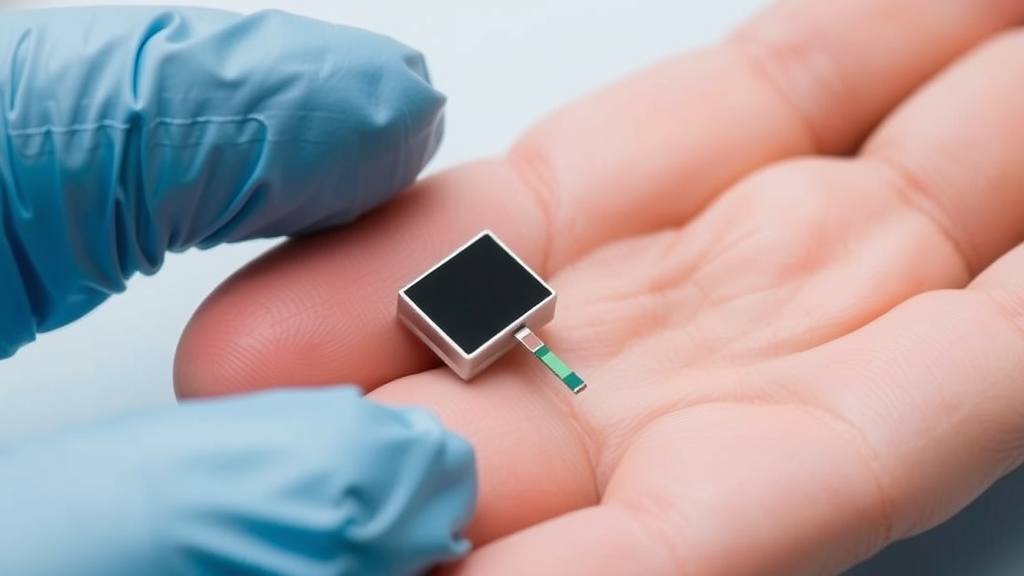
Electrochemical sensors, the quiet workhorses behind the humble glucose test strip, are undergoing a transformation that could reshape how and where medicine is practised. A comprehensive review published in Advances in Industrial and Engineering Chemistry by researchers at Sharda University and Kalinga University maps the rapid progress in low-cost electrochemical sensing for healthcare monitoring and diagnostics, arguing that affordable, portable and sensitive devices are now within reach for clinics, homes and resource-limited settings worldwide. The review, which has already drawn thousands of reads and multiple citations, synthesises advances in materials, fabrication and digital integration that together point toward a future in which diagnostic information flows as freely as the smartphones that increasingly collect it.
At its core, an electrochemical sensor is deceptively simple. A chemical species of interest, the analyte, interacts with an electrode surface, and a redox reaction transfers electrons, generating a current or a change in potential that is directly proportional to the analyte’s concentration. A typical cell contains a working electrode where the reaction occurs, a reference electrode providing a stable potential, and a counter electrode completing the circuit, all bathed in an electrolyte. Different readout modes exploit this interaction in different ways: amperometry applies a fixed potential and measures the resulting current, the principle underlying most glucose meters; potentiometry measures the voltage difference at near-zero current, as in ion-selective pH electrodes; voltammetry sweeps the potential to produce current-voltage curves rich in qualitative and quantitative information; and conductometric and impedimetric techniques track changes in the solution’s electrical properties. Selectivity is engineered into the electrode surface itself, where enzymes, antibodies or aptamers act as molecular recognition elements that bind only the intended target.
The commercial success of glucose sensing demonstrates what the technology can achieve, but the review’s central argument is that the same principles can be made radically cheaper without sacrificing performance. The authors identify three families of cost-reducing materials. Carbon-based compounds lead the list: carbon black, an abundant and highly conductive industrial material, can be dispersed in solvents, easily functionalised and formed into working electrodes that rival graphite at a fraction of the price. Carbon nanotubes and reduced graphene oxide nanocomposites push performance further, offering fast response times, large electrochemically active surface areas and excellent biocompatibility; the review notes that hydrogen peroxide detection at carbon nanotube-modified electrodes shows marked improvements relevant to enzymatic glucose sensing. Conductive polymers such as polyaniline, polypyrrole and PEDOT form the second family, prized because they can be produced by simple electropolymerisation or chemical polymerisation without complex infrastructure, and their structures can be doped or functionalised to tune sensitivity for specific analytes. When combined with metal nanoparticles or metal oxides such as zinc oxide, these polymer matrices yield nanocomposites with synergistic gains in conductivity, surface area and detection limits.
The third and perhaps most striking family is drawn from nature itself. The review highlights plant-derived bioactive molecules and green synthesis routes for electroactive nanomaterials, alongside sustainable substrates made from the outer shells of bamboo, sugarcane and palm, which can be recycled into electrochemical sensing chips thanks to the water-resistant properties of biomass skin fibres. Lignin-based carbon nanomaterials offer biodegradability, biocompatibility, high surface area and low toxicity. Silk from the silkworm Bombyx mori has been engineered into skin-conformal electrodes by embedding conductive materials in glycerol-plasticised porous fibre mats, producing on-skin sensors that tolerate sweat and remain comfortable during long-term wear. The authors stress that sustainability is not merely an ethical add-on: biodegradable substrates reduce the environmental footprint of disposable sensors, and increasing the electrochemically active surface area through micro- and nanoscale roughness compensates for the signal loss that miniaturisation would otherwise impose. One cited approach etched silicon nanowires coated with gold to achieve an active surface area six times larger than planar gold electrodes.
Materials alone do not make a cheap sensor; manufacturing does. The review identifies screen printing as the backbone technology of affordable electrochemical sensing. Essentially a miniaturised version of textile printing, screen printing deposits working, reference and counter electrodes onto substrates in high volume, producing disposable devices whose per-unit cost falls with scale and whose single-use nature eliminates cross-contamination. Three-dimensional printing extends this logic to fully customised devices: additive manufacturing builds complex geometries layer by layer from thermoplastics, ceramics, graphene-based materials and metals, enabling microfluidic reactor arrays for rapid molecular diagnosis and even biocompatible tissue scaffolds in regenerative medicine. Inkjet printing adds another dimension, depositing conductive inks, typically graphite or carbon-based formulations prized for their chemical inertness and stability across pH ranges, onto flexible substrates such as polyethylene, polyimide and textiles. Printed sensors have already proven durable enough to monitor the structural health of bridges for a year, and the same economics apply to chemical sensing systems for the body.
Once fabricated, these sensors are increasingly being woven into digital ecosystems. Wearable and implantable electrochemical devices can now track lactate, cholesterol, uric acid and cortisol, and even detect viral and bacterial pathogens with high specificity. Continuous glucose monitors illustrate the model: a subcutaneous glucose oxidase-dipped electrode generates a current proportional to local glucose, a transmitter relays readings wirelessly every one to five minutes, and software on a smartphone, insulin pump or receiver displays trends and alarms for hypo- and hyperglycaemic episodes. Since the first continuous monitors were approved in 1999, accuracy, measured by metrics such as the mean absolute relative difference, has improved steadily. Beyond glucose, wearable platforms integrate accelerometers, gyroscopes and barometers to detect falls in older adults, monitor electrocardiograms, respiration and body temperature, and feed data to cloud platforms where machine learning algorithms can support predictive diagnosis. With roughly two-thirds of the world’s population carrying smartphones equipped with cameras, processors and connectivity, the review argues that the phone itself is becoming the analytical instrument, interfacing with microfluidic and lab-on-a-chip systems for point-of-care and mobile health applications.
The clinical payoff spans the major disease burdens of our time. In diabetes, non-invasive approaches using sweat and saliva are under intense development, though the review is candid that even today’s non-invasive technologies have not matched the accuracy of invasive ones; early devices such as the GlucoWatch G2 Biographer, which extracted interstitial fluid by reverse iontophoresis, were ultimately withdrawn over skin irritation and accuracy problems. In cardiovascular medicine, electrochemical biosensors detect cardiac troponin, myoglobin, creatine kinase and C-reactive protein, with multiplexed paper-based analytical devices enabling simultaneous biomarker panels that improve specificity and speed while label-free immunoassays cut cost by dispensing with expensive labelling reagents. In infectious disease, electrochemical biosensors detect viral proteins, nucleic acids and host antibodies, and the review highlights a tuberculosis assay built on inexpensive disposable electrodes that costs about three US dollars, delivers results in seventy-five minutes and achieves sensitivity down to single cells of Mycobacterium tuberculosis. Cancer biomarker detection, including prostate-specific antigen at detection limits as low as five picograms per millilitre, rounds out the portfolio, with smartphone-based portable sensing offering screening options for low-income regions.
None of this is trivial to industrialise, and the review devotes considerable attention to the obstacles. Real biological samples are hostile environments: blood, urine, sweat and saliva carry proteins, lipids and metabolites that foul sensor surfaces, while fluctuations in pH, temperature and ionic strength destabilise delicate biorecognition elements. Enzymes and antibodies degrade over time, batch-to-batch consistency in electrode modification remains difficult, and long-term implantable operation must contend with the body’s immune response to foreign materials. Selectivity poses its own challenge, since cross-reactivity with non-target molecules, including co-administered drugs, can produce false readings; functional nucleic acids, synthetic receptors and cross-reactive sensor arrays processed by pattern-recognition algorithms are among the emerging countermeasures. Then there is the regulatory gauntlet: medical devices require lengthy and expensive clinical validation to demonstrate safety and efficacy, home-use sensors must be exceptionally simple while addressing data privacy and cybersecurity, and frameworks such as HIPAA impose strict obligations on how patient data from connected sensors is stored and protected.
The authors conclude that low-cost electrochemical sensors stand on the threshold of clinical ubiquity, provided that future research prioritises robust calibration, manufacturable processes and seamless integration with mobile health solutions. If those challenges are met, the implications are profound: diagnostics that once required a centralised laboratory, trained personnel and days of waiting could be performed at a village clinic, an ambulance or a kitchen table, at a cost measured in dollars rather than hundreds of them. In a world where the WHO projects hundreds of millions of diabetes cases by 2045 and where pandemics have exposed the fragility of centralised testing, the humble electrode, printed in carbon ink on a scrap of sustainable substrate and paired with a phone in a pocket, may prove one of the most consequential medical technologies of the coming decade.
Subject of Research: Advances in low-cost electrochemical sensors for healthcare monitoring and diagnostics
Article Title: Advances in low-cost electrochemical sensors for healthcare monitoring and diagnostics
Article References: Anuthra, B., Ratan, J., Gupta, P., & Sharma, S. (2026). Advances in low-cost electrochemical sensors for healthcare monitoring and diagnostics. Advances in Industrial and Engineering Chemistry, 2(1), Article 3. https://doi.org/10.1007/s44405-026-00043-2
Image Credits: AI Generated
DOI: 10.1007/s44405-026-00043-2
Keywords: electrochemical sensors, biosensors, point-of-care testing, healthcare diagnostics, carbon nanomaterials, conductive polymers, screen printing, wearable sensors, continuous glucose monitoring, nanotechnology, infectious disease detection, digital health
Cite Scienmag News
Bethany Barker. (September 12, 2026). Cheap Electrochemical Sensors Bring Lab-Grade Diagnostics to the Point of Care. Scienmag. https://scienmag.com/cheap-electrochemical-sensors-bring-lab-grade-diagnostics-to-the-point-of-care/
Bethany Barker. "Cheap Electrochemical Sensors Bring Lab-Grade Diagnostics to the Point of Care." Scienmag, 12 September 2026, https://scienmag.com/cheap-electrochemical-sensors-bring-lab-grade-diagnostics-to-the-point-of-care/. Accessed 12 September 2026.
Bethany Barker. "Cheap Electrochemical Sensors Bring Lab-Grade Diagnostics to the Point of Care." Scienmag. September 12, 2026. https://scienmag.com/cheap-electrochemical-sensors-bring-lab-grade-diagnostics-to-the-point-of-care/


