


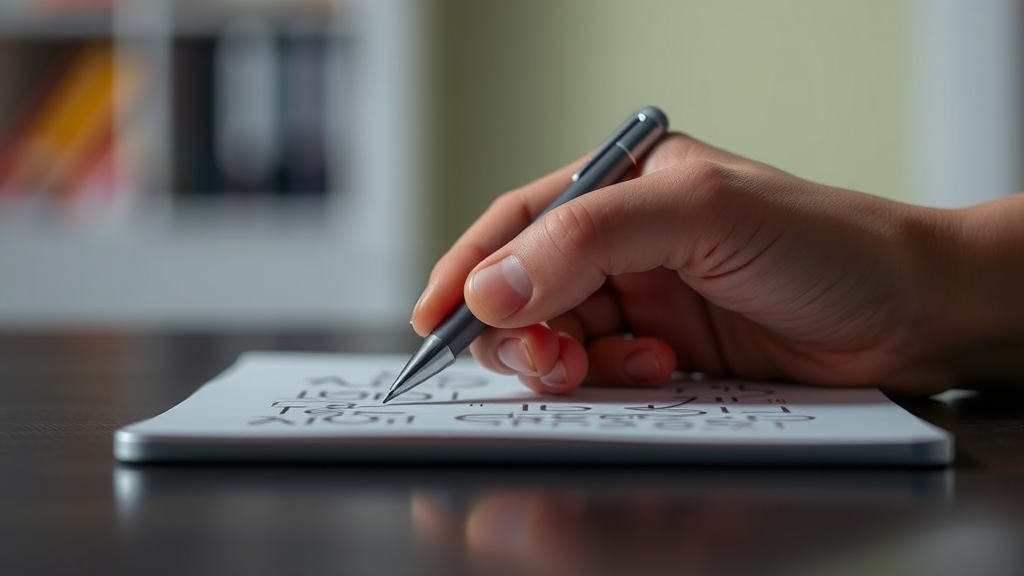
A sensorized ink pen that lets children write on ordinary paper while silently recording every nuance of their handwriting has emerged as one of the most promising tools yet for catching writing difficulties early. In a new study led by Politecnico di Milano in collaboration with the University of Insubria in Varese and Como, more than 700 children spanning the full cycle of primary and lower secondary school used the device, known as THInkPen, short for Tele-Health Ink Pen, while completing standardized writing assessments. The findings, published in PLOS Digital Health, suggest that the humble act of putting pen to paper, when measured carefully enough, can reveal a great deal about how a child’s graphomotor skills are developing and whether intervention may be needed.
The research team designed THInkPen around a deceptively simple requirement: the pen must behave like any ordinary pen. Children hold it, move it and write with it exactly as they would with a standard ballpoint, producing real ink on real paper. This is a substantial departure from many digital screening tools, most notably tablets, which require children to write on a glass surface with a stylus and can subtly alter the mechanics of handwriting. By preserving the natural writing experience, the researchers argue, THInkPen captures a more authentic picture of a child’s writing process rather than an artifact of the measurement technology itself.
Underneath that familiar exterior, however, sits a sophisticated array of sensors. As the children wrote, the pen continuously sampled signals describing the pressure applied to the paper, the fluency and smoothness of movement, the inclination of the pen, and the frequency of the signals transmitted to the device. From these raw measurements, the team computed a set of digital indicators covering different dimensions of the writing process. Rather than judging only the final written product, as conventional tests do, the device records the entire dynamic journey from the first stroke to the last letter.
To validate the device, the researchers asked study participants to complete two tasks from the BVSCO-3, the Battery for the Clinical Assessment of Writing and Orthographic Skills. This battery is the most widely used clinical test in Italy for assessing writing difficulties, dysgraphia and dysorthography, which makes it a rigorous benchmark against which any new screening technology must prove itself. The digital indicators gathered by the pen were then analyzed in three ways: the team examined their correlation with clinical scores, modeled how they progress across school grades, and tested their usefulness in detecting writing difficulties using artificial intelligence algorithms developed specifically for the task.
The results were striking. The analysis revealed significant and consistent relationships between the digital indicators and the clinical scores, confirming that the sensor-derived measures reliably reflect the performance characteristics that clinicians assess by hand. In other words, the pen’s invisible record of pressure, rhythm and fluency tracks closely with the judgments that trained specialists make when they score a child’s handwriting on paper. This correspondence is precisely what any screening tool must demonstrate before it can be trusted in schools.
Artificial intelligence then took the analysis a step further. Binary classification models trained on the pen data successfully distinguished students with writing difficulties, identified on the basis of their BVSCO-3 results, from the other students. Crucially, the researchers did not stop at a correct-or-incorrect verdict. They applied Explainable Artificial Intelligence, or XAI, techniques to open up the model’s reasoning and identify the reasons underlying below-average performance. Instead of a black-box flag that a child may have a problem, teachers and clinicians could receive an interpretable account of which aspects of the writing process deviate from the norm, paving the way for targeted interventions matched to each child’s specific profile.
The statistical analysis across school grades added another layer of validation. It showed that the digital indicators faithfully reproduced the well-established pattern of improvement in writing that occurs from one grade to the next, demonstrating their sensitivity in capturing the development of graphomotor skills over time. A measurement tool that cannot detect developmental change would be of limited use in a school setting, where the goal is not only to identify current difficulties but to monitor progress as children grow. THInkPen’s ability to mirror this trajectory suggests the device could serve as a longitudinal companion to routine education.
The study stems from the PRIN research project e-School 2.0, coordinated by the Department of Electronics, Information and Bioengineering at Politecnico di Milano in collaboration with the University of Insubria. Simona Ferrante, professor at the department and coordinator of the Politecnico di Milano research team, explains that using THInkPen to analyze not only the final written product but the entire writing process could support the early identification of writing difficulties in schools, thus facilitating the timely and effective activation of clinical services. The distinction matters because timing is often decisive: writing difficulties that are recognized early can be addressed before they compound into broader academic struggles and loss of confidence.
The clinical context gives the work particular urgency. Cristiano Termine, professor of Child Neuropsychiatry at the University of Insubria, notes that the aspect is particularly relevant in light of the growing demand that Child and Adolescent Neuropsychiatry services face on a daily basis, and the resulting long waiting lists. School difficulties are one of the main reasons children are referred for assessment by these services, but not all the difficulties experienced by students necessarily require specialist clinical evaluation. Termine argues that it therefore becomes essential to have reliable observation and screening tools that can help schools better understand the nature of these difficulties and identify at an earlier stage those situations that genuinely require referral to Child and Adolescent Neuropsychiatry services. A tool like THInkPen could act as a filter, easing pressure on overloaded services while ensuring that children who do need specialist attention are not left waiting behind those who do not.
The pen itself has a longer history than its current application might suggest. The THInkPen project, patented by Politecnico di Milano together with the University of Milan in collaboration with professor Alberto Borghese, was initially conceived for the screening of neurodegenerative diseases and was subsequently developed for neurodevelopmental assessment. Linda Greta Dui, a researcher at the Department of Electronics, Information and Bioengineering and recipient of the Tecnovisionaria 2025 Award on this topic, also contributed to this development. The latest publication additionally involved Cesare Cornoldi, professor emeritus at the University of Padua and one of the developers of the BVSCO-3, along with ASST Sette Laghi and the Neuroscience Centre of Los Madroños Hospital in Madrid. Taken together, the study points toward a future in which the same device used for a routine classroom writing exercise can double as a sensitive diagnostic instrument, screening hundreds of children non-invasively, at low cost and without disrupting the natural act of writing, while giving clinicians the quantitative evidence they need to prioritize care where it is most needed.
Subject of Research: Early screening of dysgraphia and writing difficulties in schoolchildren using a sensorized ink pen
Article Title: THInkPen, a “smart” pen for early screening of dysgraphia: study by Politecnico di Milano and the University of Insubria published
Article References: THInkPen, a “smart” pen for early screening of dysgraphia: study by Politecnico di Milano and the University of Insubria published. (n.d.). Original publication
Image Credits: AI Generated
DOI: Not provided
Keywords: dysgraphia, THInkPen, sensorized pen, handwriting, learning disorders, screening, BVSCO-3, artificial intelligence, explainable AI, child neuropsychiatry, graphomotor skills, Politecnico di Milano
Cite Scienmag News
Courtney Benton. (September 12, 2026). Smart Sensorized Pen Shows Promise for Early Screening of Dysgraphia in Schoolchildren. Scienmag. https://scienmag.com/smart-sensorized-pen-shows-promise-for-early-screening-of-dysgraphia-in-schoolchildren/
Courtney Benton. "Smart Sensorized Pen Shows Promise for Early Screening of Dysgraphia in Schoolchildren." Scienmag, 12 September 2026, https://scienmag.com/smart-sensorized-pen-shows-promise-for-early-screening-of-dysgraphia-in-schoolchildren/. Accessed 12 September 2026.
Courtney Benton. "Smart Sensorized Pen Shows Promise for Early Screening of Dysgraphia in Schoolchildren." Scienmag. September 12, 2026. https://scienmag.com/smart-sensorized-pen-shows-promise-for-early-screening-of-dysgraphia-in-schoolchildren/


