


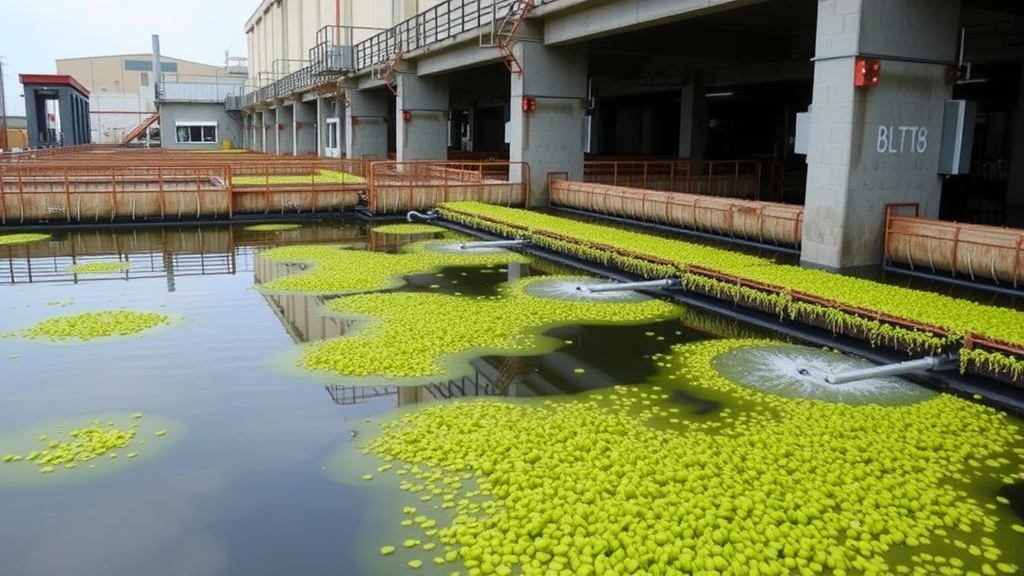
Tannery wastewater is among the most stubborn industrial effluents to treat. Each tonne of processed hide can generate roughly 30 to 34 cubic meters of tannery industrial effluent, a complex cocktail of organic matter, ammonia, sulfides, oils, suspended solids, and chromium. A new study published in Case Studies in Chemical and Environmental Engineering shows that a humble green microalga, Chlorella vulgaris, cultivated in a two-stage system using real tannery effluent from Indonesia, can strip out more than 99 percent of chromium and ammonia while producing a biomass rich in fatty acids with potential value for biofuels and nutraceuticals.
The research, led by Dhomas Indiwara Prana Jhouhanggir and colleagues working with the Environmental Agency of Bantul Regency in Yogyakarta, Indonesia, began with a sobering field assessment. Monthly monitoring of the centralized activated sludge treatment plant serving ten leather tanning industries revealed persistent compliance failures. Ammonia concentrations in the treated effluent ranged from 2.24 to 11.10 milligrams per liter throughout 2025, consistently exceeding the local discharge limit of 0.5 milligrams per liter. BOD5 and COD also spiked dramatically in some months, peaking at 225 and 487 milligrams per liter respectively in August, far above the regulatory thresholds of 50 and 110 milligrams per liter.
These failures are not surprising. Activated sludge systems depend on delicate microbial communities whose nitrifying bacteria are highly sensitive to the wild fluctuations in flow, salinity, pH, and toxic load that characterize tannery wastewater. Influent flow at the Bantul plant nearly doubled between January and February 2025, swinging from 437 to 868 cubic meters per month. During a three-day field assessment conducted alongside the laboratory experiments, the full-scale system removed only about 26 percent of influent ammonia, leaving 15.64 milligrams per liter in the effluent, and achieved just 24 percent removal of total dissolved solids, which remained far above the 2000 milligram per liter limit.
To address these weaknesses, the team turned to microalgae, organisms that photosynthesize, assimilate nitrogen and phosphorus directly into their cells, and tolerate environmental variability better than bacterial consortia. The researchers obtained a Chlorella vulgaris culture from the Jepara Brackishwater Aquaculture Fisheries Center and verified its identity twice over. Light microscopy showed the characteristic unicellular, spherical cells averaging 6.33 micrometers in diameter, while PCR amplification and sequencing of the 18S rRNA gene returned 100 percent query coverage and 100 percent sequence identity against reference strains in the NCBI GenBank database. A phylogenetic tree placed the isolate firmly within the authenticated C. vulgaris clade, closest to strains from South Korea, Cape Verde, and Malaysia, confirming a globally conserved genetic profile for this species.
The experimental heart of the study was a two-stage cultivation design. Tannery effluent collected from the equalization tank of the centralized plant was centrifuged to reduce turbidity and sterilized before inoculation with three different proportions of algal culture: 10, 20, and 30 percent by volume, each supplemented with Walne medium. Each stage lasted seven days at 24 degrees Celsius under continuous illumination of 5000 lux with aeration. Growth was tracked daily by optical density and fitted to the Gompertz kinetic model, which achieved coefficients of determination between 0.9906 and 0.9966 across all treatments, indicating an excellent fit to the observed growth dynamics.
The two-stage strategy proved decisive. In the first stage, the raw effluent’s high pollutant load, turbidity, and toxic constituents such as chromium and sulfide suppressed growth, particularly at lower inoculum densities where longer lag phases reflected slower acclimatization and greater sensitivity to ammonia inhibition. By the second stage, however, the first round of algal treatment had already removed much of the inhibitory load and clarified the medium, allowing better light penetration and faster growth. The maximum specific growth rate in stage two rose to 0.0765 cells per milliliter per day for the 30 percent treatment, statistically comparable to pure culture growth, and the lag phase shortened to just over half a day, indicating rapid adaptation.
Pollutant removal followed the same trajectory of improvement. Under the best-performing condition, CVG 30 percent, the two-stage system achieved 92.94 percent removal of BOD5, 91.60 percent removal of COD, 99.74 percent removal of total chromium, 93.31 percent removal of total nitrogen, and a striking 99.80 percent removal of ammonia. Sulfide removal exceeded 99.99 percent in every treatment, and total suspended solids fell by up to 97.60 percent. Critically, the final concentrations of chromium, BOD5, COD, and ammonia all fell within the applicable regulatory discharge limits, a feat the existing full-scale activated sludge system could not match for most of these parameters during the same period. Only total dissolved solids remained above the limit, at 3740 milligrams per liter, reflecting the inherent difficulty of biologically removing dissolved inorganic ions such as chloride, sodium, and sulfate.
The authors attribute this performance to the complementary mechanisms of phycoremediation. Dissolved pollutants first adhere to the algal cell surface through biosorption, involving adsorption, ion exchange, surface complexation, precipitation, and electrostatic interactions. Living cells then transport selected nutrients and contaminants intracellularly, where nitrogen from ammonia is incorporated into amino acids, proteins, and nucleic acids, directly linking pollutant removal to biomass production. Meanwhile, photosynthetic oxygen generation supports aerobic degradation of organic matter by associated microorganisms, and enzymatic transformations break down complex organics both outside and inside the cells. This metabolic flexibility explains why microalgae outperformed conventional biological treatment on the very pollutants, especially ammonia, that most plague activated sludge operations.
Beyond water cleaning, the study adds a waste-to-resource dimension by characterizing the fatty acid methyl ester profile of the biomass harvested from the best treatment. The lipid composition proved remarkably balanced: 28.41 percent saturated fatty acids, 35.17 percent monounsaturated fatty acids, and 36.41 percent polyunsaturated fatty acids. Methyl palmitate dominated the saturated fraction at 22.40 percent, a hallmark of biodiesel feedstocks. Methyl cis-11-eicosenoate, a long-chain monounsaturated ester with potential lubricity and even immunostimulatory pharmaceutical applications, reached 16.67 percent, an unusually high level that suggests wastewater cultivation may enhance long-chain monounsaturated lipid synthesis. Most notably, methyl linoleate accounted for 26.36 percent of the total, and the biomass also contained gamma-linolenic acid, eicosapentaenoic acid, and docosahexaenoic acid, omega fatty acids associated with cardiovascular protection, anti-inflammatory effects, and neurological development.
The researchers caution that fatty acid composition alone does not establish a specific commercial application, and that pilot and full-scale trials will be needed to evaluate long-term stability, energy requirements, and economic feasibility when the algal process is integrated with existing infrastructure. Because dissolved solids resist biological removal, a membrane polishing step such as ultrafiltration or reverse osmosis may still be required to meet the TDS standard. Nevertheless, the integrated assessment, spanning molecular strain verification, kinetic growth modeling, pollutant removal, field benchmarking against a real treatment plant, and biochemical biomass characterization, provides one of the most comprehensive demonstrations to date that two-stage microalgal cultivation can transform tannery effluent from a regulatory liability into a feedstock, closing the loop in one of the world’s most polluting industries.
Subject of Research: Two-stage microalgae cultivation for tannery industrial effluent treatment and biomass valorization
Article Title: Two-stage cultivation of microalgae C. vulgaris for tannery industrial effluent treatment: strain verification, growth performance, pollutant removal, and fame characterization
Article References: Jhouhanggir, D. I. P., Pertiwiningrum, A., Kollia, C., Dardavila, M. M., Lymperopoulou, T., Fitriyanto, N. A., Suyono, E. A., Abidin, M. Z., & Widiastuti, I. (2026). Two-stage cultivation of microalgae C. vulgaris for tannery industrial effluent treatment: strain verification, growth performance, pollutant removal, and FAME characterization. Case Studies in Chemical and Environmental Engineering, 14, Article 101476. https://doi.org/10.1016/j.cscee.2026.101476
Image Credits: AI Generated
DOI: 10.1016/j.cscee.2026.101476
Keywords: Chlorella vulgaris, tannery wastewater, phycoremediation, ammonia removal, chromium removal, two-stage cultivation, Gompertz model, FAME profile, biodiesel, activated sludge, wastewater treatment, biomass valorization
Cite Scienmag News
Bethany Barker. (September 12, 2026). Microalgae Turn Tannery Wastewater Into Clean Water and Valuable Fatty Acids. Scienmag. https://scienmag.com/microalgae-turn-tannery-wastewater-into-clean-water-and-valuable-fatty-acids/
Bethany Barker. "Microalgae Turn Tannery Wastewater Into Clean Water and Valuable Fatty Acids." Scienmag, 12 September 2026, https://scienmag.com/microalgae-turn-tannery-wastewater-into-clean-water-and-valuable-fatty-acids/. Accessed 12 September 2026.
Bethany Barker. "Microalgae Turn Tannery Wastewater Into Clean Water and Valuable Fatty Acids." Scienmag. September 12, 2026. https://scienmag.com/microalgae-turn-tannery-wastewater-into-clean-water-and-valuable-fatty-acids/


