


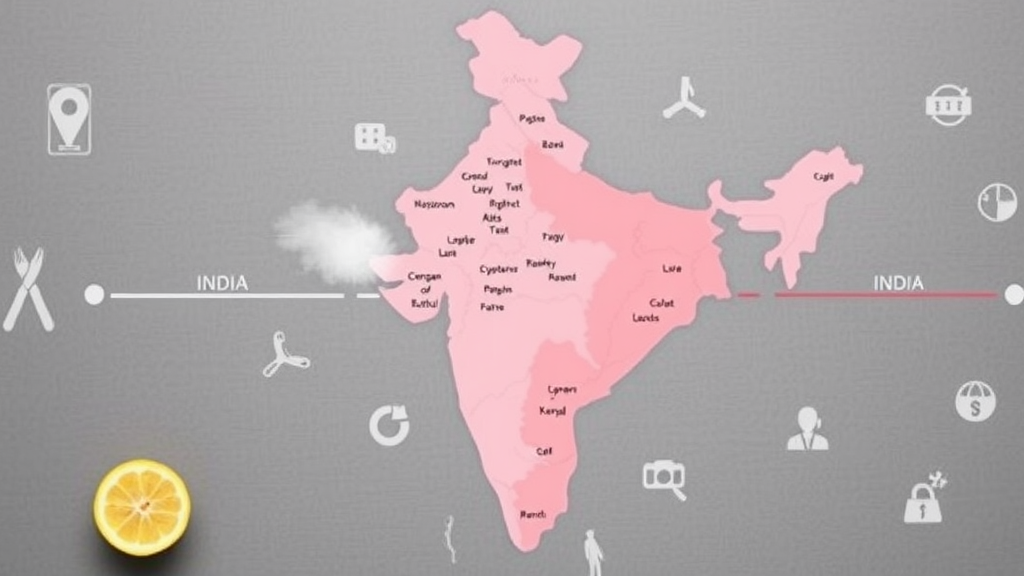
India’s adolescents are growing up on two divergent nutritional trajectories, and a new analysis of one of the largest nutrition surveys ever conducted in the country shows just how sharply those trajectories diverge by geography and household circumstance. A study published in Discover Social Science and Health by Prateek Sharma, Taseen Javid and Rinshu Dwivedi of the National Institute of Technology Hamirpur examined individual-level data from the Comprehensive National Nutrition Survey conducted between 2016 and 2018, covering 35,830 adolescents aged 10 to 19 years. Rather than treating India as a single nutritional landscape, the researchers divided the country’s states into four zones based on the official sampling classifications of the survey framework, allowing them to map where underweight, stunting and overweight or obesity cluster, and to model how shifts in socio-demographic conditions could reshape future risk.
The team pursued a two-fold objective. First, they estimated the prevalence of the three principal forms of adolescent malnutrition, underweight, stunting, and overweight or obesity, and identified the socio-demographic determinants associated with each across Indian states. Second, they built scenario-based predictions of future malnutrition risk, with a particular focus on regional disparities across the four zones. This combination of descriptive epidemiology and predictive modelling is notable because adolescent nutrition has often been overshadowed in national policy by the intensive focus on the first thousand days of life, even though adolescence is a second window of rapid growth in which nutritional deficits and excesses can lock in lifelong health consequences.
Methodologically, the researchers relied on multivariable logistic regression, a statistical technique that estimates the association between each socio-demographic factor and a nutritional outcome while holding other variables constant. From the fitted models, they generated marginal predicted probabilities, which translate regression coefficients into concrete estimates of how likely an average adolescent in a given zone would be malnourished under hypothetical changes in key determinants such as household wealth, maternal and paternal education, and residence. The scenario-based approach effectively asks counterfactual questions: if poverty declined, or school completion rose, or healthcare access improved in a particular zone, by how much would predicted malnutrition risk shift?
The headline findings confirm a deeply uneven geography of malnutrition. Underweight was most prevalent in zone 4, affecting 30.25 percent of adolescents there, while stunting peaked in zone 3 at 33.29 percent. The authors report that these spatial disparities are driven primarily by lower educational attainment and lower household wealth. At the same time, the survey data reveal that the burden of malnutrition in India is no longer a story of undernutrition alone. Overweight and obesity emerged as a growing concern in zone 4, where 36.90 percent of adolescents were affected, with the rise concentrated particularly among adolescents from richer households. This coexistence of underweight and obesity within the same regions and even the same communities is the classic signature of the double burden of malnutrition, a phenomenon increasingly documented in low- and middle-income countries undergoing rapid economic and dietary transition.
The risk prediction analysis added a forward-looking dimension that distinguishes this study from conventional prevalence reports. The predicted risk map showed that zone 1 carries the highest probability of adolescent malnutrition, exceeding 0.4, a level the researchers attribute to high poverty, limited access to healthcare and persistent rural-urban disparities. Zone 3 followed with predicted risks in the range of 0.3 to 0.4, while zone 4 exhibited the lowest predicted risk, below 0.2. In practical terms, the model suggests that an adolescent living in the country’s poorest-resourced zone faces more than twice the predicted malnutrition risk of one living in the wealthiest zone, even before considering individual household characteristics.
The identification of specific socio-demographic determinants carries direct policy weight. Education and wealth function as the primary levers in the models: where parental schooling is limited and household assets are scarce, both underweight and stunting rise, whereas overweight and obesity climb along the wealth gradient, particularly in zones undergoing the fastest nutritional transition. This pattern implies that a single, uniform national nutrition strategy cannot serve all regions equally. An intervention designed to reduce underweight by boosting food security and household income may do little to slow, and could even accelerate, the rise of obesity in communities where caloric abundance and processed food access are increasing faster than nutritional literacy.
The authors argue that their zone-specific results point toward targeted, region-sensitive interventions. Underweight among adolescents should be prioritized in the northern and central parts of the country, stunting demands attention in the eastern region, and overweight and obesity require urgent action in the southern part of the nation. Mapping these three forms of malnutrition onto distinct geographic zones transforms the policy problem from an undifferentiated national target into a portfolio of regionally tailored programs, each with its own risk profile, delivery infrastructure and metric of success. The researchers further contend that integrating predictive analytics into public health planning can significantly improve policy responsiveness and the allocation of scarce resources, allowing program designers to anticipate where need will concentrate rather than reacting to prevalence data years after the fact.
The study also underscores why adolescence deserves greater analytical and programmatic attention in India. Data from the Comprehensive National Nutrition Survey, which was the first nationally representative nutrition survey to focus comprehensively on children and adolescents, show that nutritional insults accumulated during the second decade of life interact with pubertal growth, schooling outcomes and, eventually, the intergenerational transmission of health status. An adolescent girl who enters pregnancy stunted or underweight faces elevated risks of complications and of delivering a low-birth-weight infant, perpetuating a cycle that begins in the next generation. Conversely, adolescents who develop obesity face elevated lifetime risks of type 2 diabetes, cardiovascular disease and other non-communicable conditions, imposing a different but equally substantial burden on future health systems.
The technical machinery of the study, from its zone-level stratification to its marginal predicted probabilities, reflects a broader shift in population health research toward spatially explicit, forward-looking analysis. Where earlier surveys might have reported a single national prevalence figure, this work demonstrates how individual-level data from a comprehensive national survey can be recombined to expose the fault lines that matter for intervention design: which zone, which determinant, which form of malnutrition. The predicted risk figures, in particular, offer policymakers a quantitative template for prioritization, since a zone with predicted risk above 0.4 clearly warrants a different intensity of investment than one below 0.2, even if headline national averages appear moderate.
Limitations and caveats aside, the research lands at a moment when India is simultaneously confronting the residual challenges of undernutrition and the accelerating advance of diet-related chronic disease. The finding that overweight and obesity already affect nearly 37 percent of adolescents in the highest-burden zone, alongside underweight levels above 30 percent, captures the difficulty of that dual challenge in a single pair of numbers. The authors’ conclusion is measured but clear: predictive analytics embedded in nutrition policy, combined with interventions calibrated to the distinct epidemiology of each region, offer the most credible path to reducing adolescent malnutrition in all its forms. As the country’s demographic window of youth remains open for the coming decades, how effectively it responds to this divided nutritional map may shape the health of a generation.
Subject of Research: Spatial distribution and socio-demographic determinants of adolescent malnutrition in India using national nutrition survey data
Article Title: Spatial distribution and socio-demographic determinants of adolescent malnutrition in India using comprehensive national nutrition survey
Article References: Sharma, P., Javid, T., & Dwivedi, R. (2026). Spatial distribution and socio-demographic determinants of adolescent malnutrition in India using comprehensive national nutrition survey. Discover Social Science and Health. https://doi.org/10.1007/s44155-026-00457-9
Image Credits: AI Generated
DOI: 10.1007/s44155-026-00457-9
Keywords: adolescent malnutrition, India, underweight, stunting, overweight and obesity, double burden of malnutrition, Comprehensive National Nutrition Survey, socio-economic determinants, spatial distribution, risk prediction, public health policy, regional disparities
Cite Scienmag News
Daisy Hatcher. (September 12, 2026). India’s Adolescents Face a Divided Malnutrition Map, New National Survey Analysis Reveals. Scienmag. https://scienmag.com/indias-adolescents-face-a-divided-malnutrition-map-new-national-survey-analysis-reveals/
Daisy Hatcher. "India’s Adolescents Face a Divided Malnutrition Map, New National Survey Analysis Reveals." Scienmag, 12 September 2026, https://scienmag.com/indias-adolescents-face-a-divided-malnutrition-map-new-national-survey-analysis-reveals/. Accessed 12 September 2026.
Daisy Hatcher. "India’s Adolescents Face a Divided Malnutrition Map, New National Survey Analysis Reveals." Scienmag. September 12, 2026. https://scienmag.com/indias-adolescents-face-a-divided-malnutrition-map-new-national-survey-analysis-reveals/


