


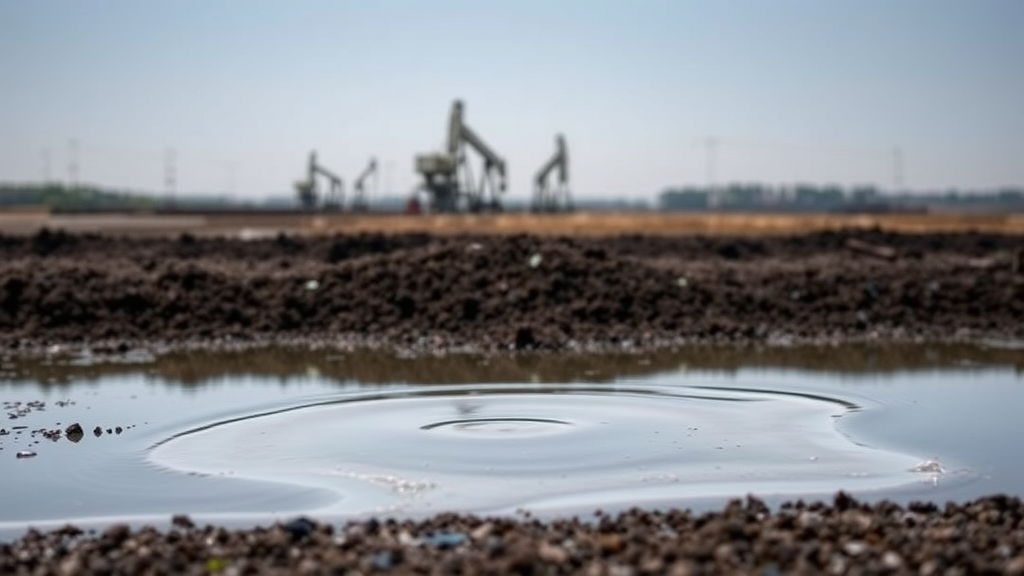
Groundwater supplies in the Appalachian region face a measurably higher likelihood of contamination resembling the salty, mineral-rich chemistry of shale gas produced water wherever surface spills coincide with hydrologically vulnerable terrain, according to new research published in Nature Sustainability. The study, which examines the intersection of horizontal drilling, hydraulic fracturing, and local water resources, concludes that more than 120,000 residents in the region draw drinking water from aquifers that could be exposed in areas where spilled fluids are most likely to reach shallow groundwater.
Hydraulic fracturing has become a cornerstone of the United States domestic energy economy, and the Appalachian Basin, which stretches across parts of Pennsylvania, Ohio, West Virginia, and New York, hosts some of the most intensive shale gas development in the country. Operators drill horizontally into organic-rich shale formations thousands of feet below the surface and inject large volumes of water, sand, and chemical additives under high pressure to create networks of fractures that release natural gas. Once flowback begins, the water returning to the surface, along with water that is co-produced from the formation over the life of a well, carries dissolved salts, metals, naturally occurring radioactive materials, and hydrocarbons in concentrations that reflect the deep subsurface environment.
This produced water differs sharply in chemistry from ordinary surface water and shallow groundwater. Its telltale signature includes elevated concentrations of chloride, bromide, strontium, barium, and other constituents that accumulate in formation brines over geological timescales. When researchers assess whether shale gas operations have affected a water supply, the appearance of this produced-water-like chemistry is one of the most diagnostic indicators, because few natural processes near the land surface generate the same combination of high salinity and characteristic ion ratios. Detecting such a fingerprint in a drinking water well therefore raises immediate concern that fluids from deep geological formations, or fluids handled at the surface during drilling and production, have reached the aquifer.
The new analysis shifts attention away from the wellbore itself and toward the surface. While much of the public debate over shale gas and water quality has focused on whether fracturing fluids migrate upward through rock to contaminate aquifers, the researchers emphasize that surface spills of produced water, flowback fluids, drilling muds, and stored chemicals represent a far more frequent and better-documented pathway. Tanks overflow, valves fail, pipelines leak, and trucks carrying wastewater are involved in accidents. Each of these events releases fluids at the land surface, and whether those fluids threaten drinking water depends on how quickly they can travel downward through soil and fractured rock toward the water table.
Hydrologic vulnerability, in the framework of the study, is determined by the physical characteristics of the landscape: the permeability of soils and surficial deposits, the depth to the water table, the degree of fracturing in near-surface bedrock, and the connectivity between shallow aquifers and the wells that supply homes and communities. Where these conditions favor rapid infiltration and short travel times, a spill has a greater chance of contaminating groundwater before it can be contained or naturally attenuated. Where clays are thick and the water table is deep and protected, the same spill may pose little risk. By mapping where shale gas infrastructure overlaps with the most vulnerable hydrologic settings, the researchers generated spatial estimates of contamination odds across the Appalachian development footprint.
The central finding is stark in its simplicity: groundwater located in areas of high hydrologic vulnerability shows higher odds of exhibiting produced-water-like chemistry than groundwater in less vulnerable settings where shale gas activity is present. This statistical association does not demonstrate that any individual spill contaminated any individual well, and the authors are careful to frame the result as a probabilistic assessment of risk rather than a forensic reconstruction of specific contamination events. Nevertheless, the pattern is consistent with the hypothesis that surface releases, when they occur in sensitive terrain, can and do leave chemical traces in the aquifers that communities depend on.
For the more than 120,000 residents whose drinking-water sources lie within these vulnerable, actively developed areas, the findings carry practical significance. Many rural households in the Appalachian shale gas region rely on private water wells that are not subject to routine regulatory monitoring, meaning contamination may go undetected unless homeowners independently test their water. The study’s vulnerability mapping offers a way to prioritize both monitoring and spill prevention, directing attention and resources to the places where a release is most likely to translate into a public health exposure. Regulators could use the same framework when deciding where to require enhanced secondary containment, stricter setbacks, or more frequent inspection of tanks, impoundments, and gathering lines.
The research also carries broader implications for how the environmental footprint of shale gas development is evaluated. If surface spills in vulnerable terrain are the dominant pathway by which groundwater acquires produced-water-like chemistry, then mitigation efforts aimed solely at well integrity, while important, address only part of the risk. Wastewater management practices, including the volume of produced water stored at the surface, the routes by which it is trucked, and the integrity of the infrastructure used to move and contain it, become central variables in protecting drinking water. The study suggests that risk is not distributed evenly across the landscape but concentrated where development and hydrologic sensitivity intersect, a spatial reality that targeted policy can exploit.
Appalachia presents a particularly consequential setting for this kind of analysis. The region’s population is dispersed across rural valleys where headwater streams feed public and private water systems, and where shallow aquifers are often the only practical source of household water. The same rugged topography and shallow bedrock that make the area attractive for siting well pads on flat, cleared land can also create rapid pathways for spilled fluids to reach groundwater. Combined with the sheer density of wells and associated infrastructure in the core production counties, these conditions mean that even a modest individual probability of contamination, multiplied across thousands of wells and spill events, can add up to meaningful cumulative exposure for a large population.
The study, published in Nature Sustainability under the title describing the higher odds of produced-water-like chemistry in groundwater vulnerable to shale gas spills, adds a quantitative, spatially explicit dimension to a debate that has often proceeded anecdotally. By linking the chemistry of groundwater to mapped hydrologic vulnerability and the geography of shale gas activity, it provides regulators, operators, and communities with a common evidence base for deciding where the risks are greatest and where protective measures will deliver the most benefit. As horizontal drilling and hydraulic fracturing remain core components of the US energy economy, the researchers’ work underscores that safeguarding the drinking water of more than 120,000 Appalachian residents depends less on any single technology and more on managing, with precision, where and how the industry’s fluids are handled at the surface.
Subject of Research: The risk of shale gas surface spills contaminating vulnerable groundwater with produced-water-like chemistry in the Appalachian region
Article Title: Higher odds of produced-water-like chemistry in groundwater vulnerable to shale gas spills
Article References: Higher odds of produced-water-like chemistry in groundwater vulnerable to shale gas spills. (n.d.). https://doi.org/10.1038/s41893-026-01933-5
Image Credits: AI Generated
DOI: 10.1038/s41893-026-01933-5
Keywords: shale gas, groundwater contamination, hydraulic fracturing, produced water, Appalachian Basin, surface spills, drinking water, hydrologic vulnerability, Nature Sustainability, horizontal drilling, water quality, environmental risk
Cite Scienmag News
Sloane Callahan. (September 12, 2026). Groundwater Near Shale Gas Sites Shows Elevated Risk of Spill-Like Contamination. Scienmag. https://scienmag.com/groundwater-near-shale-gas-sites-shows-elevated-risk-of-spill-like-contamination/
Sloane Callahan. "Groundwater Near Shale Gas Sites Shows Elevated Risk of Spill-Like Contamination." Scienmag, 12 September 2026, https://scienmag.com/groundwater-near-shale-gas-sites-shows-elevated-risk-of-spill-like-contamination/. Accessed 12 September 2026.
Sloane Callahan. "Groundwater Near Shale Gas Sites Shows Elevated Risk of Spill-Like Contamination." Scienmag. September 12, 2026. https://scienmag.com/groundwater-near-shale-gas-sites-shows-elevated-risk-of-spill-like-contamination/


