


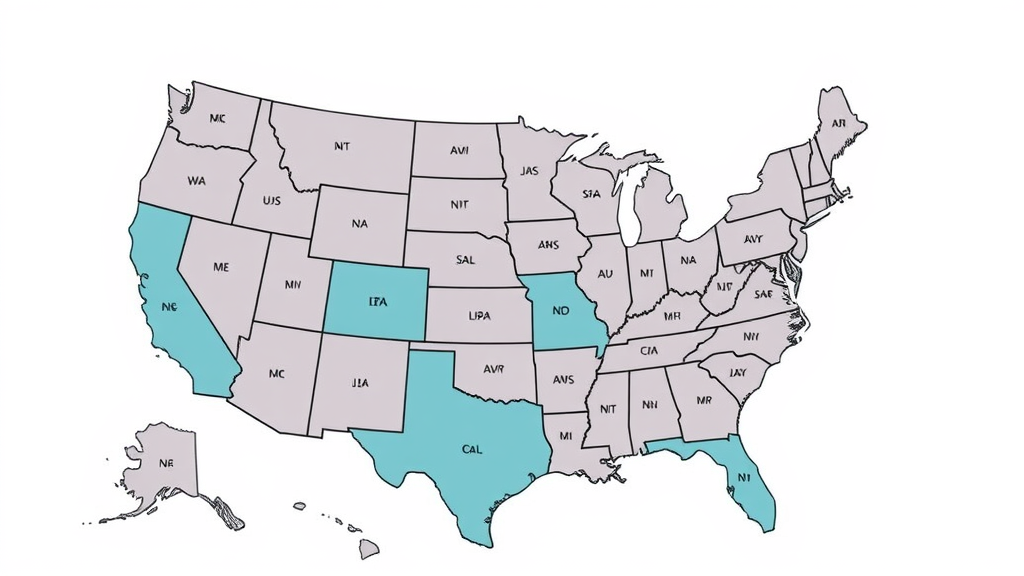
The United States is running short of general surgeons, and the places where new surgeons are trained are not necessarily the places where the population is growing. That is the central finding of a sweeping national analysis published in Global Surgical Education – Journal of the Association for Surgical Education, which tracked the allocation of entering general surgery residency positions against population change across every U.S. Census Bureau region from 2013 to 2024. The study, led by researchers at the Lewis Katz School of Medicine at Temple University, reveals a training pipeline that has expanded modestly nationwide but with almost no systematic relationship to where Americans actually live, raising fresh concerns about equitable access to surgical care at a moment when the surgical workforce is aging faster than it can be replaced.
The stakes of this mismatch are considerable. General surgery residency positions are disproportionately concentrated in urban academic centers, and the national per capita supply of general surgeons has been declining. Projections cited in the study suggest that the adequacy gap in general surgeon supply will continue to widen through 2037, with rural regions bearing the greatest burden because their surgical workforce is disproportionately older and insufficiently replenished. Previous research has shown that residents with dedicated rural training exposure are significantly more likely to practice in rural settings after graduation, which means that where training slots sit today shapes where patients will find surgeons tomorrow. Yet until now, no systematic examination had tested whether the expansion of the surgical training pipeline actually tracks the demographic realities it is meant to serve.
To answer that question, the research team assembled a retrospective observational dataset spanning twelve years. They drew on the National Resident Matching Program’s annual Match Rates by Specialty and State reports, extracting the total number of filled postgraduate year one general surgery positions in every state for each year from 2013 through 2024. These counts included all applicant categories, from U.S. allopathic and osteopathic seniors to international medical graduates. State-level population estimates came from two U.S. Census Bureau reports covering 2010 through 2024. States were aggregated into the nine Census Bureau divisions, matching the regional definitions used by the American Medical Association’s FREIDA database, and the number of entering residents per region was divided by regional population to yield a per capita measure of training capacity for each year.
Statistically, the team modeled trends with linear regression, comparing the annual percentage change in per capita residency positions against the corresponding percentage change in population using paired t-tests, and assessing the strength and direction of their relationship with Pearson correlation coefficients. Nationally, the mean annual percentage change in entering residency positions per capita was 1.35 percent, compared with 0.48 percent for population growth. Perhaps surprisingly, the difference between these two national growth rates was not statistically significant, and neither were the regional comparisons of workforce and population change taken individually. At the aggregate level, then, surgical training capacity and population appear to be growing at broadly comparable rates. But the national average masked a strikingly uneven regional picture.
Linear regression showed statistically significant per capita increases in entering residency positions in four regions: the Mid Atlantic, with an R-squared of 0.90; the South Atlantic, R-squared 0.89; the East North Central, R-squared 0.74; and the Mountain region, R-squared 0.73. New England moved in the opposite direction, with a statistically significant decline in positions per capita, R-squared 0.75. The remaining regions – West North Central, East South Central, West South Central, and Pacific – showed no statistically significant linear trends at all. In other words, expansion of the surgical training pipeline has been clustered in particular corners of the country while other regions have stagnated or slipped backward.
The correlation analysis made the disconnect even clearer. Only one region, the East North Central – comprising Illinois, Indiana, Michigan, Ohio, and Wisconsin – showed a meaningful positive alignment between training capacity growth and population change, with a correlation coefficient of 0.63. At the other extreme, the East South Central region – Alabama, Kentucky, Mississippi, and Tennessee – showed a moderate negative correlation of minus 0.57, indicating that residency positions may be contracting or stagnating precisely where the population is growing. Nationally, the correlation between changes in residency positions per capita and population growth was a negligible 0.05, effectively zero. Most other regions exhibited weak or no meaningful correlation, confirming that the apparent national balance is a statistical artifact rather than evidence of coordinated workforce planning.
The authors interpret New England’s per capita decline as potentially a gradual correction rather than a crisis. The region has historically held the highest concentration of graduate medical education positions and Medicare GME funding in the nation, a legacy of institutional growth that predates the federal cap on Medicare-funded residency slots enacted in the late 1990s. That cap froze the geographic distribution of training capacity in place even as population growth shifted decisively toward the South and West. Although roughly 15,000 new Medicare-funded positions have been authorized since the cap was imposed, teaching hospitals concentrated in the Northeast continue to hold a disproportionate share. Only about 2 percent of Medicare-funded training slots are located in rural areas, meaning federal investment in medical training has largely bypassed the communities that need surgeons most.
The situation in the East South Central region is far more troubling from a health equity standpoint. Mississippi currently has one of the lowest general surgeon workforce adequacy levels nationally, at 64.3 percent, yet the region receives disproportionately low Medicare GME funding relative to its population need. These states have substantial rural populations and some of the lowest life expectancies in the country. Within nonmetropolitan areas, 28.1 percent of general surgeons are already 65 or older, and 60 percent are projected to reach retirement age within the next decade. A training pipeline that is not growing in such a region, the study suggests, amounts to a slow-motion workforce emergency that current funding structures are ill-equipped to address.
The researchers point to policy levers that could begin to realign the pipeline with demographic reality. At the federal level, they highlight targeted Medicare GME cap adjustments, expanded rural training tracks, and programs such as the HRSA-funded Rural Residency Planning and Development initiative, which as of 2023–2024 accounted for 21.6 percent of all rural residency programs nationally. Existing models like Maine’s MERGE Collaborative, with 18 rural rotation sites, and Wisconsin’s state-funded rural residency assistance program demonstrate that rural exposure can be built into training deliberately. At the state level, the authors argue that Medicaid GME is a largely underutilized and immediately actionable lever: states can adopt Medicaid GME State Plan Amendments to unlock federal matching funds, redesign payment formulas to weight reimbursement toward rural sites and shortage specialties, and protect training dollars through explicit carve-outs from managed care capitation rates – all without new federal legislation.
The study is not without limitations. Census division-level data can obscure urban-rural variation within regions, and entering residency positions are only a proxy for eventual workforce supply, since attrition, fellowship subspecialization, and graduates’ ultimate practice locations all affect the effective workforce. The 2013–2024 window overlaps with the COVID-19 pandemic, which may have influenced both population dynamics and training capacity in ways that are difficult to disentangle, and correlation analyses cannot establish causation. Even so, the authors conclude that general surgery residency growth has not been strategically calibrated to population needs, and they call for population-informed, geographically intentional graduate medical education planning. Without it, the geographic maldistribution of America’s surgical workforce – and the patients it fails to reach – seems likely to deepen.
Subject of Research: Regional allocation of U.S. general surgery residency positions relative to population growth from 2013 to 2024
Article Title: General surgery residency expansion does not systematically scale with population growth across U.S. regions: a national analysis, 2013–2024
Article References: Zhang, Z., Phillips, L., & Dauer, E. (2026). General surgery residency expansion does not systematically scale with population growth across U.S. regions: a national analysis, 2013–2024. Global Surgical Education – Journal of the Association for Surgical Education, 5(1), Article 177. https://doi.org/10.1007/s44186-026-00579-3
Image Credits: AI Generated
DOI: 10.1007/s44186-026-00579-3
Keywords: general surgery, surgical education, residency workforce, regional disparities, rural surgical training, graduate medical education, Medicare GME funding, Medicaid GME, population growth, NRMP match data, surgeon shortage, health equity
Cite Scienmag News
Ophelia Keating. (September 12, 2026). General Surgery Residency Growth Fails to Match Population Shifts Across U.S. Regions. Scienmag. https://scienmag.com/general-surgery-residency-growth-fails-to-match-population-shifts-across-u-s-regions/
Ophelia Keating. "General Surgery Residency Growth Fails to Match Population Shifts Across U.S. Regions." Scienmag, 12 September 2026, https://scienmag.com/general-surgery-residency-growth-fails-to-match-population-shifts-across-u-s-regions/. Accessed 12 September 2026.
Ophelia Keating. "General Surgery Residency Growth Fails to Match Population Shifts Across U.S. Regions." Scienmag. September 12, 2026. https://scienmag.com/general-surgery-residency-growth-fails-to-match-population-shifts-across-u-s-regions/


