


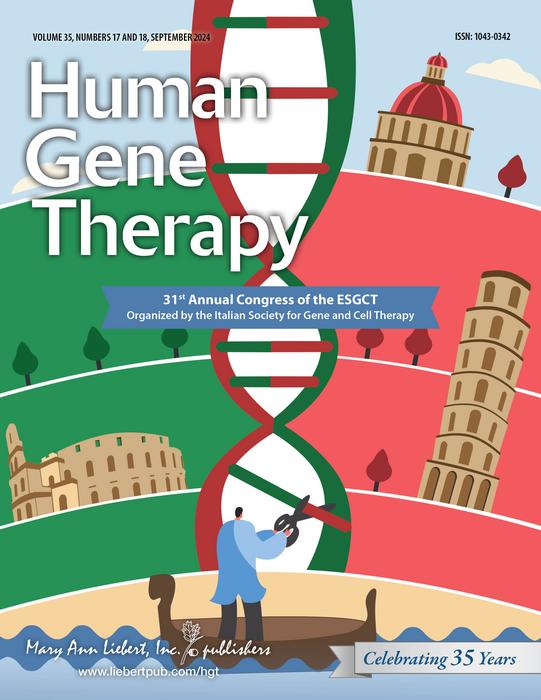
Researchers from the University of Pennsylvania, Perelman School of Medicine, Gene Therapy Program, and Moderna, have shown that repeated administration of lipid nanoparticle-encapsulated mRNA therapy significantly extended survival and reduced serum leucine levels in a mouse model of maple syrup urine disease (MSUD). Click here to read the article now.
The researchers, led by James Wilson, MD, PhD, from the University of Pennsylvania, Perelman School of Medicine, evaluated a lipid nanoparticle-based treatment approach to address all possible genetic mutations that can cause MSUD.
“Repeated intravenous delivery of lipid nanoparticle-encapsulated mRNAs encoding hBCKDHA, hBCKDHB, and hDBT increased survival and body weight, and decreased serum leucine levels in a hypomorphic MSUD mouse model that survives until weaning without clinical intervention,” stated the investigators. “Repeated administration of LNP-encapsulated mRNAs may represent a potential long-term universal treatment approach for MSUD.”
In another new study emerging from Dr. Wilson’s laboratory, researchers identified a novel family of adeno-associated virus (AAV) variants with desirable biodistribution properties that may be useful for targeting tissues other than the liver, such as the heart. To improve the safety and cost of AAV gene therapy, capsid engineering efforts are aimed at redirecting in vivo AAV biodistribution away from the liver toward disease-relevant peripheral organs. One newly identified variant exhibited a six-fold reduction in liver RNA expression and a ten-fold increase in cardiac RNA expression compared with wild-type AAV9 in the mouse.
“The first of the two studies from the Wilson laboratory demonstrates correction of one of the classical inborn errors of metabolism, MSUD, a disease which can be caused by any of several different genes encoding the components of a multi-subunit enzyme complex responsible for degrading branched-chain amino acids,” says Editor in Chief Terence R. Flotte, MD, Celia and Isaac Haidak Professor of Medical Education and Dean, Provost, and Executive Deputy Chancellor, University of Massachusetts Medical School. “The other paper from the Wilson lab represents an important advance in AAV capsid engineering to deliver genes more selectively to the heart while decreasing exposure of the liver, thus making the vector safer.”
About the Journal
Human Gene Therapy, the Official Journal of the European Society of Gene and Cell Therapy, and eight other international gene therapy societies, was the first peer-reviewed journal in the field and provides all-inclusive access to the critical pillars of human gene therapy: research, methods, and clinical applications. The Journal is led by Editor-in-Chief Terence R. Flotte, MD, Celia and Isaac Haidak Professor of Medical Education and Dean, Provost, and Executive Deputy Chancellor, University of Massachusetts Medical School, and an esteemed international editorial board. Human Gene Therapy is available in print and online. Complete tables of contents and a sample issue are available on the Human Gene Therapy website.
About the Publisher
Mary Ann Liebert, Inc. is a global media company dedicated to creating, curating, and delivering impactful peer-reviewed research and authoritative content services to advance the fields of biotechnology and the life sciences, specialized clinical medicine, and public health and policy. For complete information, please visit the Mary Ann Liebert, Inc. website.

Credit: Mary Ann Liebert, Inc.
Researchers from the University of Pennsylvania, Perelman School of Medicine, Gene Therapy Program, and Moderna, have shown that repeated administration of lipid nanoparticle-encapsulated mRNA therapy significantly extended survival and reduced serum leucine levels in a mouse model of maple syrup urine disease (MSUD). Click here to read the article now.
The researchers, led by James Wilson, MD, PhD, from the University of Pennsylvania, Perelman School of Medicine, evaluated a lipid nanoparticle-based treatment approach to address all possible genetic mutations that can cause MSUD.
“Repeated intravenous delivery of lipid nanoparticle-encapsulated mRNAs encoding hBCKDHA, hBCKDHB, and hDBT increased survival and body weight, and decreased serum leucine levels in a hypomorphic MSUD mouse model that survives until weaning without clinical intervention,” stated the investigators. “Repeated administration of LNP-encapsulated mRNAs may represent a potential long-term universal treatment approach for MSUD.”
In another new study emerging from Dr. Wilson’s laboratory, researchers identified a novel family of adeno-associated virus (AAV) variants with desirable biodistribution properties that may be useful for targeting tissues other than the liver, such as the heart. To improve the safety and cost of AAV gene therapy, capsid engineering efforts are aimed at redirecting in vivo AAV biodistribution away from the liver toward disease-relevant peripheral organs. One newly identified variant exhibited a six-fold reduction in liver RNA expression and a ten-fold increase in cardiac RNA expression compared with wild-type AAV9 in the mouse.
“The first of the two studies from the Wilson laboratory demonstrates correction of one of the classical inborn errors of metabolism, MSUD, a disease which can be caused by any of several different genes encoding the components of a multi-subunit enzyme complex responsible for degrading branched-chain amino acids,” says Editor in Chief Terence R. Flotte, MD, Celia and Isaac Haidak Professor of Medical Education and Dean, Provost, and Executive Deputy Chancellor, University of Massachusetts Medical School. “The other paper from the Wilson lab represents an important advance in AAV capsid engineering to deliver genes more selectively to the heart while decreasing exposure of the liver, thus making the vector safer.”
About the Journal
Human Gene Therapy, the Official Journal of the European Society of Gene and Cell Therapy, and eight other international gene therapy societies, was the first peer-reviewed journal in the field and provides all-inclusive access to the critical pillars of human gene therapy: research, methods, and clinical applications. The Journal is led by Editor-in-Chief Terence R. Flotte, MD, Celia and Isaac Haidak Professor of Medical Education and Dean, Provost, and Executive Deputy Chancellor, University of Massachusetts Medical School, and an esteemed international editorial board. Human Gene Therapy is available in print and online. Complete tables of contents and a sample issue are available on the Human Gene Therapy website.
About the Publisher
Mary Ann Liebert, Inc. is a global media company dedicated to creating, curating, and delivering impactful peer-reviewed research and authoritative content services to advance the fields of biotechnology and the life sciences, specialized clinical medicine, and public health and policy. For complete information, please visit the Mary Ann Liebert, Inc. website.
Journal
Human Gene Therapy
Method of Research
Commentary/editorial
Subject of Research
Not applicable
Article Title
Improving the Assessment of Risk Factors Relevant to Potential Carcinogenicity of Gene Therapies: A Consensus Article
Article Publication Date
16-Aug-2024
Cite Scienmag News
Juliet Wilcox. (August 30, 2024). Consensus paper: Carcinogenicity of gene therapies. Scienmag. https://scienmag.com/consensus-paper-carcinogenicity-of-gene-therapies/
Juliet Wilcox. "Consensus paper: Carcinogenicity of gene therapies." Scienmag, 30 August 2024, https://scienmag.com/consensus-paper-carcinogenicity-of-gene-therapies/. Accessed 5 September 2026.
Juliet Wilcox. "Consensus paper: Carcinogenicity of gene therapies." Scienmag. August 30, 2024. https://scienmag.com/consensus-paper-carcinogenicity-of-gene-therapies/

