


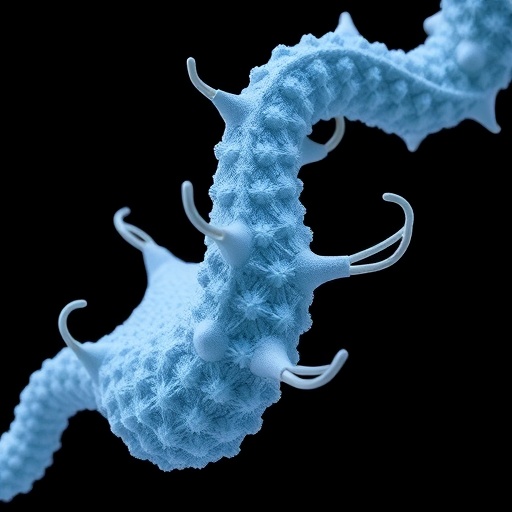
A team of researchers has unveiled a printing technology that takes its cue from one of nature’s most overlooked design tricks: foam. In a study published in Nature, the group describes “deep-foam photolithography,” a light-driven process that turns ordinary photosensitized polymer films into intricate, sponge-like structures whose pores can be created, grown, and even collapsed with micrometre-level precision. The result is a platform that can print without ink in white and greyscale, generate diffractive colour at extremely high resolution, and engineer surfaces that repel water as effectively as a lotus leaf.
Nature builds an astonishing variety of foam-like materials, from the porous scaffolding of bone to the airy cellular texture of a banana peel, by orchestrating physical and biochemical processes across many length scales simultaneously. Engineered foams, by contrast, have long been difficult to pattern: conventional foaming processes tend to act uniformly through a material, leaving designers with little control over where bubbles form or how large they grow. The new work tackles that problem head-on by making foaming itself a spatially addressable, light-controlled phenomenon.
The core of the technique begins with a polymer film that has been photosensitized so that it responds to ultraviolet light. The researchers expose the film to deeply penetrating UV-A radiation, which does not merely act at the surface but initiates photochemistry throughout the depth of the material. That exposure produces two complementary populations of polymer chains: fragments created by chain scission, and new network strands created by crosslinking. Because both processes occur simultaneously and throughout the film, the material is primed, in a depth-independent way, for the transformation that follows.
The transformation is driven by water. When the exposed film is placed in contact with a weak solvent under hypotonic conditions, the solvent penetrates the polymer by a mode of transport known as case II diffusion — a Front-like, anomalously fast permeation mechanism in which the solvent advances as a sharp front rather than by slow, Fickian spreading. As the solvent front moves inward, it selectively solubilizes the scission-derived polymer fragments, while the crosslinked network remains intact. This localized solubilization triggers the nucleation of pores, which then expand as more solvent is drawn in by osmotic pressure.
Crucially, the process does not stop at pore growth. The researchers show that the swelling, porous polymer can subsequently undergo a controllable viscoelastic collapse, in which the pore walls buckle and densify in a regulated fashion. By tuning exposure doses, solvent chemistry, and timing, the team can dictate whether a given region of the film ends up as an expanded foam, a partially collapsed structure, or a fully densified surface layer. The result is a three-dimensional, hierarchical architecture created in a material that started as a flat, featureless film.
One of the most striking consequences of the method is optical. Because the foamed regions scatter light, they appear brilliantly white — the same phenomenon that makes bird feathers, beetle scales, and many other biological surfaces appear white without any pigment. This resemblance to the amorphous structural whites found in nature means the technique can perform inkless printing in white and greyscale: denser or more collapsed regions scatter differently than open foams, allowing a full tonal range to be rendered purely through morphology. No dyes, no pigments, no consumable inks — just polymer and light.
The resolution of the process is equally remarkable. The researchers report patterning at roughly 20,000 dots per inch, far beyond what conventional printing can achieve. At that length scale, features are fine enough to act as diffraction gratings for visible light, which means the platform can also produce diffractive colour — structural colour generated by interference rather than by absorbing pigments. Combining white, greyscale, and diffractive colour from a single material system opens the door to security printing, anti-counterfeiting marks, and optical devices that are difficult to replicate.
The mechanical dimension of the technology may prove even more consequential. Because foaming physically expands the polymer, the method can print structures with high aspect ratios — the team reports expansion ratios of up to 20 times — meaning that relatively thin printed regions can stand proud of the substrate as tall, delicate architectures. Conversely, by inducing controlled collapse, the researchers can sculpt surfaces with hierarchical roughness across multiple length scales. When that roughness is combined with the right surface chemistry, it produces lotus-like super-hydrophobicity, in which water beads up and rolls off, carrying dirt with it, just as it does on the surface of a lotus leaf.
The versatility of the platform extends beyond flat films. The researchers demonstrate deep-foam photolithography on fibres as well, and they show that the approach works with a range of polymeric materials, spanning both amorphous polymers and semi-crystalline ones. That breadth matters because it suggests the technique is not tied to one exotic, specially formulated resin; many common engineering plastics could, in principle, be foamed and patterned with the same light-and-solvent workflow.
The practical applications the team demonstrates sketch out a broad technological horizon. By patterning micrometre-scale differences in foamability across a surface, the researchers create high-resolution printed features whose height, thickness, and optical character vary from point to point. By patterning wettability, they can design channels and compartments that guide liquids without walls — an approach to microfluidics in which the foam architecture itself does the fluid handling. And by exploiting the tiny, absorbent pores, they achieve picolitre capture of liquids and colloidal matter, grabbing volumes on the scale of trillionths of a litre, small enough to hold individual cells or engineered particles.
Picolitre liquid handling of this kind could matter for diagnostics, environmental monitoring, and materials discovery, where manipulating vanishingly small volumes of samples or reagents is a persistent bottleneck. Meanwhile, the combination of inkless greyscale printing, diffractive colour, and programmable surface texture suggests applications in displays, sensors, and functional surfaces that respond optically or mechanically to their environment.
What ties these capabilities together is the underlying insight: rather than depositing material pixel by pixel, deep-foam photolithography transforms material that is already there, using light to write the instructions and osmosis to execute them. The polymer film is, in effect, both the paper and the developing chemistry. The technique also echoes biology in a deeper sense. Natural structural materials are rarely homogeneous; they are hierarchical, combining solid and porous phases across scales from nanometres to millimetres, and their properties — strength, whiteness, water repellency — emerge from that hierarchy rather than from any single ingredient. By giving engineers a way to program porosity, collapse, and roughness across a polymer film with light, the new method brings that design philosophy within reach of the printing lab.
The study, led by Qin, Liu, and Kuang and colleagues, appears in Nature as “Foaming photopolymers as a high-resolution biomimetic printing platform.” As the technology matures, the researchers’ biomimetic framing seems likely to prove prescient: bones, feathers, and lotus leaves have been refined by hundreds of millions of years of evolution, and a printing platform that can borrow their tricks — foam, whiteness, and water repellency in one step — may find uses its inventors have not yet imagined.
Cite Scienmag News
Denise Maddox. (September 10, 2026). Foaming photopolymers enable high-resolution biomimetic 3D printing. Scienmag. https://scienmag.com/foaming-photopolymers-enable-high-resolution-biomimetic-3d-printing/
Denise Maddox. "Foaming photopolymers enable high-resolution biomimetic 3D printing." Scienmag, 10 September 2026, https://scienmag.com/foaming-photopolymers-enable-high-resolution-biomimetic-3d-printing/. Accessed 10 September 2026.
Denise Maddox. "Foaming photopolymers enable high-resolution biomimetic 3D printing." Scienmag. September 10, 2026. https://scienmag.com/foaming-photopolymers-enable-high-resolution-biomimetic-3d-printing/


