


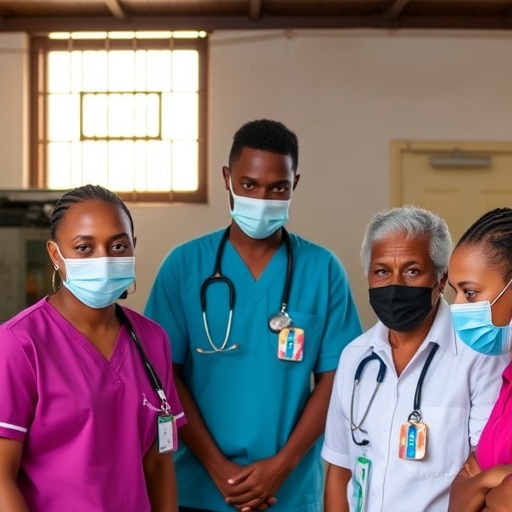
In the crowded drop-in centers and methadone clinics of Kampala, Uganda, healthcare workers have a simple way of describing what integrated HIV prevention could look like for their clients: a full course meal. A new qualitative study published in Addiction Science & Clinical Practice finds that nurses, social workers, psychologists and clinical officers who serve people who use drugs view the integration of HIV pre-exposure prophylaxis, or PrEP, into medication for opioid use disorder and needle and syringe exchange programs as not only acceptable but urgently needed—provided that the rollout is built around community-based delivery, peer engagement, and sustained investment in provider training.
The research, conducted by a team from the University of Washington, the Infectious Diseases Institute at Makerere University, Uganda’s Ministry of Health, and the Most-At-Risk Populations Initiative, comes at a critical moment. According to the United Nations Office on Drugs and Crime, 292 million people worldwide used drugs for non-medical purposes in 2022, and 13.9 million of them reported injecting drugs. Among people who inject drugs, the risk of acquiring HIV is fourteen times higher than in the general population. In Uganda, where national HIV prevalence among adults aged 15 to 64 stands at 5.9 percent, estimates for people who inject drugs range from 3.6 percent to as high as 45 percent, depending on the population and methods used to collect the data. For PWUD who also engage in transactional sex, an estimated 31.3 percent are living with HIV.
Between March 2021 and September 2022, the research team conducted in-depth interviews with healthcare workers purposively sampled from five program sites in Kampala: one facility-based medication for opioid use disorder program housed within Butabika National Referral Mental Hospital—Uganda’s only such program, established in 2019—two community-based needle and syringe exchange sites led by MARPI, and two in-patient and outpatient rehabilitation centers. Thirty healthcare workers were interviewed; after two were excluded, twenty-eight remained in the analysis, representing social workers, nurses, psychologists and clinical officers. Their median age was 32 years, and 54 percent identified as male. Interviews, guided by the Consolidated Framework for Implementation Research, were conducted in English or Luganda by Ugandan social scientists, audio-recorded, translated where necessary, and transcribed verbatim. Each interview lasted a median of 60 minutes.
The findings reveal a striking pattern: enthusiasm for integration was nearly universal, but confidence in its feasibility was more guarded. When asked about acceptability, 89 percent of healthcare workers strongly agreed that they liked the idea of offering PrEP through the programs where they worked. The metaphor of the “whole package” recurred throughout the transcripts. “It will be like a full course meal, because if it was one, if you give them only PrEP and not the needle,” one social worker with five years of experience at a needle exchange site explained, noting that clients who forget to take a daily pill while intoxicated would still be protected from the consequences of sharing injection equipment. Another social worker framed the stakes bluntly: “We cannot stop the behavior but we can stop HIV.”
Healthcare workers saw integration as appropriate for their clients because they witness daily the behaviors that place people who use drugs at risk—sex without condoms, sex with partners of unknown HIV status, and syringe sharing in the informal settings known locally as ghettos, where a used syringe of unknown origin may be the only one available. They also identified integration as a relative advantage over the current system, in which clients must navigate referrals to HIV clinics that many find unwelcoming. “The drug users are not accepted in other facilities because people have the perception that they still use drugs,” one social worker at the methadone program observed. “If the services they need are all in one place, they will feel comfortable receiving all the services from one place…because this is their safe place.” Integration, in their view, would eliminate the referral chains that cause clients to give up before reaching care, reduce prohibitive transportation costs, and shorten the long waits that discourage utilization.
Feasibility, however, drew a more cautious assessment. While 89 percent of healthcare workers agreed that integration would be feasible, only 46 percent strongly agreed. Participants worried that adding PrEP to sites focused on addiction management could create friction with existing workflows, particularly in rehabilitation centers whose mandates have historically excluded HIV services. Resource constraints loomed large: insufficient funding, shortages of trained staff, and gaps in medication supplies all threatened the viability of integrated care. A social worker at the methadone clinic emphasized the importance of what the researchers call resource continuity—the uninterrupted availability of medicines. “Our clients do not have patience in them,” she said. “We just have to make sure that the medications are always there!” A client told to wait while a provider checks the stockroom, she warned, will simply say he will come back tomorrow—or not at all.
To overcome these barriers, healthcare workers converged on a set of practical strategies. Foremost among them was decentralization: taking services to clients where they are, through outreach, mobile clinics, and community refills, rather than expecting clients to travel to centralized facilities. Peer-to-peer delivery emerged as a second cornerstone. Peers—people with lived experience of drug use—already play roles in distributing HIV self-testing kits and needles, and healthcare workers believed they could extend that role to delivering PrEP refills, correcting misinformation, and making clinic spaces feel safe. “They saw that we had people who valued them, who were not judging them, they felt safe and that is why having a safe space for people who use drugs really encourages them to access services,” one social worker recalled. Notably, while healthcare workers endorsed peers as delivery partners, they recommended that the dedicated PrEP implementation “champion” at each site be a counselor rather than a peer, citing reliability concerns such as relapse and inconsistent attendance that peers, like any clients, can experience.
Capacity building formed the third pillar of their recommendations. Knowledge about PrEP varied considerably across sites, and many participants who felt unconfident about providing it said they simply lacked the training to screen eligibility and counsel clients. Healthcare workers called for continuous cross-training so that staff experienced in substance use services could gain HIV prevention competencies, and vice versa—mirroring evidence from other settings that cross-training expands skills, mitigates staffing shortages, and improves job satisfaction. They also acknowledged the contribution of their own attitudes to the stigma clients experience, urging colleagues to examine personal values and beliefs so that facilities become “friendly” toward harm reduction clients.
Policy reform and community sensitization rounded out the strategy list. Uganda Harm Reduction Network’s drop-in centers currently cannot initiate clients on antiretroviral therapy or PrEP because the accrediting policy framework does not yet exist, and healthcare workers argued that such restrictions must be lifted before integration can succeed. They also advocated for access to longer-acting PrEP products, such as injectable formulations administered every two to three months, which would reduce visit frequency, ease transportation burdens, and sidestep the stigma associated with pill bottles whose packaging resembles that of antiretroviral therapy—raising suspicion among partners that a person taking PrEP may already be living with HIV. Finally, they stressed that public understanding of addiction as a disease rather than a moral failing remains a prerequisite for any successful intervention. “Many people, especially here in Uganda, do not understand this as a disease, which leads to a lot of judgement for the clients,” one counselor at a rehabilitation center said.
The study’s authors conclude that PrEP integration with medication for opioid use disorder and needle and syringe exchange programs is perceived by healthcare workers as acceptable, appropriate, and feasible for people who use or inject drugs—but that achieving impact will require leveraging strategies that optimize available resources, particularly peer delivery models that can address challenges of resource continuity and program sustainability. In a landscape reshaped by shifting foreign aid priorities, the findings offer a roadmap grounded in the daily experience of the frontline workers best positioned to know what will work: bring the whole meal to the table, and bring it to the client’s door.
Cite Scienmag News
Ophelia Keating. (September 10, 2026). Healthcare workers share strategies for integrating PrEP into drug services in Uganda. Scienmag. https://scienmag.com/healthcare-workers-share-strategies-for-integrating-prep-into-drug-services-in-uganda/
Ophelia Keating. "Healthcare workers share strategies for integrating PrEP into drug services in Uganda." Scienmag, 10 September 2026, https://scienmag.com/healthcare-workers-share-strategies-for-integrating-prep-into-drug-services-in-uganda/. Accessed 10 September 2026.
Ophelia Keating. "Healthcare workers share strategies for integrating PrEP into drug services in Uganda." Scienmag. September 10, 2026. https://scienmag.com/healthcare-workers-share-strategies-for-integrating-prep-into-drug-services-in-uganda/


