


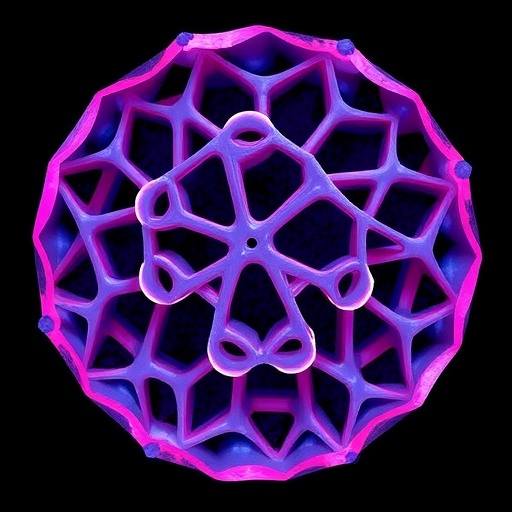
In a development that blurs the line between synthetic materials and living tissue, researchers have unveiled a new class of self-assembling, 3D-printable materials that closely mimic the architecture and behavior of biological tissues. Known as jammed interconnected bilayer emulsions, or JIBEs, these materials can be produced in remarkable quantities—up to deciliter-scale volumes within minutes—and contain billions of microscopic, membrane-bound water compartments per milliliter. The achievement, described in a study published in Nature Materials, opens a pathway toward tissue-like materials that are not merely passive structural imitations but functional systems capable of selective transport, electrical signaling, and even memory-like behavior.
At first glance, a JIBE looks deceptively simple: an opaque, paste-like substance that can be squeezed through a nozzle. But zoom in, and the structure becomes extraordinary. The material is composed of countless water droplets, each wrapped in its own lipid or polymer membrane, packed so densely that they press against one another and deform—much like bubbles in a foam. Crucially, the membranes of adjacent droplets adhere to one another, forming shared bilayers that connect the entire population into a continuous, tissue-like network. The result is a jammed, interconnected architecture in which every compartment remains individually bounded by a membrane, yet the whole assembly behaves as a cohesive, moldable solid.
This jammed state is the key to the material’s most striking property: it can be 3D printed directly into water. Conventional emulsions tend to coalesce, cream, or destabilize when extruded, but the jammed packing of JIBEs gives them a yield stress—meaning they hold their shape under gentle conditions yet flow when force is applied. This is the same rheological principle that allows toothpaste to sit still on a brush but spread when squeezed. When pushed through a printing nozzle into an aqueous bath, JIBEs emerge as stable filaments that retain their printed geometry, allowing researchers to build three-dimensional, tissue-mimicking constructs layer by layer. The sheer volume of material that can be generated in minutes—billions of compartments per milliliter, scaled to deciliters—distinguishes this approach from earlier droplet-network methods, which were typically laborious, small-scale, and impractical for macroscopic applications.
The self-assembly process underlying JIBEs is what makes this scalability possible. Rather than individually forming and connecting droplets, the researchers exploit the natural tendency of amphiphilic molecules—compounds with water-loving heads and water-fearing tails—to stabilize interfaces between oil and water phases. By carefully controlling mixing conditions, the team coaxes droplets into forming bilayer-connected networks spontaneously. Because the method relies on fundamental physicochemical principles rather than bespoke chemistry, it is remarkably adaptable. The researchers demonstrated that a wide range of amphiphiles can be used, from biological lipids to synthetic block copolymers, giving them the flexibility to tune membrane thickness, stability, permeability, and mechanical properties for different applications. Lipid-based JIBEs might better approximate the softness and biocompatibility of natural cell membranes, while block copolymer versions could offer superior mechanical robustness and chemical resistance.
What elevates JIBEs from an impressive structural feat to a genuinely functional material platform is the incorporation of membrane proteins—specifically, ion channels. In living organisms, ion channels are the molecular gates embedded in every cell membrane, controlling the flow of charged particles such as sodium, potassium, and chloride ions. They underlie nerve impulses, muscle contraction, and countless other physiological processes. The researchers functionalized JIBE membranes with distinct ion channels and demonstrated three hallmark behaviors. First, tunable conductance: the channels allow ionic current to pass through the interconnected bilayer network, and the magnitude of that current can be adjusted, giving the material an electrically addressable character. Second, selective transport: by choosing channels with specific ion preferences, the team showed that the material can discriminate between different ionic species, moving some across its membranes while blocking others—a capability directly relevant to separation technologies and mimicking one of biology’s most refined skills.
The third behavior is perhaps the most provocative: memristance. A memristor is an electronic component whose resistance depends on the history of current that has flowed through it—it “remembers” its past. Memristance is a cornerstone of neuromorphic computing, a field that seeks to build circuits that process information more like brains than like conventional silicon chips. Demonstrating memristive behavior in a soft, water-based, self-assembled material suggests that JIBEs could one day serve as a substrate for computing architectures that more closely resemble biological neural tissue—not metaphorically, but in their actual physical mechanism of information storage and processing. The idea that a vat of membrane-bound droplets, printed into arbitrary shapes, could perform memory functions is a striking example of how materials science and computing are beginning to converge.
The researchers argue that functionalized JIBEs could unlock applications across a strikingly broad landscape. In tissue engineering, the material’s compartmentalized, membrane-bound structure mirrors the cell-dense organization of real tissues, potentially providing scaffolds that better recapitulate the microenvironment of living organs. In drug delivery, the ability to load individual compartments with therapeutic agents and release them through membrane-controlled transport offers a route to precisely dosed, responsive delivery systems. In separations technology, selective ion transport through engineered channels could enable energy-efficient filtration or purification of specific molecules. In energy storage, the dense network of interfaces presents enormous surface area for electrochemical processes. And in soft robotics, a printable, water-based material with embedded sensory and actuation-like ionic behavior could form the basis of machines that are simultaneously soft, compliant, and intelligent.
The concept of droplet networks—3D assemblies of aqueous compartments connected by lipid bilayers—has been explored before, most famously in the construction of synthetic tissues from printed droplets. What sets this work apart is scale, speed, and functionality in combination. Earlier approaches often required microfluidic fabrication of individual droplets, slow assembly procedures, and produced only tiny volumes. The jamming strategy described here sidesteps those bottlenecks, transforming a delicate laboratory curiosity into a bulk material that can be manufactured by the deciliter and handled like a paste or printing ink. It is the difference, in some sense, between assembling a mosaic tile by tile and casting a wall from a self-organizing compound.
There remain, of course, substantial challenges between this demonstration and real-world deployment. Maintaining long-term stability of billions of individual membranes is nontrivial; biological systems constantly repair and remodel their membranes, whereas synthetic versions must be engineered to persist. Incorporating complex membrane proteins at scale, ensuring they orient correctly and remain active, is a notoriously difficult task in synthetic biology. And integrating electrical readout or stimulation into printed JIBE constructs will require interfacing soft ionic materials with conventional electronics. The study’s authors nonetheless frame these as engineering hurdles rather than fundamental barriers, pointing to the demonstrated adaptability of the platform as evidence that the chemistry can be tuned to meet specific demands.
The broader significance of the work lies in what it suggests about the future of “active matter.” For decades, materials science has excelled at making substances that are strong, light, or conductive, but biological tissues operate on entirely different principles: they are soft, self-healing, compartmentalized, and chemically communicative. JIBEs represent a serious attempt to capture those principles in a manufacturable form. A material in which billions of membrane-bound compartments communicate through channels—carrying ions, storing information, and responding to their environment—begins to resemble something closer to a primitive synthetic tissue than a conventional polymer or gel.
For researchers in neuromorphic computing, the demonstration of memristance in a self-assembled, printable medium may prove the most tantalizing result. Conventional memristor devices are typically fabricated from thin films of metal oxides under high-vacuum conditions. A water-based, room-temperature, self-assembling alternative, printable into complex three-dimensional geometries, would represent a radically different fabrication philosophy—one borrowed not from the semiconductor industry but from the self-organization of living matter.
For now, JIBEs remain a laboratory platform, albeit a remarkably versatile one. But the trajectory is clear: from passive mimicry toward active, functional synthetic tissues. If ion-channel-functionalized bilayer emulsions can be scaled further, stabilized further, and integrated with sensing and actuation, the boundary between printed material and living system may continue to erode. The study stands as a demonstration that the organizing principles of biology—compartmentalization, membrane transport, jammed packing, and self-assembly—can be captured in a material that comes off a nozzle in minutes, at a scale measured in hundreds of milliliters rather than microliters. In a field where the dream has long been to build, rather than merely imitate, tissue-like matter, that is a milestone worth watching.
Cite Scienmag News
Denise Maddox. (September 10, 2026). Jammed emulsions enable 3D-printed mimics of living tissue. Scienmag. https://scienmag.com/jammed-emulsions-enable-3d-printed-mimics-of-living-tissue/
Denise Maddox. "Jammed emulsions enable 3D-printed mimics of living tissue." Scienmag, 10 September 2026, https://scienmag.com/jammed-emulsions-enable-3d-printed-mimics-of-living-tissue/. Accessed 10 September 2026.
Denise Maddox. "Jammed emulsions enable 3D-printed mimics of living tissue." Scienmag. September 10, 2026. https://scienmag.com/jammed-emulsions-enable-3d-printed-mimics-of-living-tissue/


