


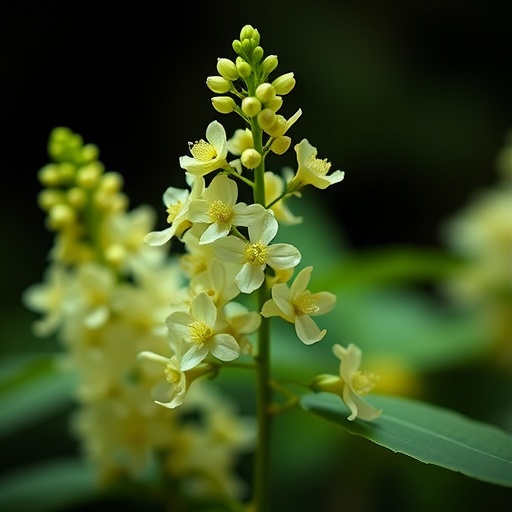
In a development that could reshape how the food and wellness industries harness ancient medicinal plants, researchers in China have successfully combined machine learning with probiotic fermentation to dramatically boost the antioxidant power of Dendrobium officinale, one of traditional Chinese medicine’s most prized and expensive botanicals. The study, published in Food Chemistry: X, demonstrates that artificial intelligence can outperform conventional optimization techniques to unlock the hidden nutritional potential of a plant whose therapeutic compounds have long been locked behind stubborn molecular barriers.
Dendrobium officinale, often abbreviated as DO, occupies a unique position in Chinese culture and commerce. Classified as a “medicine and food homology” resource, the plant has been used for centuries as both a remedy and a delicacy, commanding prices that can rival gold by weight. Modern science has validated much of its reputation, attributing health-promoting effects to its rich content of polysaccharides, polyphenols, alkaloids, and bibenzyl compounds, with documented immunomodulatory, antioxidant, and blood sugar-lowering activities. Yet the plant has also frustrated food scientists. Its bioactive polysaccharides are massive molecules with complex structures that resist absorption in the human digestive tract, dramatically limiting their biological efficacy and complicating efforts to develop high-value functional foods and nutraceuticals from the material.
The research team, led by Yuhang Yi, Chenghao Lv, Hongbin Lan, Abdulaziz Nuhu Jibril, Yibo Luo, Jun Fang, and Si Qin, attacked this problem from two directions simultaneously. First, they employed lactic acid bacteria, specifically three generally recognized as safe strains of Lactobacillus, to ferment fresh DO juice. Fermentation is an elegant biological solution to the bioavailability problem: the bacteria produce hydrolytic enzymes that break down plant cell walls, liberating intracellular compounds and cleaving oversized macromolecular polysaccharides into smaller fragments that the body can actually absorb. Fermentation also generates novel metabolites and can amplify the antioxidant properties of existing compounds, effectively transforming the nutritional profile of the finished product.
The second, and arguably more groundbreaking, component of the study was the application of machine learning to optimize the fermentation process itself. Traditional optimization in food science has relied heavily on response surface methodology, or RSM, a statistical technique that models relationships between controlled experimental factors and observed outcomes. While RSM has served the field well for decades, it struggles when confronted with the nonlinear, multivariate interactions that define complex biological systems. Fermentation involves an intricate dance of variables: temperature, duration, the ratio of liquid to solid material, inoculation concentration, and the relative proportions of different bacterial strains, all of which can interact in ways that linear statistical models fail to capture. Machine learning algorithms, which process information through parallel computations in a manner loosely analogous to biological nervous systems, offer a powerful alternative capable of global optimization across these tangled parameter spaces.
The experimental design unfolded in two stages. In the first stage, the researchers conducted a single-factor experiment examining five factors across five levels each, spanning fermentation temperatures from 26 to 40 degrees Celsius, fermentation times from 24 to 72 hours, liquid-to-solid ratios ranging from 15 to 35 milliliters per milligram, inoculation amounts from 1 to 10 percent, and varying proportions of the mixed bacterial strains, which included Lactobacillus plantarum, Lactobacillus paracasei, and Lactobacillus rhamnosus obtained from Hunan Agricultural University. The fresh stems of Dendrobium officinale were sourced from a planting cooperative in Xinning County in China’s Hunan Province, with the species identity confirmed through taxonomic identification by a team at the Institute of Botany of the Chinese Academy of Sciences. In the second stage, the most influential variables identified in stage one were subjected to a Box-Behnken design based on RSM, providing a conventional benchmark against which the machine learning approaches could be measured.
What set this study apart was the sophistication of its computational framework. The researchers built and compared nine distinct machine learning algorithms spanning three methodological families. Tree-based ensemble methods included XGBoost and Gradient Boosting, which build predictive strength through stage-wise boosting strategies, along with Random Forest and Extra Trees, which rely on bagging and randomized splitting to stabilize predictions and reduce variance. AdaBoost completed this family by adaptively reweighting training instances to focus the model on samples it had previously mispredicted. On the linear side, Ridge Regression applied L2 regularization to guard against multicollinearity, while Elastic Net combined L1 and L2 penalties for flexibility with high-dimensional correlated features. Finally, Support Vector Regression employed kernel-based hyperplane optimization with a Radial Basis Function kernel to capture nonlinear relationships, and K-Nearest Neighbors offered a non-parametric approach that averaged the target values of the most similar instances in feature space.
The researchers paid careful attention to a subtle but critical data science challenge: the compositional nature of the strain mixture data. Because the three Lactobacillus strains must together sum to 100 percent of the inoculum, using their raw proportions as model inputs risks inducing spurious correlations, a well-known pitfall in compositional data analysis. To resolve this, the team applied a centered log-ratio transformation, which projects the compositional data from the constrained simplex into real space by subtracting the mean of the log-transformed components. This mathematically principled workaround preserved the relative compositional information while eliminating closure-induced bias. Continuous variables such as temperature, time, and inoculation amount were additionally scaled using Z-score normalization or range scaling, ensuring that no single variable could dominate distance-based or inner-product-based computations during model training.
With a dataset comprising 59 experimental groups, the team employed rigorous validation procedures to ensure their models would generalize beyond the training data. The data was partitioned with 80 percent allocated to training, 10 percent to validation for hyperparameter fine-tuning, and a held-out 10 percent external test set that remained completely unseen during model development. Hyperparameter tuning was performed through grid search within repeated 5-fold cross-validation, with performance assessed using the coefficient of determination, root mean square error, mean absolute error, and mean squared error. For the gradient-boosting models, learning rates were tuned between 0.01 and 0.1, and early stopping with a patience of 50 rounds prevented overfitting once validation loss plateaued. The Support Vector Regression model’s regularization parameter was optimized across a range spanning four orders of magnitude, while the k-nearest neighbor algorithm settled on k equal to 5 after evaluating odd integer values against validation error.
The outcome of this computational effort was validated through comprehensive chemical and biological characterization. Total phenolic content was quantified using the Folin-Ciocalteu colorimetric method, while antioxidant activity was assessed through both DPPH and ABTS radical scavenging assays, with half maximal inhibitory concentration values calculated for comparative evaluation. Beyond the chemical assays, the researchers conducted a preliminary safety assessment using human colorectal epithelial Caco-2 cells and human hepatocellular HepG2 cells, which respectively mimic intestinal exposure and hepatic metabolism following oral intake. The fermented material was exposed to these cells at concentrations up to 4 milligrams per milliliter for 24 hours, with metabolic activity quantified using the CCK-8 assay, providing early reassurance about the biocompatibility of the optimized fermented product.
Perhaps the deepest layer of insight came from untargeted metabolomics analysis performed by liquid chromatography coupled with tandem mass spectrometry. Using a Shimadzu UHPLC system connected to a SCIEX TripleTOF 6600-plus mass spectrometer with electrospray ionization, the team profiled the metabolic landscape of the fermented material in both positive and negative ionization modes, with pooled quality control samples injected throughout the analytical batch to confirm system stability and reproducibility. This metabolomic mapping allowed the researchers to elucidate the molecular transformations that fermentation induces in Dendrobium officinale, moving the field beyond simple before-and-after bioactivity comparisons toward a mechanistic understanding of precisely how microbial processing reshapes the plant’s chemical profile to enhance its functional value.
The significance of this work extends well beyond a single botanical species. The authors frame their approach as a blueprint for the precision bioprocessing of medicine and food homology resources generally, a category of materials that occupies an enormous space in global wellness markets and is expanding as consumers increasingly seek natural, health-promoting ingredients. Prior studies of DO fermentation, the researchers note, have mostly settled for simple comparisons of bioactivity before and after fermentation, without establishing quantitative relationships between process parameters and compositional outcomes. By demonstrating that machine learning can decode the nonlinear relationship between fermentation conditions and polyphenol enrichment, and by pairing predictive modeling with metabolomic characterization, the study provides both methodological guidance and mechanistic insight that other researchers can adapt to their own materials and processes.
For an industry long guided by empirical trial-and-error, the message of this research is clear: the future of functional food processing may belong to algorithms that can navigate vast experimental spaces far more efficiently than any human experimenter. The integration of machine learning into food fermentation research, particularly for medicinal plant materials, remains in its infancy, the authors acknowledge, but this study demonstrates the viability of data-driven frameworks that simultaneously handle complex strain interactions and multi-factor processing variables. As consumer demand for bioavailable, functional botanical ingredients continues its steep climb, the marriage of ancient fermentation wisdom with modern artificial intelligence offers a compelling path forward, one in which a treasured orchid from the mountains of southern China may finally deliver the full measure of its legendary benefits.
Cite Scienmag News
Blake Davidson. (September 9, 2026). Machine learning optimizes Dendrobium officinale fermentation for enhanced antioxidant activity. Scienmag. https://scienmag.com/machine-learning-optimizes-dendrobium-officinale-fermentation-for-enhanced-antioxidant-activity/
Blake Davidson. "Machine learning optimizes Dendrobium officinale fermentation for enhanced antioxidant activity." Scienmag, 9 September 2026, https://scienmag.com/machine-learning-optimizes-dendrobium-officinale-fermentation-for-enhanced-antioxidant-activity/. Accessed 9 September 2026.
Blake Davidson. "Machine learning optimizes Dendrobium officinale fermentation for enhanced antioxidant activity." Scienmag. September 9, 2026. https://scienmag.com/machine-learning-optimizes-dendrobium-officinale-fermentation-for-enhanced-antioxidant-activity/


