


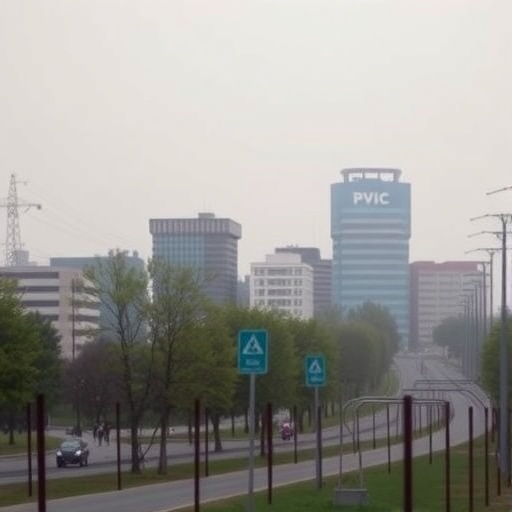
Long-term exposure to common air pollutants may significantly raise the risk of developing substance use disorders, while living surrounded by greenery appears to offer a measure of protection, according to a large new population-based study drawing on nearly a quarter of a million participants from the UK Biobank.
The research, published in BMC Psychiatry, analyzed data from 247,138 UK Biobank participants who were free of substance use disorders at baseline, tracking them over a median follow-up period of 10.9 years. During that time, 4,982 participants went on to develop a substance use disorder, providing the researchers with a robust dataset to examine the relationship between environmental exposures and mental health outcomes.
The study, led by Huan Liu and Bolun Cheng of Xi’an Jiaotong University in China, along with colleagues including Feng Zhang, represents one of the most comprehensive investigations to date into how the air people breathe and the greenness of their neighborhoods may influence vulnerability to addiction. The findings arrive at a moment when urban planners and public health officials are increasingly recognizing that the built and natural environments shape health in ways that extend well beyond respiratory and cardiovascular disease.
To assess air pollution exposure, the team employed Land Use Regression modeling to estimate concentrations of five pollutants at each participant’s residential address: fine particulate matter known as PM2.5, coarse particulate matter classified as PM2.5−10, the larger particulate fraction PM10, nitrogen dioxide (NO2), and nitrogen oxides (NOX). These pollutants, produced primarily by traffic, industry, and combustion sources, have long been associated with a range of physical health problems, but their role in psychiatric and behavioral conditions has remained far less certain.
For residential greenness, the researchers turned to the 2005–2007 Land Cover Map, measuring three distinct aspects of the environment within a 300-meter buffer around each home: the proportion of green space, the presence of a domestic garden, and the extent of natural environment. This tripartite approach allowed the investigators to distinguish between different types of vegetation and their potentially different effects on health.
Using Cox proportional hazards models, the team calculated hazard ratios with 95 percent confidence intervals to quantify the association between each exposure and the risk of developing a substance use disorder. The results were striking in their consistency. All five air pollutants were positively associated with incident SUD in fully adjusted models that controlled for a wide range of potential confounders.
Fine particulate matter, or PM2.5, showed the strongest effect, with a hazard ratio of 1.111 (95 percent CI: 1.081–1.142), followed by PM10 with a hazard ratio of 1.070 (95 percent CI: 1.054–1.086). These figures indicate that higher exposure to particulate pollution was associated with a measurable increase in the likelihood of developing a substance use disorder over the follow-up period, even after accounting for demographic, socioeconomic, and behavioral factors.
On the protective side of the ledger, two of the three greenness measures emerged as significant. Green space was inversely associated with SUD risk, showing a hazard ratio of 0.997 (95 percent CI: 0.996–0.998), and the natural environment measure produced an identical finding, with a hazard ratio of 0.997 (95 percent CI: 0.995–0.998). While these effect sizes appear modest on a per-unit basis, they represent population-level signals across a very large cohort, suggesting that even incremental increases in neighborhood greenness may contribute to reduced vulnerability.
Perhaps the most intriguing finding of the study concerns the interaction between pollution and greenery. The researchers tested whether residential greenness modified the association between air pollutants and SUD risk by introducing cross-product terms into their models and evaluating them with likelihood-ratio tests. The results pointed to a buffering role for domestic gardens specifically. Among participants in the high-exposure subgroup, the presence of a domestic garden attenuated the positive associations between pollutants and SUD, with cross-product terms of 0.979 (95 percent CI: 0.963–0.996) for PM2.5 and 0.987 (95 percent CI: 0.980–0.995) for PM10.
In practical terms, this suggests that having access to a private garden may partially offset some of the harm associated with living in areas of elevated particulate pollution, offering a form of environmental resilience that public health advocates have long hypothesized but rarely demonstrated with prospective cohort data.
The associations were not uniform across the population. The positive relationships between air pollution and substance use disorder risk were most pronounced among males, participants aged 65 and older, and individuals with a history of smoking. These findings highlight the importance of considering demographic and behavioral modifiers when assessing the health consequences of environmental exposures, and they suggest that certain subgroups may benefit disproportionately from interventions aimed at reducing pollution or increasing green cover.
To ensure the robustness of their findings, the team conducted a series of sensitivity analyses. These included restricting the sample to long-term residents to minimize exposure misclassification from relocation, using alternative outcome definitions based on ICD-10 codes F10-F19 and F11-F19 to capture different ranges of substance-related diagnoses, and recomputing greenness measures at a wider 1000-meter buffer around each residence. The core conclusions held across these variations, strengthening confidence in the results.
The study was performed in accordance with the ethical principles of the Declaration of Helsinki and was registered with the UK Biobank under application number 46478. Ethical approval for the UK Biobank was granted by the North West Multi-centre Research Ethics Committee under approval reference 11/NW/0382. All participants provided written informed consent before any study-related procedures were initiated.
The work was supported by the China Postdoctoral Science Foundation, the Natural Science Basic Research Plan in Shaanxi Province of China, and the Fundamental Research Funds for the Central Universities. Corresponding authors are Bolun Cheng and Feng Zhang, both affiliated with Xi’an Jiaotong University, with Zhang also holding a position in the Department of Psychiatry at the First Affiliated Hospital of Xi’an Jiaotong University.
The findings come amid growing scientific interest in the neurological and psychiatric consequences of air pollution. Particulate matter, particularly PM2.5, is small enough to cross the blood-brain barrier and has been implicated in neuroinflammation, oxidative stress, and alterations in brain structure and function. These biological mechanisms could plausibly influence reward processing, impulse control, and stress reactivity, all of which are central to the development and perpetuation of substance use disorders.
Conversely, greenness has been associated with stress reduction, improved mental well-being, greater opportunities for physical activity and social interaction, and lower levels of psychological distress, each of which may buffer against the onset of addictive behaviors. The current study adds a significant piece of evidence to this emerging picture by demonstrating the relationship prospectively in one of the world’s largest and most deeply phenotyped biobanks.
The authors conclude that long-term exposure to ambient air pollutants was associated with a higher risk of incident substance use disorders and that residential greenness showed protective associations, with the most pronounced patterns observed among older males and individuals with a smoking history. They argue that the findings support integrating greenness exposure into environmental frameworks for the prevention of substance use disorders, a recommendation that carries implications for urban design, housing policy, and environmental regulation.
As cities around the world continue to grapple with the twin challenges of air quality and mental health, studies of this scale provide an evidence base for interventions that address both simultaneously. The prospect that something as tangible as a garden could offer measurable protection against the psychiatric consequences of polluted air adds a compelling dimension to ongoing debates about how the environments we build shape the minds that inhabit them.
The article is published open access under a Creative Commons Attribution 4.0 International License, permitting broad sharing and adaptation with appropriate credit to the original authors and source. It was received on 08 December 2025, accepted on 28 August 2026, and published on 09 September 2026.
Cite Scienmag News
Russell Cooper. (September 9, 2026). Air pollution and lack of green space linked to substance use disorders. Scienmag. https://scienmag.com/air-pollution-and-lack-of-green-space-linked-to-substance-use-disorders/
Russell Cooper. "Air pollution and lack of green space linked to substance use disorders." Scienmag, 9 September 2026, https://scienmag.com/air-pollution-and-lack-of-green-space-linked-to-substance-use-disorders/. Accessed 9 September 2026.
Russell Cooper. "Air pollution and lack of green space linked to substance use disorders." Scienmag. September 9, 2026. https://scienmag.com/air-pollution-and-lack-of-green-space-linked-to-substance-use-disorders/


