


The Denisovans, the enigmatic archaic human relatives first identified from a finger bone and a handful of teeth in a Siberian cave, have long been known almost exclusively through their DNA. Now, a landmark study published in Nature has pulled back the curtain on how these ancient hominins actually lived — what they ate, how they hunted, what tools they made, and the environments they braved — through an extraordinary assemblage of fossils and artefacts from Bianfu Cave in Yunnan Province, southwestern China. The findings paint the most detailed portrait to date of Denisovan biology, behaviour and ecology in eastern Asia, and suggest that these vanished people left a deep genetic and cultural imprint on later populations across Southeast Asia and Oceania.
The research team, led by Qingfeng Ruan, Hua Li and Song Xing and their colleagues, conducted a comprehensive analysis of hominin fossils and the associated archaeological remains recovered from Bianfu Cave. The hominin fossils themselves date to roughly 167,000 to 134,000 years ago, placing them firmly in the Middle Pleistocene. But the cultural sequence preserved in the cave’s sediments is far longer, stretching from approximately 190,000 years ago to about 70,000 years ago. That span — some 120,000 years of continuous or near-continuous occupation — makes Bianfu Cave one of the longest cultural records that can most parsimoniously be attributed to Denisovans anywhere in the world.
The Denisovan identity of the fossils was established through two independent and technically demanding lines of evidence. The first involved analysis of the enamel–dentine junction, the internal boundary between the enamel cap and the underlying dentine of the teeth. This three-dimensional morphological interface acts something like a fingerprint of evolutionary relationships, revealing diagnostic traits of the tooth’s internal architecture that are invisible from the outside but characteristic of particular hominin lineages. The second line of evidence came from palaeoproteomics, the recovery and identification of ancient proteins preserved within fossilized tissues. Because proteins are far more abundant and durable than DNA, they can survive in warm, humid environments like those of southern China, where genetic material degrades rapidly. Sequencing these ancient proteins allowed the researchers to place the Bianfu hominins on the Denisovan branch of the human family tree with confidence.
The fossil collection itself is remarkable. It includes four teeth that substantially expand the known range of dental variation within the Denisovan lineage — a critical contribution, since Denisovans were previously represented by a very small number of dental specimens, making it difficult to gauge how variable their teeth could be. The new fossils also include two cranial fragments and a radius, a forearm bone, providing rare glimpses of Denisovan skull and postcranial anatomy that were previously almost entirely unknown. Together, these remains transform Denisovans from a genome and a scatter of isolated teeth into a population with recognizable skeletal biology.
Beyond the fossils, the archaeological record from Bianfu Cave offers something equally precious: a window into Denisovan daily life. The researchers reconstructed the ancient environment using faunal remains and pollen preserved in the cave deposits. These records indicate that across Marine Isotope Stages 6 through 4 — a period encompassing major glacial–interglacial climatic swings between roughly 190,000 and 57,000 years ago — the landscape around the cave was dominated by coniferous forest or a mosaic of forest and steppe. This was a cool, variable environment that Denisovans exploited successfully across tens of thousands of years, demonstrating a resilience to climatic change that adds to growing evidence of their adaptability, from the high altitudes of the Tibetan Plateau to the subtropical latitudes of mainland Southeast Asia.
The subsistence evidence is particularly striking. Analysis of the animal bones from the cave shows that its inhabitants practised specialized hunting focused on medium- to large-bodied prey. This was not opportunistic scavenging but a sustained, targeted hunting strategy — one that would have required knowledge of animal behaviour, coordinated effort and effective weaponry. Specialized big-game hunting of this kind has often been associated with modern humans and late Neanderthals in western Eurasia, so finding it in a Denisovan context more than 150,000 years ago dramatically narrows the perceived behavioural gap between these archaic lineages and our own species.
Yet the technological strategy documented at Bianfu Cave is, at first glance, surprisingly simple. The stone tool assemblage is characterized by expedient core reduction and tool production — that is, the inhabitants struck flakes from cores as needed, used them, and discarded them, rather than investing in carefully shaped, curated tools that were carried, maintained and resharpened over time. Alongside this, the Denisovans of Bianfu Cave made pervasive use of unmodified bones, employing skeletal elements of their prey directly as tools without altering them beforehand.
Taken together, the researchers interpret this pattern as an adaptive system that prioritized the exploitation of what they call object affordance — the inherent functional possibilities already present in a raw material or object — over intensive tool manufacture. A suitably shaped bone fragment could serve as a hammer, a digging implement or a scraping tool with little or no modification; a sharp flake struck from a convenient core could cut and butcher without further refinement. In the rich, resource-diverse environments of subtropical southwestern China, where raw materials and animal resources were plentiful, such a flexible, low-investment strategy may have been not a sign of simplicity but a highly efficient way of life. It suggests that Denisovans measured success not by the sophistication of their toolkit but by how skilfully they read and exploited the opportunities their landscape provided.
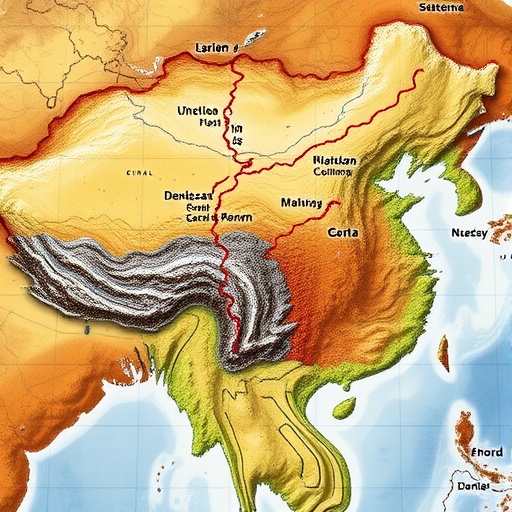
This behavioural portrait gains added significance when set against the wider geography of Denisovan presence. Over the past decade and a half, Denisovans have been documented across a staggering range: from the original genomic discoveries in the Altai Mountains of Siberia, first reported in 2010, to the mandible from the Tibetan Plateau described in 2019, Denisovan DNA recovered from sediments at Baishiya Karst Cave in 2020, a molar from the Annamite Chain of northern Laos announced in 2022, a male Denisovan mandible from Pleistocene Taiwan reported in 2025, and proteomic identification of the 146,000-year-old Harbin cranium, also in 2025. Bianfu Cave now anchors this story firmly in southwestern China, a region long suspected to have been a Denisovan heartland and a critical corridor for hominin movements between mainland Asia and Southeast Asia.
The study’s authors argue that the region’s Denisovans point to a substantial genetic and cultural legacy in later human populations. Modern populations in Southeast Asia and Oceania carry the highest known proportions of Denisovan ancestry anywhere in the world — a legacy of interbreeding that occurred as modern humans moved through and beyond island Southeast Asia. The new evidence from Bianfu Cave suggests that the ways of life practised by Denisovans in this region — their hunting strategies, their flexible technological approaches, their hard-won knowledge of tropical and subtropical environments — may have been part of the inheritance, alongside their genes, that helped later human populations thrive as they spread across the diverse and challenging landscapes of Asia and the Pacific.
For palaeoanthropologists, the significance of the Bianfu Cave discoveries is difficult to overstate. Denisovans have been the least anatomically documented of all known hominin groups — a lineage defined first by DNA and only slowly fleshed out with fragmentary fossils. The new teeth, cranial fragments and radius from Yunnan, combined with an unmatched 120,000-year archaeological sequence, mean that researchers can finally study Denisovans not just as a genome or a set of molecular signatures but as a living, adapting population: hunters of large game, makers and users of expedient tools, and inhabitants of conifer forests that swung between glacial cold and interglacial warmth. As analysis of the Bianfu material continues, it promises to reshape our understanding of how archaic humans lived in eastern Asia and how deeply their story is woven into our own.
Cite Scienmag News
Juliet Wilcox. (September 9, 2026). Denisovans in southwestern China reveal their ancient subsistence strategies. Scienmag. https://scienmag.com/denisovans-in-southwestern-china-reveal-their-ancient-subsistence-strategies/
Juliet Wilcox. "Denisovans in southwestern China reveal their ancient subsistence strategies." Scienmag, 9 September 2026, https://scienmag.com/denisovans-in-southwestern-china-reveal-their-ancient-subsistence-strategies/. Accessed 9 September 2026.
Juliet Wilcox. "Denisovans in southwestern China reveal their ancient subsistence strategies." Scienmag. September 9, 2026. https://scienmag.com/denisovans-in-southwestern-china-reveal-their-ancient-subsistence-strategies/


