


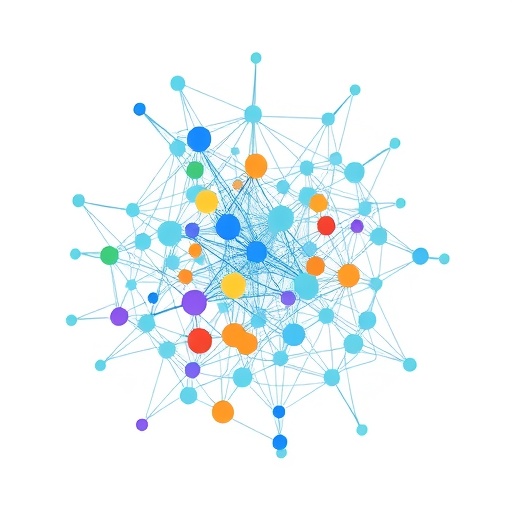
In a development that could reshape how businesses understand their customers in real time, a team of researchers at the University of Blida 1 in Algeria has unveiled a new artificial intelligence framework capable of tracking evolving customer behavior without ever needing to retrain its underlying model from scratch. The framework, known as IncDEC, combines dynamic knowledge graphs with BERT-based semantic embeddings and an incremental deep clustering strategy, offering a solution to one of the most persistent problems in modern data analytics: how to segment customers accurately when their preferences, transactions, and relationships are constantly shifting.
The research, published in the International Journal of Data Science and Analytics, addresses a fundamental limitation of conventional customer segmentation approaches. Traditional clustering methods, such as k-means and its many variants, treat customer data as a static snapshot. They group customers based on attributes like recency, frequency, and monetary value—often called the RFM model—but they struggle to capture the relational and temporal richness of real-world commerce. A customer is not simply a row in a spreadsheet; they exist within a web of relationships involving products, transactions, merchants, and time-varying behavioral patterns. Static representations inevitably lose much of this contextual texture, producing segments that quickly become outdated as markets evolve.
Deep clustering techniques have emerged as a powerful alternative, learning low-dimensional representations of data points in a latent space where similar entities naturally group together. Methods such as Deep Embedded Clustering, introduced by Xie and colleagues in 2016, jointly learn feature representations and cluster assignments, often achieving far better results than clustering raw features directly. Yet these approaches carry their own burden: they typically require full retraining whenever new data arrives. In a high-velocity retail environment where thousands of transactions stream in daily, retraining a deep model from scratch is computationally expensive, operationally impractical, and wasteful, since it discards the hard-won knowledge already embedded in the model’s parameters.
The team behind IncDEC—Halima Aoula, Messaouda Fareh, and Ishak Riali, all of the Faculty of Sciences at the University of Blida 1—recognized that the answer required capturing structure as well as semantics. Their solution begins with a dynamic knowledge graph, a flexible data structure that represents entities such as customers, products, and transactions as nodes, and the relationships among them as edges. Unlike a static graph, which must be rebuilt whenever circumstances change, a dynamic knowledge graph can be updated incrementally: new nodes and edges are added as new customers make purchases, as products enter the catalog, and as transaction histories lengthen. The graph thus functions as a living, evolving map of the commercial ecosystem, preserving relational and contextual information that flat tabular data simply cannot express.
To transform this graph structure into a form suitable for machine learning, the researchers turned to transformer-based language models. BERT, a bidirectional encoder originally developed for natural language understanding, is used to produce rich semantic embeddings of the textual and categorical attributes associated with each entity. By combining these semantic embeddings with structural information encoded in the graph, IncDEC constructs representations that capture both what an entity is and how it is connected to everything else. A customer who purchases premium organic products repeatedly, for example, is embedded not just as a list of purchase counts but as a node whose meaning reflects their products, transaction patterns, and position within the broader network of commercial relationships.
The genuine innovation, however, lies in the incremental clustering mechanism. Rather than retraining the entire deep clustering pipeline when new data arrives, IncDEC updates cluster assignments and centroids directly in the latent space. When a new customer or transaction enters the system, the framework computes its embedding and compares it against the existing cluster centroids, assigning it to the most appropriate segment. The centroids themselves are then adjusted to reflect the new member, a lightweight operation analogous to how incremental k-means updates work, but performed on sophisticated deep representations informed by both graph structure and semantic content. Critically, the framework also handles drift: as customers’ behaviors change over time—their purchase frequency shifts, their product preferences broaden or narrow—existing assignments can be revisited and revised, ensuring segments remain faithful to current reality rather than historical patterns.
Experimental validation was carried out on the Online Retail II dataset, a widely used benchmark from the UCI Machine Learning Repository containing real transactional data from a UK-based online retailer. The choice of dataset is significant: it provides the kind of messy, temporal, evolving transactional data that characterizes genuine e-commerce environments, with customers appearing and disappearing, purchase patterns shifting seasonally, and product catalogs expanding over time. The researchers report that IncDEC demonstrated strong effectiveness, scalability, and adaptability in these dynamic conditions, preserving cluster quality even as new data arrived continuously, and outperforming approaches that would demand complete retraining.
The implications for industry are considerable. Customer relationship management systems depend on accurate segmentation to drive personalized marketing, churn prediction, recommendation engines, and resource allocation. When segments are stale, marketing budgets are wasted on customers who have already moved on, and emerging high-value segments go unnoticed until competitors identify them first. An incremental system like IncDEC promises near-continuous segmentation updates at a fraction of the computational cost of full retraining. For large retailers processing millions of transactions, this distinction is not merely academic—it can mean the difference between actionable intelligence and yesterday’s news.
The work also contributes to a broader research conversation about dynamic representation learning on graphs. In recent years, researchers have explored recurrent graph neural networks, contrastive learning on evolving networks, and continuous-time representation frameworks to handle temporal graph data. IncDEC distinguishes itself by targeting a specific, high-value application—customer segmentation—and by emphasizing practical incremental updates rather than modeling dynamics purely for representational fidelity. It builds on the authors’ own earlier work, including a 2025 study combining knowledge graphs and BERT embeddings for deep semantic clustering, and a 2026 publication describing a convolutional autoencoder and embedding-based approach to deep clustering in knowledge graphs, published in Knowledge and Information Systems. The new framework extends this line of research by making the pipeline genuinely incremental, closing the loop between dynamic data structures and dynamic learning.
Challenges remain, as the researchers and the wider field acknowledge. Incremental systems must guard against the gradual degradation of cluster structure over long horizons, a phenomenon sometimes related to catastrophic forgetting in incremental learning more broadly. Deciding when a drift in behavior warrants splitting an existing cluster or merging two clusters into one is a nontrivial design question, and the theoretical guarantees available for batch clustering methods do not always transfer neatly to incremental settings. Nonetheless, the experimental results presented in the study suggest that careful centroid management in a semantically informed latent space can preserve cluster quality across extended sequences of updates.
The research arrives at a moment when knowledge graphs are experiencing renewed attention across machine learning. From recommendation systems to drug discovery to question answering, graph-structured representations are proving indispensable wherever entities and their relationships matter as much as the entities themselves. Pairing these structures with pretrained language models—a strategy broadly described as graph-plus-text fusion—allows systems to exploit both relational topology and the semantic richness of natural language descriptions. IncDEC is a compelling demonstration that this fusion can be made not only accurate but also efficient and adaptive, two qualities that industrial deployment demands.
For the researchers, the path forward likely involves testing the framework on additional domains beyond retail, including banking, telecommunications, and streaming services, where customer dynamics follow different rhythms and where relational structures differ in kind. The methodology’s reliance on publicly available data and standard architectural components—knowledge graphs, BERT, and latent-space clustering—means that other research groups can readily build upon it. In a field where the gap between academic benchmarks and production systems often remains wide, IncDEC’s focus on the incremental adaptation problem addresses precisely the constraint that most often prevents deep clustering from being deployed at scale.
As commerce becomes ever more digital and customer expectations ever more personalized, the ability to understand customers as they change—not as they were last quarter—may well become a defining competitive capability. This Algerian research team’s framework offers a technically elegant step in that direction: a system that watches, learns, and adjusts continuously, treating customer understanding not as a periodic report but as a living process. Whether it becomes a foundational technique in the next generation of analytics platforms will depend on further validation, but its core insight—that dynamic graphs, semantic embeddings, and incremental clustering are natural allies—is one the field is likely to hear more of in the years ahead.
Cite Scienmag News
Denise Maddox. (September 9, 2026). Incremental customer clustering using dynamic knowledge graph embeddings. Scienmag. https://scienmag.com/incremental-customer-clustering-using-dynamic-knowledge-graph-embeddings/
Denise Maddox. "Incremental customer clustering using dynamic knowledge graph embeddings." Scienmag, 9 September 2026, https://scienmag.com/incremental-customer-clustering-using-dynamic-knowledge-graph-embeddings/. Accessed 9 September 2026.
Denise Maddox. "Incremental customer clustering using dynamic knowledge graph embeddings." Scienmag. September 9, 2026. https://scienmag.com/incremental-customer-clustering-using-dynamic-knowledge-graph-embeddings/


