


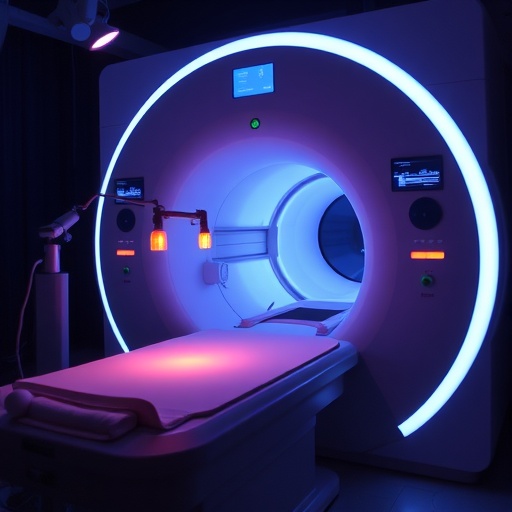
A team of Italian researchers is drawing international attention to a striking new role for an imaging agent originally designed to detect Alzheimer’s disease. In a recently published case report in Annals of Hematology, physicians from Pisa describe how florbetaben positron emission tomography, or PET, allowed them to identify light chain amyloidosis in a 72-year-old man with both cardiac and thyroid involvement—quickly, non-invasively, and at a stage when the diagnosis might otherwise have eluded them. The work, led by Ilaria Sorgiovanni and Gabriele Buda of the Hematology Unit at Santa Chiara Hospital, University of Pisa, together with nuclear medicine specialists and cardiologists from the Fondazione Toscana Gabriele Monasterio, argues that this imaging technique could fundamentally change how one of medicine’s most elusive blood disorders is caught and treated.
Light chain amyloidosis, often abbreviated AL amyloidosis, is a hematological disease in which abnormal plasma cells in the bone marrow produce misfolded immunoglobulin light chains. Instead of remaining soluble, these protein fragments aggregate into amyloid fibrils that deposit in tissues and organs, progressively disrupting their structure and function. The heart, kidneys, liver, nerves, and soft tissues are the most common targets, and the clinical consequences can be devastating: restrictive cardiomyopathy, nephrotic syndrome, hepatomegaly, and neuropathy, depending on where the fibrils accumulate. Because the disease is rare and its symptoms overlap with far more common conditions such as hypertensive heart disease or chronic kidney disease, patients frequently wait many months, sometimes years, before the correct diagnosis is made. That delay matters enormously. AL amyloidosis is a race against time, since organ damage accumulates relentlessly, and effective therapies—primarily anti-plasma-cell regimens borrowed from the myeloma arsenal—work best when the amyloid burden is still low and organs have not yet decompensated.
Historically, confirming the diagnosis has required tissue. The diagnostic gold standard involves obtaining a biopsy, typically from an accessible site such as abdominal fat or the bone marrow, or from a clinically affected organ, and staining it with Congo red. Under polarized light, amyloid stained with Congo red exhibits a characteristic apple-green birefringence, and immunohistochemistry or mass spectrometry can then identify the amyloid precursor protein as a light chain. Yet each of these steps carries obstacles. Fat pad biopsy has limited sensitivity, particularly when the amyloid burden is small or the deposits are concentrated in organs that are difficult to sample, such as the myocardium. Endomyocardial biopsy, though highly accurate, is invasive, technically demanding, available only in specialized centers, and associated with a small but real risk of serious complications including perforation and arrhythmia. Moreover, biopsy samples only a fragment of tissue, so sampling error can produce false negatives even when the disease is present elsewhere. The net effect is a diagnostic pathway that is both slow and imperfect at precisely the moment when speed is everything.
Cardiac involvement is especially problematic. The heart is the organ whose involvement most strongly determines prognosis in systemic amyloidosis, and it is also the organ most often mimicked by other diseases. Patients typically present with thickened ventricular walls on echocardiography—findings that are easily misread as hypertensive heart disease or hypertrophic cardiomyopathy—and with nonspecific symptoms such as breathlessness, fatigue, and edema. Biomarkers add further ambiguity: elevated N-terminal pro-B-type natriuretic peptide and cardiac troponins signal myocardial stress and injury but cannot distinguish amyloid infiltration from other causes. Advanced cardiovascular magnetic resonance imaging with late gadolinium enhancement can raise suspicion by revealing characteristic patterns of scarring, but it remains indirect. What clinicians have long wanted is a way to look inside the heart and actually see the amyloid, without a needle.
That is where florbetaben enters the story. Florbetaben is a radiopharmaceutical tracer labeled with fluorine-18, developed and approved for the detection of beta-amyloid plaques in the brains of patients being evaluated for Alzheimer’s disease. Amyloid fibrils, whatever their protein composition, share a cross-beta-sheet molecular architecture, and this structural commonality turned out to be exploitable. The tracer binds to beta-pleated sheet fibrils regardless of whether they are made of amyloid-beta or of light chains, transthyretin, or other amyloidogenic proteins. When administered intravenously, florbetaben circulates and attaches to fibrillar deposits throughout the body, and PET imaging then visualizes where it accumulates. Over the past decade, researchers have progressively demonstrated that florbetaben PET can visualize cardiac amyloid in both AL and transthyretin-related forms of the disease, sometimes with visual uptake patterns that differ between the two types and can even hint at the underlying amyloidotype before biopsy results return.
In the case now reported, the 72-year-old man arrived with clinical findings that raised suspicion of systemic amyloidosis but did not confirm it. Standard diagnostic work-up pointed toward light chain disease, yet the confirmation that clinicians urgently needed—demonstration of organ involvement—would traditionally have required invasive biopsy. Instead, the team performed florbetaben PET, and the scan revealed pathological tracer accumulation in two locations: the heart and the thyroid gland. The cardiac signal established amyloid involvement of the myocardium, which is the single most prognostically important finding in systemic amyloidosis, while the thyroid uptake illustrated the technique’s distinctive ability to detect deposits in atypical or clinically silent sites that no one would have thought to biopsy. On the strength of this imaging, the diagnosis of light chain amyloidosis with cardiac and thyroid localization was made early, and the patient could be directed to treatment without undergoing organ biopsy.
The significance of this extends beyond a single patient. Early diagnosis in AL amyloidosis changes the calculus of therapy in concrete ways. Modern treatments, such as proteasome-inhibitor-based regimens including daratumumab and bortezomib combinations, can achieve deep and rapid hematologic responses in the underlying plasma cell clone, and when these are started before severe organ damage sets in, patients can enjoy years of progression-free life and sometimes meaningful organ recovery. Conversely, when the diagnosis arrives after advanced cardiac dysfunction has developed, even complete suppression of the clone may not save the heart, and many patients die of cardiac failure within months. A non-invasive imaging modality that confirms organ amyloid deposition at the first suspicion of disease compresses the diagnostic timeline, spares patients an invasive procedure, and gets therapy started while it can still alter the disease’s trajectory.
The method has technical nuances worth understanding. On florbetaben PET images, cardiac amyloid uptake is typically scored visually, with semiquantitative measures such as the heart-to-contralateral lung ratio providing an objective index of tracer retention. Uptake in AL amyloidosis has been reported to be somewhat more diffuse and intense across the whole myocardium than in ATTR, which tends to show more heterogeneous or basal-predominant patterns, although these visual signatures are not reliable enough on their own to replace tissue typing or scintigraphy-based differential diagnosis. Importantly, florbetaben PET distinguishes between amyloid deposited as fibrils and the early oligomeric or non-fibrillar precursor stages, which means it detects established amyloid rather than merely the misfolded protein before aggregation—making it a marker of actual tissue involvement rather than a harbinger. The technique also excels at whole-body surveying in a single session, revealing soft-tissue deposits in salivary glands, muscles, nerves, and organs such as the thyroid, as documented in the present case, that would otherwise go unnoticed.
The Pisa team situates their case within a growing literature that they briefly review, and their conclusion is measured but forward-looking: florbetaben PET is emerging as a powerful tool for early, non-invasive diagnosis of light chain amyloidosis and for mapping the full extent of organ involvement, including atypical sites. It is not without caveats. The tracer is not specific to the light chain type, so hematological work-up—serum free light chain assays, serum and urine immunofixation, and bone marrow biopsy—remains essential to establish the amyloidotype and guide treatment. Experience with florbetaben PET remains concentrated in specialized centers, and large prospective studies comparing it head-to-head with biopsy-based pathways are still needed before it can be recommended as a routine first-line diagnostic. Insurance coverage and access to the tracer outside its approved neurological indication also present practical hurdles in many health systems.
Still, the conceptual shift the case embodies is hard to overstate. For a disease whose diagnosis has been chained to the biopsy needle for decades, a whole-body molecular imaging method that lights up amyloid fibrils wherever they hide—heart, thyroid, kidneys, or beyond—represents a genuine advance in clinical capability. If validated across larger cohorts, florbetaben PET could become the pivotal early test that transforms AL amyloidosis from a diagnosis of late suspicion into one of early detection, giving hematologists and cardiologists the head start their patients so desperately need. The Pisa report, published as a peer-reviewed case study with a concise review of the literature, offers a compelling proof of principle that this future may be closer than previously imagined.
Cite Scienmag News
Ophelia Keating. (September 8, 2026). Florbetaben PET enables early non-invasive detection of light chain amyloidosis. Scienmag. https://scienmag.com/florbetaben-pet-enables-early-non-invasive-detection-of-light-chain-amyloidosis/
Ophelia Keating. "Florbetaben PET enables early non-invasive detection of light chain amyloidosis." Scienmag, 8 September 2026, https://scienmag.com/florbetaben-pet-enables-early-non-invasive-detection-of-light-chain-amyloidosis/. Accessed 8 September 2026.
Ophelia Keating. "Florbetaben PET enables early non-invasive detection of light chain amyloidosis." Scienmag. September 8, 2026. https://scienmag.com/florbetaben-pet-enables-early-non-invasive-detection-of-light-chain-amyloidosis/


